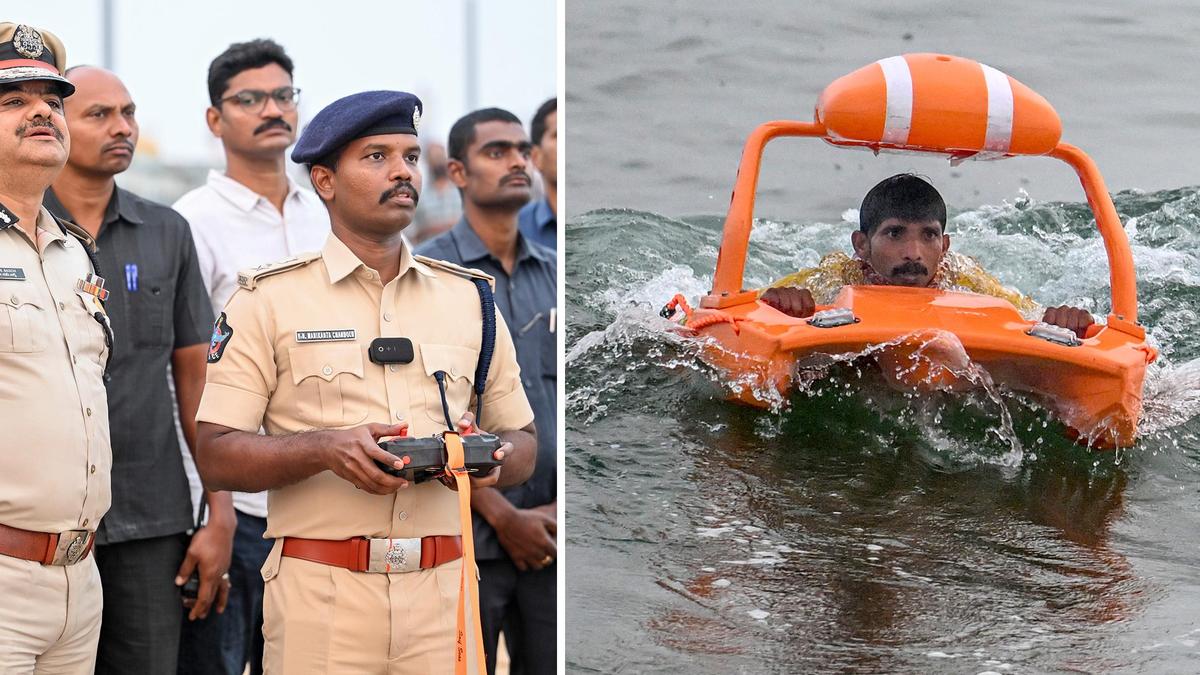
Visakhapatnam police have begun testing a remote-controlled lifebuoy system as part of a wider effort to reduce drowning incidents along the city’s coastline. The demonstration, held at YMCA Beach near RK Beach, was personally inspected by City Police Commissioner Shankabratha Bagchi. Deputy Commissioner of Police (Zone I) Ch. Manikanta accompanied him and provided a hands-on explanation of the device’s operation.
Visakhapatnam lifebuoy deployment strengthens beach safety
The police assessment identified about 16 vulnerable points between Bheemunipatnam and Appikonda where drownings have been recorded previously. Commissioner Bagchi said the remote-controlled lifebuoys will be deployed at these locations to improve immediate rescue capability and deter unsafe entry into the sea.
During the demonstration, officers showed how the device can be launched quickly from the shore and steered towards a person in distress. The lifebuoy is operated remotely, allowing rescuers to deliver flotation support without exposing personnel to the immediate hazards of entering turbulent water. Mr Manikanta said the technology reduces response time and increases the likelihood of a successful rescue in situations where every second counts.

Alongside the lifebuoys, the police plan to install caution boards and public address systems at the identified points. Police personnel will be stationed at key stretches to advise beachgoers on safe behaviour and to intervene when people attempt to enter the water in unsafe conditions. A dedicated rescue team will maintain readiness to operate the lifebuoys and provide additional assistance during emergencies.
Commissioner Bagchi stressed the preventive aim of the initiative, saying the primary goal is to make Visakhapatnam’s beaches safer for both residents and visitors in the run-up to the New Year. “Our foremost aim this New Year is to make Vizag’s beaches the safest,” he said, reiterating the force’s commitment to proactive measures rather than reactive responses.
Local officials hope the combination of technology, signage and active policing will reduce the number of fatal and non-fatal drownings. The use of remote-controlled lifebuoys is intended to complement traditional lifeguard training and equipment, offering an additional tool that can be deployed rapidly in hard-to-reach areas or when sea conditions make a direct swim rescue hazardous.
Tourism stakeholders welcomed the move, noting that improved safety measures can bolster visitor confidence and support the local economy. Residents, too, expressed relief that authorities are taking concrete steps to address a persistent hazard along the coastline.
Police have not yet announced an exact timetable for full deployment, but officials indicated that roll-out to the 16 identified points would take place in phases. As the programme advances, authorities will monitor its effectiveness and adjust positioning and staffing according to incident data and local conditions.
For now, the police urged beach users to heed warning signs and follow instructions from on-duty personnel. The success of the Visakhapatnam lifebuoy deployment, they said, will depend as much on public cooperation as on equipment and training.
Key Takeaways:
- Visakhapatnam police demonstrated a remote-controlled lifebuoy at YMCA/RK Beach to reduce drownings.
- Authorities identified 16 vulnerable points between Bheemunipatnam and Appikonda for deployment of the devices.
- Additional measures — caution boards, public address systems and police presence — will accompany the Visakhapatnam lifebuoy deployment.
- The initiative aims to improve rescue response times and enhance beach safety for residents and tourists.