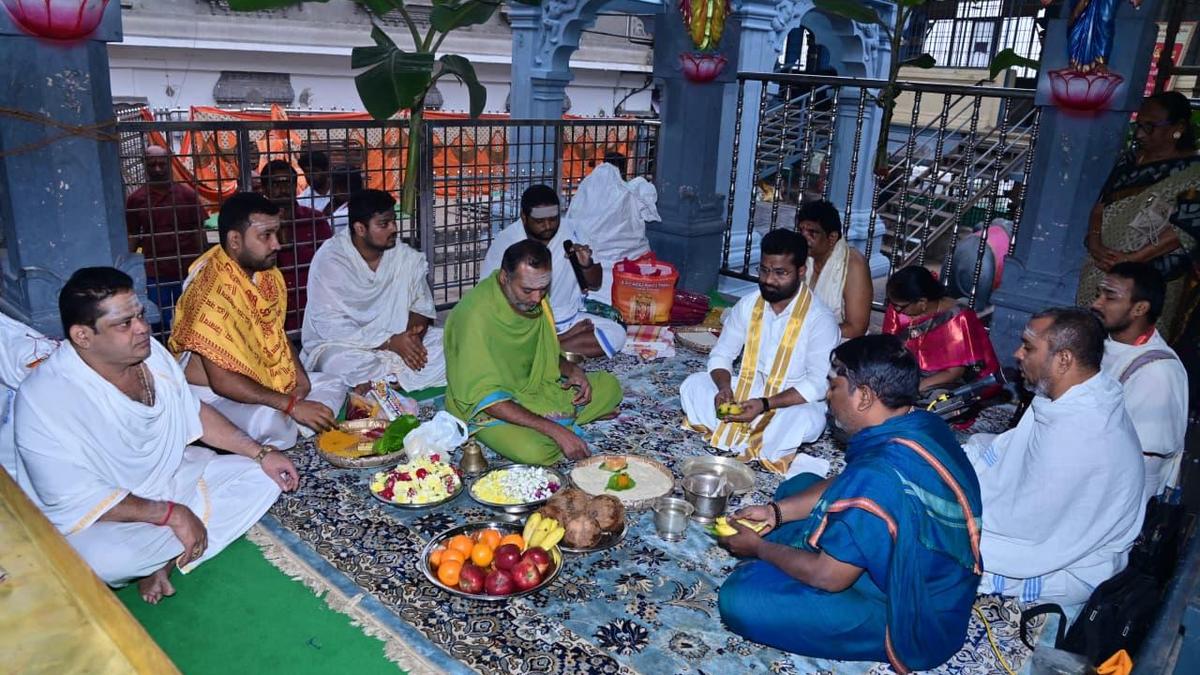
The three-day Arudrotsava Kalyanotsavams began with solemnity and devotion at the Sri Shiva Kamakshi Sundari Sametha Nataraja Swamy Temple atop Indrakeeladri in Vijayawada on Friday, 2 January 2026. Organised by the Sri Durga Malleswara Swamy Devasthanam, the annual festival will continue through 4 January and is expected to draw large numbers of devotees.
Arudrotsava Kalyanam Vijayawada draws devotees
Rituals opened at dawn with Mangala Snanam and the ceremonial decoration of Sri Nataraja Swamy alongside Sri Shiva Kamakshi Sundari Devi, presented as the divine bride and groom. The first day concluded with Ankurarpana, Agni Pratishthapana, Dhwajarohana and Baliharana performed in the evening, setting the tone for the festival’s principal ceremonies.
Saturday’s programme features the Maha Kalyanam, a series of homams and the Arudrotsava Abhishekam, followed by Annabhishekam late at night. On the final day, devotees will be able to attend Uttara Dwara Darshanam in the early hours, witness Purnahuti rituals and join the grand Nagarotsavam in the evening.

Temple officials emphasised the festival’s particular importance in the region, noting that Nataraja temples are rare in the territory corresponding to the erstwhile united Andhra Pradesh. The Nataraja Swamy temple on Indrakeeladri has been a focal point for worship since donors, inspired by divine will, initiated construction in 1954.
Special pujas were conducted in the presence of Executive Officer V.K. Seena Nayak and members of the donor family, including Leela Nageswari and her relatives. Chief Priest Lingambotla Durga Prasad and Assistant Priest Kota Prasad led the liturgies, assisted by other temple priests.
The temple complex houses finely sculpted idols of Sri Vighneswara Swamy, Sri Nataraja Swamy, Sri Shiva Kamakshi Sundari Devi, Nandiswara and Chandiswara. These figures are carved from Chandrashila stone and follow the iconographic traditions of the famed Chidambaram temple. A Natya Mandapam and a Kalyana Mandapam form part of the complex and support cultural and ceremonial functions.
Organisers extended an open invitation to the public to participate in the rituals and seek blessings during the three-day observance. The festival not only offers an opportunity for collective worship but also reaffirms the temple’s role as a centre for cultural continuity and communal gathering.
Local authorities and temple managers have arranged timings and facilities to accommodate the expected influx of visitors. Devotees travelling to the hilltop shrine are advised to check the temple’s schedule for specific darshan timings and any special arrangements for Annabhishekam and Nagarotsavam.
As the Arudrotsava Kalyanotsavams progress, the temple’s ancient chants, fire rites and processions will provide a vivid reminder of classical ritual practice and living tradition. For many attendees, the festival offers a chance to witness rituals that are seldom observed elsewhere in the region and to pay respects at an architectural site modelled on a major south Indian temple form.
Key Takeaways:
- Arudrotsava Kalyanam Vijayawada began on 2 January and will run for three days at the Nataraja Swamy Temple on Indrakeeladri.
- Key rites include Mangala Snanam, Ankurarpana, Maha Kalyanam, Arudrotsava Abhishekam and a grand Nagarotsavam.
- The festival highlights the rarity of Nataraja temples in the region and the temple’s Chidambaram-inspired stone sculptures.
- Donor families and temple authorities invited large participation and sought devotees’ blessings.