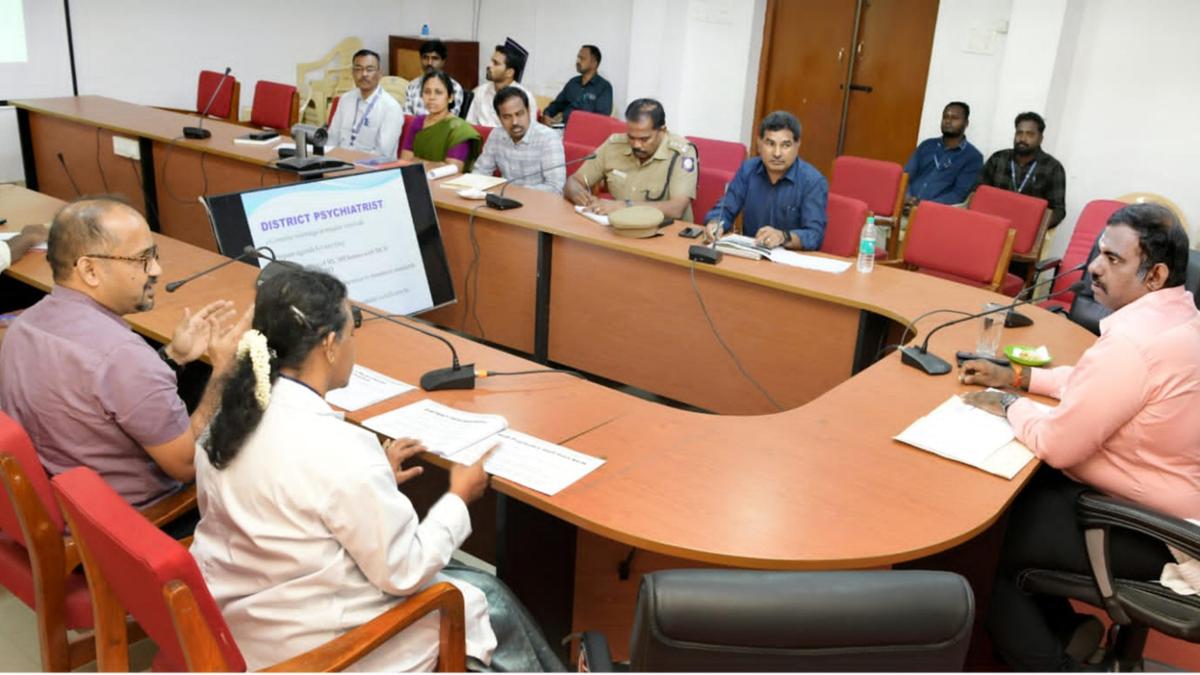
District officials in Krishnagiri convened the District Mental Health Monitoring Committee on Friday, led by Collector C. Dinesh Kumar, to evaluate the functioning of registered homes for the mentally ill and rehabilitation centres for those with substance dependence. The meeting assessed clinical care practices, administrative arrangements and the practical measures required to ensure patients are treated with dignity and provided pathways back to family life.
Krishnagiri mental health monitoring
The committee conducted a comprehensive review of standard treatment protocols followed by local facilities and sought to identify gaps in compliance and capacity. Officials examined patient admission procedures, medication management, counselling services and aftercare plans, with a focus on bringing practices in line with recognised clinical standards. The review also covered infection control, record keeping and staff training as essential components of safe, effective care.
Discussion at the meeting highlighted the importance of administrative support schemes that enable access to services. Members reviewed the rollout of integrated differently-abled cards and Aadhaar registration drives in treatment facilities, noting that formal identity and disability documentation often determines eligibility for state benefits and rehabilitation programmes. Ensuring timely issuance of these documents was framed as a priority to help patients access entitlements and social support.

Collector C. Dinesh Kumar directed officials to strengthen mechanisms for identifying and rescuing people with mental illness living on the streets. The committee explored coordinated responses involving the health department, social welfare teams, local law enforcement and non-governmental organisations to conduct outreach, provide immediate medical assessment and arrange safe admissions to appropriate centres. Officials emphasised humane, rights-based approaches during rescue operations and the need to respect patient autonomy where possible.
Equally important was the committee’s focus on rehabilitation and reintegration. Members discussed tailored plans to restore individuals to their families when appropriate, including counselling for relatives, gradual reintegration schedules and follow-up services at the community level. The meeting recognised that family reunification often requires social and economic support alongside clinical care, and recommended linkages with local welfare schemes to assist reintegrated persons.
To improve oversight, the committee proposed regular inspections of registered homes and rehabilitation centres and the development of clear monitoring indicators. Recommendations included routine audits of treatment protocols, periodic staff competency assessments and the establishment of grievance redressal channels for patients and families. Officials also urged the expansion of community mental health awareness campaigns to reduce stigma and encourage early help-seeking.
The meeting closed with specific instructions to implement short-term corrective measures where deficiencies were noted, and to prepare a progress report for the next review. By bringing together stakeholders from multiple departments, the Krishnagiri administration aims to create a more integrated, accountable system for mental health care and addiction rehabilitation, reinforcing district-level commitment to patient welfare and public health.
Key Takeaways:
- Krishnagiri mental health monitoring committee reviewed all registered homes for the mentally ill and rehabilitation centres for addicts.
- Officials examined standard treatment protocols and schemes such as integrated differently-abled cards and Aadhaar enrolment.
- The committee discussed rescue operations for street-involved mentally ill people and their admission into care facilities.
- Plans emphasised family reintegration, inter-agency coordination and regular oversight to improve patient outcomes.