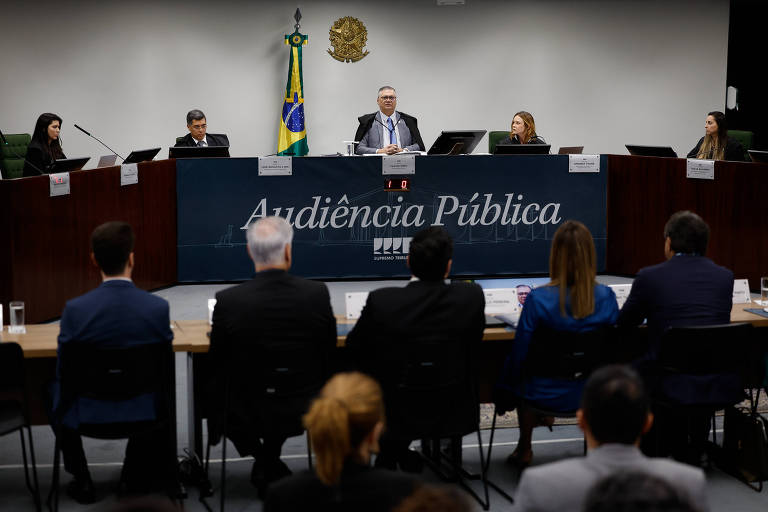
Public hearings at Brazil’s Supreme Federal Court have become a regular feature of high-profile cases, yet their practical effect on final rulings often falls short of expectations. The instrument, first used by the court in 2007, has been deployed increasingly in politically and technically charged matters, from embryonic stem-cell research to disputes over betting regulation, the classification of service providers as companies, parliamentary amendments and digital-era copyright.
Brazil Supreme Court public hearings
The court formalised internal rules for public hearings in a 2009 regimental amendment, borrowing procedures from the Chamber of Deputies. Under the current system the reporting justice organises the hearing, opens registration, selects speakers and structures the agenda. Since 2007 the STF has convened 48 public hearings, with a clear upward trend from 2017 and peaks of five sessions in both 2024 and 2025.
Legal scholars and practitioners praise the hearings for broadening the information available to justices and for increasing transparency. “The Supreme Court adopted public hearings as a space to gather information on morally sensitive and complex issues,” says Miguel Godoy, a constitutional law professor. Supporters argue that bringing technical experts and representatives of different social segments into the process can enrich judicial deliberation and strengthen democratic legitimacy.

Yet several critics argue the hearings rarely fulfil their potential as instruments of influence. Bernardo Fernandes, a professor at UFMG, notes gradual progress but warns that hearings often serve as a formal consultation rather than a mechanism that shapes outcomes. He calls for them to become “a real instrument of influence in the decision-making process, and not merely a ritual of consultation.”
Procedural weaknesses recur in analyses of the hearings’ effectiveness. Thiago Sombra, a public law partner at Mattos Filho, highlights the absence of clear selection criteria for speakers, low attendance by some justices, and the limited citation of hearing contributions in the written votes of ministers. He also points to situations in which hearings were convened for cases later resolved on procedural grounds, meaning the substantive input never affected the merits.
Another practical concern is the composition of participants. Several sessions have featured a predominance of litigators or parties to the case rather than independent technical experts or civil society representatives. Critics say this undermines the purpose of public hearings and risks turning them into a preliminary stage of advocacy rather than impartial fact-finding.
Reform proposals focus on establishing transparent selection procedures, publishing clear notices with criteria for participation, limiting the opportunity for a single speaker to appear both in a hearing and again during formal oral argument, and prioritising hearings for issues that will be decided on their merits. These measures aim to preserve the hearings’ informative value while increasing their substantive weight in judicial decision-making.
As Brazil’s highest court continues to face complex constitutional questions, the trajectory of public hearings illustrates both institutional adaptation and the limitations of procedural experimentation. The debate now centres on whether practical changes can convert hearings from a high-profile ritual into a tool that materially influences judgments and improves the court’s engagement with technical knowledge and public opinion.
Key Takeaways:
- Brazil Supreme Court public hearings have risen sharply since 2017, reaching five sessions in 2024 and 2025.
- Experts say hearings bring technical input and public visibility but often lack procedural standards and real influence on rulings.
- Criticisms include inconsistent selection criteria, frequent participation by lawyers rather than independent experts, and limited citation of hearing material in judgments.