











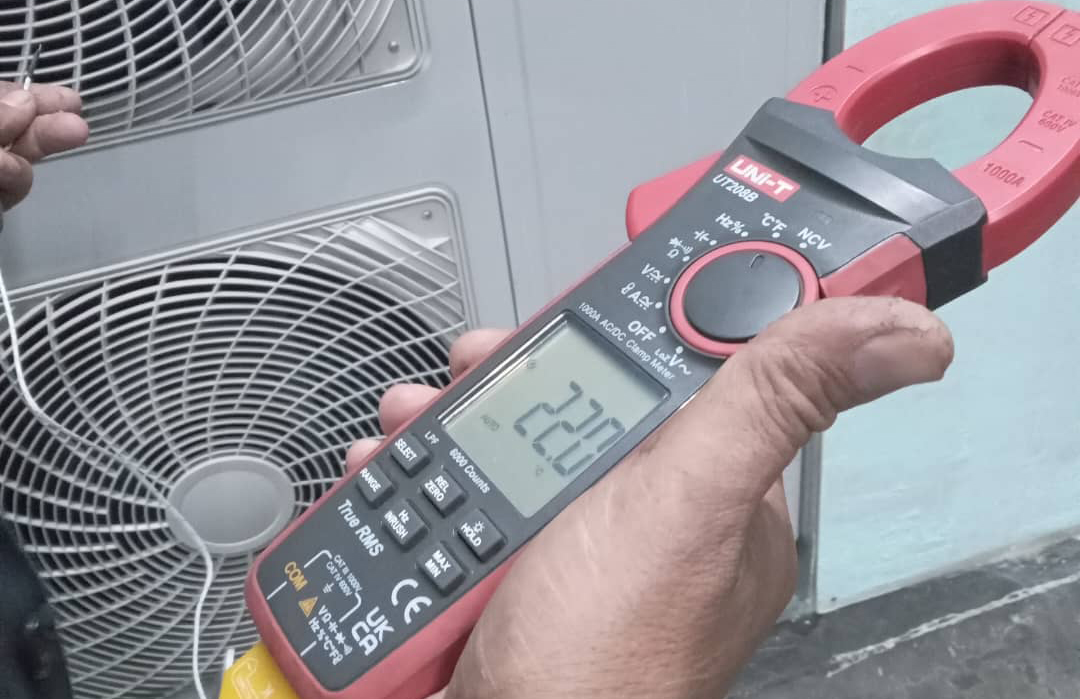
The Desembarco del Granma textile plant in Villa Clara has become the first factory in Cuba to install a high-temperature industrial heat pump system, reducing reliance on fossil fuels, saving foreign currency and lowering environmental impact.
Installed across six high-efficiency units, the system extracts heat from ambient air to heat water to more than 90°C, a temperature required for bleaching yarns and surgical gauze produced at the mill. At the same time the equipment supplies cool air used to climatise the finishing hall, improving labour conditions while cutting electricity consumption previously spent on ventilation.
textile heat pump Cuba
Engineers designed the installation with hydraulic circulation pumps and a pressurised thermal storage tank to guarantee a steady, efficient supply of hot water to the bleaching line. The configuration reduces heat loss within the production cycle by revalorising thermal energy inside the plant.

“This technology shows it is feasible to substitute fossil fuels even in industrial processes that demand high temperatures,” said Manuel Alejandro Rubio Rodríguez, director of the Centre for Energy Studies and Environmental Technologies (CETA) at the Central University Marta Abreu of Las Villas. He added the solution was an original engineering concept tailored to Cuba’s energy context rather than a foreign retrofitting.
The installation directly replaces the combustion of fuel oil and also allows the factory to dispense with the electrical consumption of the old ventilation system, which had been out of service. Officials describe the simultaneous substitution of heat and cooling as a shift in industrial energy management.
Project partners include CETA, the National Office for the Rational Use of Energy (Onure) and international backers such as the United Nations Industrial Development Organization and the European Union. María de los Ángeles García Hernández, technical director of the textile company, said the cross‑sector cooperation was decisive: efficiency is not an expense but a sustainability and cost‑reduction strategy that improves economic results.
Economically, the figures are concrete. The enterprise is expected to save about 579,000 Cuban pesos a year and the national economy to conserve around $39,800 in foreign currency by reducing fuel oil imports. The payback period for the investment is estimated at 3.76 years, a marker of high profitability.
Armando Hernández Pedroso, Onure director in Villa Clara, placed the project within the province’s broader energy transition, noting the territory has surpassed five megawatts peak capacity in renewable sources. The textile plant is also part of a provincial learning network that has implemented energy management systems under ISO 50001 since 2021.
Local residents welcomed the development as a practical response to broader challenges. “With our own science and ingenuity we can face the blockade and the energy deficit. Every kilowatt saved or generated cleanly is a step towards greater independence,” said Roberto Fernández Linares, a resident of the Escambray neighbourhood in Santa Clara.
Founded in 1979, the Empresa Textil Desembarco del Granma remains Cuba’s only full‑cycle complex for producing sewing thread and surgical gauze with crochet weaving. The heat pump installation reinforces its role as a national industrial symbol and demonstrates how collaboration between academia and industry can deliver efficient, sovereign and sustainable production capable of overcoming external obstacles.
Key Takeaways:
- The textile heat pump Cuba project replaces fuel oil with six high-efficiency units that heat water above 90°C for industrial bleaching.
- The system also produces cooling for the finishing hall, improving working conditions and cutting electricity use.
- Estimated savings: 579,000 Cuban pesos a year for the factory and about $39,800 in avoided fuel imports; payback period 3.76 years.








