Key Takeaways:
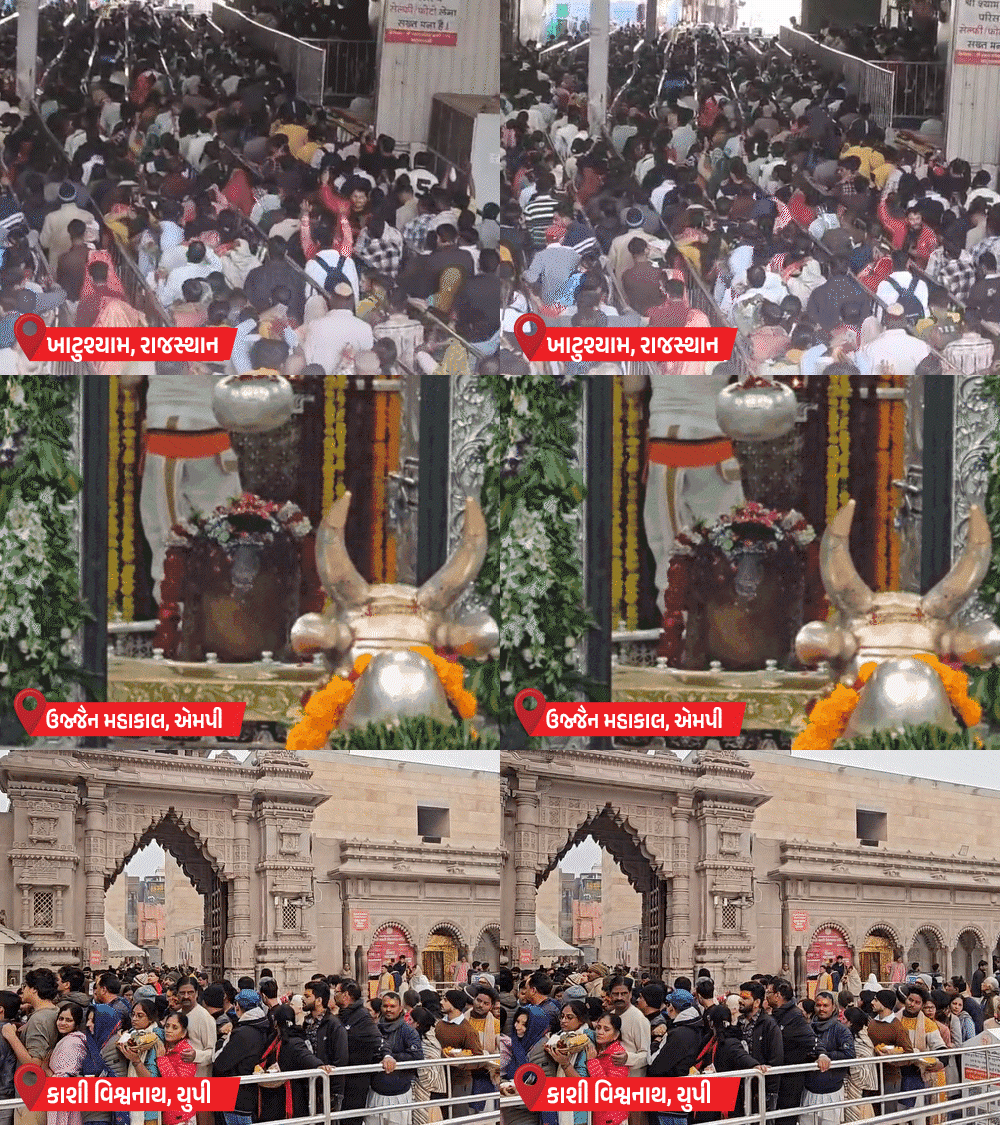
- New Year pilgrims in India converged on major pilgrimage sites, with around 500,000 visitors reported in Kashi and Vrindavan and up to 1.2 million expected in Ujjain.
- Long queues and crowded temple precincts were seen in Ayodhya, Khatushyam and Omkareshwar as devotees marked the holiday.
- Tourist hotspots from Jaisalmer to Jaipur and Amritsar also reported heavy footfall, boosting local tourism and services.

New Year pilgrims in India draw huge crowds to sacred cities
Hundreds of thousands of devotees travelled to India’s major pilgrimage destinations to mark the New Year, creating scenes of devotion and busy streets across several states. Authorities and temple administrations reported concentrated crowds in Varanasi (Kashi), Vrindavan and Ujjain, alongside heavy visitor numbers in Ayodhya, Khatushyam, Omkareshwar, Amritsar and Rajasthan’s heritage sites.
Officials estimated that about 500,000 pilgrims had arrived in the Kashi and Vrindavan area early on the New Year, with long queues forming outside the Kashi Vishwanath temple. In Varanasi, visiting devotees waited in lines that stretched for kilometres, while vendors and local businesses reported brisk trade in prasād, chaat and hot beverages along the narrow lanes.
Ujjain’s Mahakaleshwar Temple also saw exceptionally high attendance, with organisers indicating a projected turnout of up to 1.2 million devotees on the New Year day. Temple authorities made crowd-management arrangements in the inner sanctum and surrounding ghats as officials monitored flow to prevent bottlenecks.
Ayodhya experienced notable footfall along the road leading to the Ram Temple, where queues extended for nearly two kilometres. Pilgrims moving towards the new temple precincts created a steady stream of visitors, reflecting the continued draw of the site for religious travellers.
At Khatushyamji in Rajasthan, authorities reported four distinct queues for darshan, with average waiting times of around 90 minutes. The temple district’s management and volunteers worked to maintain order and provide basic amenities for those in line.
Beyond the major temple towns, popular tourist destinations also recorded large numbers of visitors. Jaisalmer’s Sam sand dune area hosted groups enjoying the desert scenery, while Jaipur’s Hawa Mahal and City Palace drew many for photographs and sightseeing. In Amritsar, the Golden Temple precinct and the adjacent Heritage Street were busy with pilgrims and tourists alike.
Local economies saw an immediate impact. Street vendors, small hotels and transport services reported increased demand, with many businesses operating extended hours to serve the influx. Temple administrations coordinated with municipal authorities to provide additional sanitation, medical aid and crowd management teams at key access points.
Security and public safety measures were visibly stepped up in several locations. Police and municipal teams patrolled major approach roads, and temporary barriers were installed at choke points. Officials encouraged pilgrims to follow directives and to use designated entry routes to ensure smooth movement.
While the gatherings reflect the cultural and religious significance of the New Year period for many Indians, authorities reiterated the need for patience and cooperation where queues formed. Temple officials said they would continue to monitor the situation and adjust arrangements as visitor numbers evolve through the holiday period.
The mass movement of pilgrims underlined the resilience of India’s pilgrimage and tourism sectors, which support local livelihoods and showcase the country’s diverse religious heritage during peak travel occasions.