











Key Takeaways:
- President Murmu celebrates tribal heritage and honours leaders such as Birsa Munda and Pankhraj Saheb Kartik Oraon, urging citizens to adopt their ideals.
- She announced plans for tribal museums and called on institutions to preserve and promote tribal legacies for future generations.
- Murmu stressed the need to connect youth with tribal traditions while embracing modern development.

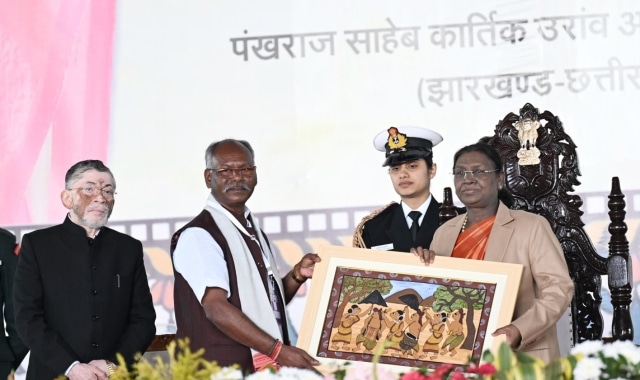
President Droupadi Murmu on Monday described her visit to Jharkhand, the birthplace of tribal leader Birsa Munda, as a pilgrimage and used the occasion of Gumla’s Kartik Jatra to highlight the region’s tribal heritage and contributions. Speaking to a large audience, she praised Birsa Munda and Pankhraj Saheb Kartik Oraon as symbols of social justice, education and community upliftment.
Murmu celebrates tribal heritage and calls for preservation
In a speech that sought to blend cultural pride with a message of progress, the President urged citizens and institutions to ensure that the achievements of tribal leaders are passed on to younger generations. She said governments are taking steps to establish tribal museums that will preserve artefacts, documents and oral histories, making them accessible to the public and researchers.
Murmu highlighted Birsa Munda’s role in advocating for tribal rights and identity, describing his legacy as a driving force for social justice. She also recalled the work of Pankhraj Saheb Kartik Oraon, praising his dedication to education and social unity and noting his efforts to strengthen tribal identity through public service.
The President asked citizens to take inspiration from these leaders and to apply their ideals in everyday life for the betterment of society and the nation. She said that telling the stories of local heroes is essential not only to preserve history but also to inspire civic responsibility and collective development.
Linking tradition with development and youth engagement
Addressing young people directly, Murmu emphasised the importance of maintaining cultural roots while embracing modern education and economic opportunities. She encouraged community groups, schools and local authorities to organise programmes that familiarise youth with traditional songs, crafts and rituals alongside vocational training and digital skills.
Officials present at the event confirmed that the proposed tribal museums will include educational outreach initiatives aimed at schools and colleges. These programmes are expected to combine exhibitions with workshops and storytelling sessions that make history tangible for students.
Murmu also noted that Jharkhand and nearby districts have produced many tribal leaders whose stories remain underreported. She urged media, academics and civil society organisations to broaden the reach of these narratives so that they occupy their rightful place in the national discourse.
Practical steps and civic responsibility
Beyond symbolism, the President urged practical measures to protect cultural sites, support local artisans and document languages and customs that are at risk of fading. She said that institutions with links to tribal heritage must collaborate with government bodies to create sustainable models for preservation that also provide livelihoods.
Expressing confidence in the future, Murmu said tribal communities can progress economically while preserving their distinct identity. Her comments at Gumla’s Kartik Jatra reflected a government emphasis on cultural preservation as a component of social development and national unity.
The event concluded with calls for greater public engagement and a commitment from local leaders to implement the ideas discussed at the gathering. Murmu’s address reinforced a message of respect for heritage alongside a clear call to equip the next generation to participate fully in India’s ongoing development.








