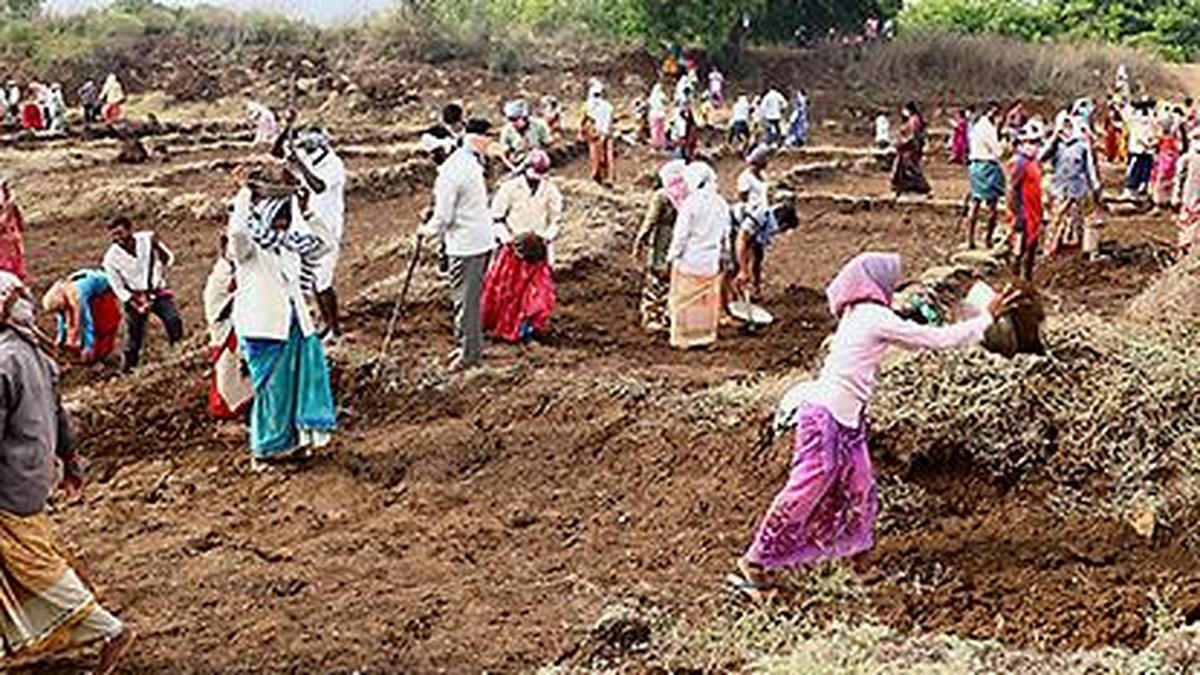
The Telangana Legislative Assembly on Friday adopted an unopposed resolution calling on the Union Government to restore the Mahatma Gandhi National Rural Employment Guarantee Act (MGNREGA) in its original form and withdraw the recently enacted Viksit Bharat Guarantee for Rozgar and Ajeevika Mission (Gramin) — VBGRAMG. The motion, moved by Chief Minister A. Revanth Reddy, framed the change as an attack on the rights of the rural poor and on protections that have supported millions since 2005.
MGNREGA restoration India
Mr Reddy told the assembly that 90% of beneficiaries under the MGNREGA scheme belong to Scheduled Castes, Scheduled Tribes and backward communities, and that women account for 62% of participants. He said the law, first launched in Bandameedipalle village of Anantapur district in the then unified Andhra Pradesh in 2005, guaranteed wage work on demand and provided a vital safety net for families during agricultural lean periods. According to the chief minister, the new VBGRAMG statute weakens the right to wage work, curtails women’s access to work and departs from the original programme’s intent.
The resolution criticised several elements of the replacement law. It objects to a provision that would require states to shoulder 40% of funding, a marked shift from the older arrangement in which the Centre met the full wage component. It also demands the removal of a 60-day break during the peak farming season, a suspension that critics say risks forcing labourers into precarious or exploitative work. The assembly called for the retention of all 266 types of permissible works under the original scheme and for Mahatma Gandhi’s name to remain associated with the programme.

Debate in the assembly was broadly hostile to the new Act, with members from the ruling Congress, the CPI and the MIM joining to voice concerns. Deputy Chief Minister M. Bhatti Vikramarka and Rural Development Minister D. Seethakka argued the replacement law would tilt benefits towards private actors by providing corporations access to cheaper labour. The ruling party speakers presented the move as a defence of federal principles and of a social guarantee that has underpinned rural livelihoods for nearly two decades.
The Opposition Bharat Rashtra Samithi chose to boycott the session. While most parties opposed the new law, one BJP member, A. Mahesgwar Reddy, spoke in favour of the replacement legislation, underscoring a degree of policy division even within the assembly.
The resolution is a political instrument rather than a legally binding order, but it signals growing state-level resistance to the central government’s policy shift. If other states take similar positions, the debate could escalate into a national dispute over the future of rural employment guarantees, the balance of fiscal responsibility between Delhi and state capitals, and safeguards for marginalised workers, especially women.
Telangana’s move is likely to intensify pressure on the Centre to justify the new law’s provisions or to engage in consultations with states. For rural households that relied on the older scheme, the outcome will determine whether wage-on-demand protections and the set of approved public works remain intact, or whether responsibility and risk shift substantially towards state governments and private contractors.
As the issue develops, attention will focus on whether the Centre will enter talks with states, face legal challenges or confront sustained political campaigning organised by affected communities and trade unions. For now, Telangana’s resolution places MGNREGA restoration firmly on the political agenda.
Key Takeaways:
- Telangana Assembly adopted an unopposed resolution urging the Centre to restore MGNREGA and withdraw the new VBGRAMG law.
- Chief Minister highlighted that 90% of beneficiaries are from SC, ST and BC communities and 62% are women, warning the new law undermines wage-on-demand rights.
- State leaders warned the new Act shifts costs to states and could reduce protections for women and vulnerable workers.
- The resolution heightens federal tensions and could shape political debate ahead of national policymaking.