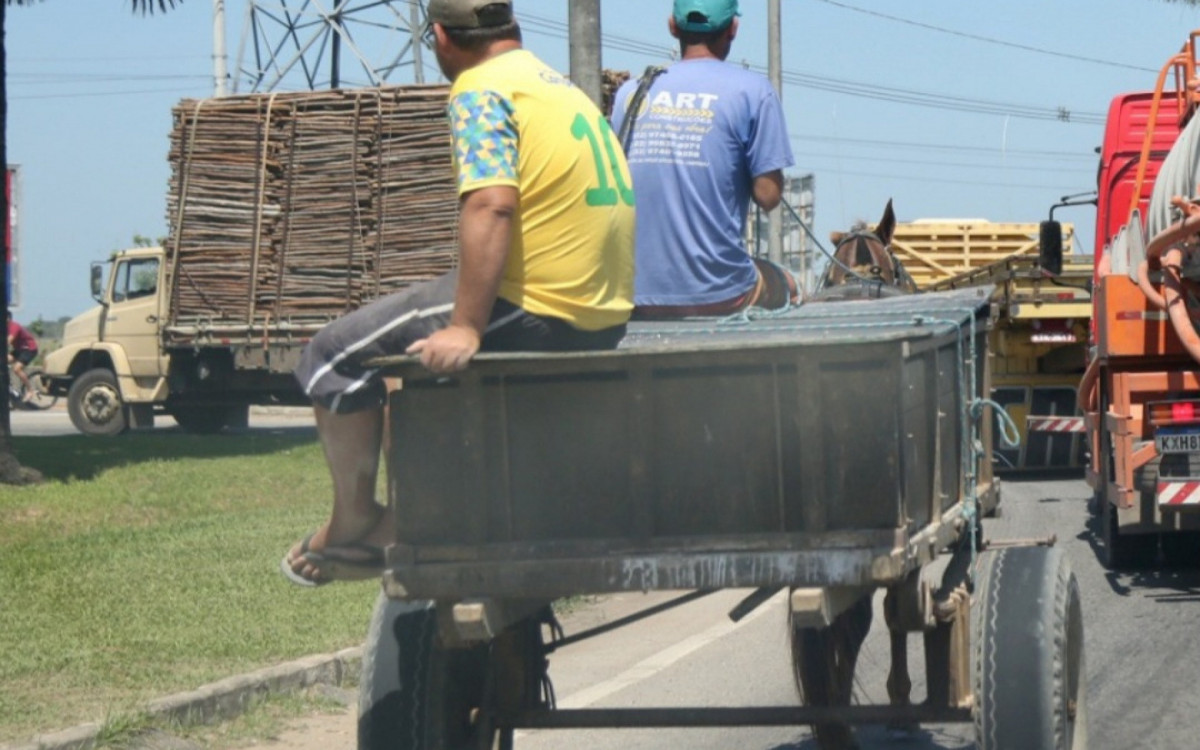
Municipal authorities in Campos dos Goytacazes, Rio de Janeiro, have announced a programme of guidance and training for drivers of animal-drawn vehicles aimed at improving animal welfare and ensuring compliance with local circulation rules.
animal-drawn vehicles in Campos
The Centre for Zoonoses Control (Centro de Controle de Zoonoses, CCZ) has scheduled two five-hour sessions on 6 and 7 January, from 13:00 to 18:00, at the Sest/Senat on Avenida Nilo Peçanha, Parque Santo Amaro. The meetings will explain the requirements of Portaria Conjunta 001/2025 and provide technical advice on permitted routes, inspection procedures and mandatory care for animals.
Carlos Morales, director of the CCZ, said the authority’s role begins when an animal is removed after an infringement of circulation rules. “When an animal is brought to the CCZ following an approach for non-compliance, we carry out a health assessment and proper registration to reduce the risk of repeat offences,” he said. Cases may result in the vehicle being impounded and the driver referred to security agencies.

The initiative brings together several municipal departments, including Education; Labour and Income; Social Assistance; the Municipal Guard; Sest/Senat; and the Municipal Institute of Traffic and Transport (IMTT). The collaboration seeks to combine inspection with guidance and social support where appropriate.
Workshops will cover practical topics such as the legislation governing animal traction vehicles, procedures for officers during inspections, how and when seizures are made, and the responsibilities of those who keep and operate the animals and carts. The guidance also includes measures intended to prevent mistreatment and to set welfare standards for working animals.
Wellington Levino, commander of the Municipal Guard, said the force will work closely with partner agencies to reach out to drivers and clarify provisions of the new ordinance. “We will strengthen trust with these professionals and ensure greater transparency in the work of public authorities,” he said. The outreach aims to answer questions from drivers and explain how enforcement actions are applied.
Under the procedures described by municipal officials, a cart stopped in a prohibited area may be taken to a municipal deposit while the animal is transported to the CCZ. There, the animal receives medical attention and is identified and recorded. The registration supports accountability if the same owner or driver commits a further violation.
City authorities describe the programme as both enforcement and education: inspections remain possible where rules are broken, but the priority is to offer training, technical advice and social support that reduce harm to animals and help drivers meet legal obligations.
The sessions at Sest/Senat are open to drivers and interested parties, and officials urge participation to promote compliance and animal welfare across the municipality. Further information can be obtained from the CCZ and the Municipal Guard ahead of the planned meetings.
Key Takeaways:
- Local authorities in Campos will deliver guidance on animal-drawn vehicles, focusing on circulation rules, welfare and enforcement.
- Two workshops on 6–7 January will cover Portaria Conjunta 001/2025 and municipal policies at Sest/Senat.
- Seized animals will be taken to the Centro de Controle de Zoonoses for health checks, identification and records to prevent repeat infractions.
- Multiple municipal departments will work together to educate drivers and increase transparency in enforcement.