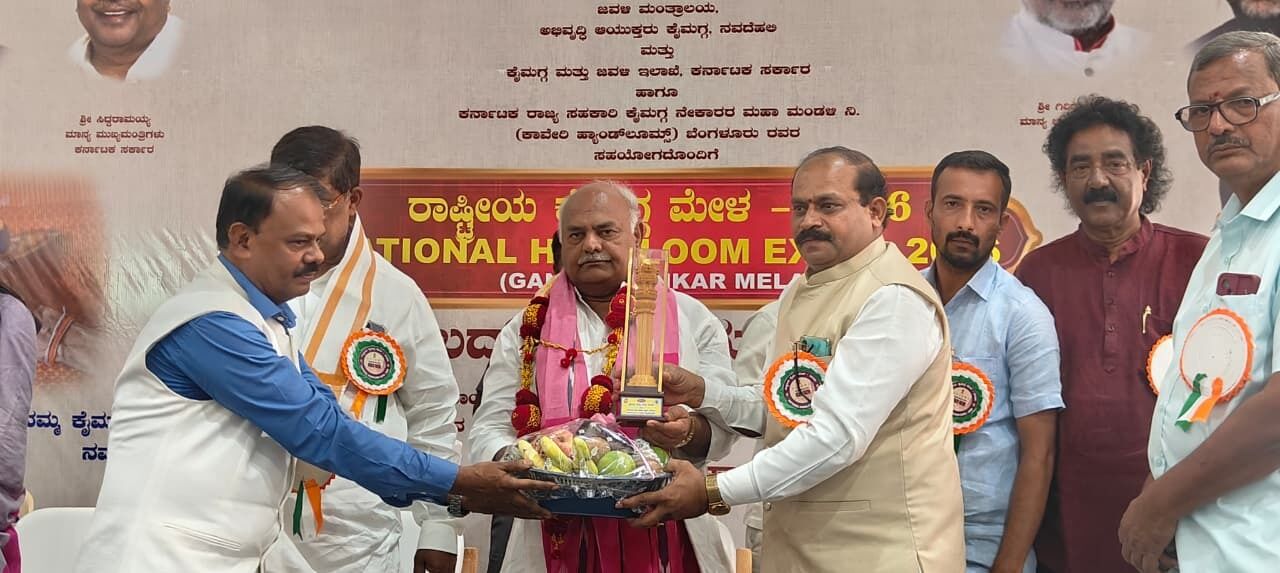
Karnataka will embed a range of supportive measures for the handloom sector within its forthcoming policy, the state’s minister for electricity and textiles, Shivananand Patil, announced at the opening of a national handloom fair in Bengaluru. The 15-day fair, organised by the state’s electricity and handloom departments, begins at Rani Abbakka Maidan in Mahalaxmi Layout.
Karnataka handloom policy to include targeted financial and power support
Patil said the new Karnataka handloom policy will incorporate complementary provisions designed to foster innovation and strengthen livelihoods in the handloom industry. The state has already increased direct financial aid under the Nekara Samman scheme from ₹2,000 to ₹5,000 per beneficiary. In 2024–25, the government credited ₹58.69 crore to the bank accounts of 1,17,459 weavers. For 2025–26 the administration has earmarked ₹60 crore to cover 120,000 handloom and power-loom workers, of which the first tranche of ₹29.99 crore was disbursed by direct benefit transfer at ₹2,500 per beneficiary.
To encourage higher education among the children of weavers, the state provides student stipends. In 2024–25, 2,843 students received a total of ₹1.65 crore, and in 2025–26 so far 1,137 students have been granted ₹62.62 lakh.

Patil also emphasised measures to boost sales of handloom products. The government offers a 20 per cent discount on eligible purchases, and it allocated ₹5.04 crore in 2024–25 and ₹54.93 lakh so far in 2025–26 to support co‑operative societies and the state handloom board in marketing campaigns and sales incentives.
Power subsidies remain a central plank of the support package. Motors up to 10 horsepower receive a 100 per cent electricity rebate, while motors between 10.1 and 20 horsepower are supplied power at a subsidised rate of ₹1.25 per unit. To date the electricity assistance scheme has seen ₹252.97 crore transferred from the electricity department to the fuel department to sustain the subsidy programme.
Beyond subsidies, the state is investing in infrastructure to modernise the textile ecosystem. The cabinet has approved the release of ₹390.26 crore towards core infrastructure for an integrated textile park in Kalaburagi, a joint venture of the central and state governments. Work is underway on a 180 megawatt power station to serve the park. Officials have completed a survey to supply 12.09 million litres per day of water from the Nandikuru village sewage treatment plant and pipeline design is in progress.
Speaking at the event, Patil said that introducing fresh ideas and new technologies will be essential to secure the future of handloom enterprises. The minister highlighted the government’s multi‑pronged approach that combines direct income support, education incentives, electricity subsidies and infrastructure development.
The fair was attended by several senior officials and stakeholders including MLA K. Gopalayya, Kaveri Handloom president J. B. Ganesh, commerce and industry secretary Rohini Sindhoori, handloom development commissioner K. Jyothi, KASTIDC chairman Chetan and vice-chair Balaji among others. The event will showcase handloom products from across the country and provide a platform for artisans to engage with buyers and policymakers.
Key Takeaways:
- Karnataka will integrate targeted support measures into the new Karnataka handloom policy to energise the state’s handloom sector.
- The state has raised direct financial assistance to weavers and released substantial transfers via DBT to more than 1.17 lakh beneficiaries.
- Electricity subsidies, sales discounts and student stipends are being expanded; a new integrated textile park in Kalaburagi will include a 180 MW power station.
- Allocations totalling several hundred crore rupees have been approved to fund infrastructure and ongoing electricity assistance.