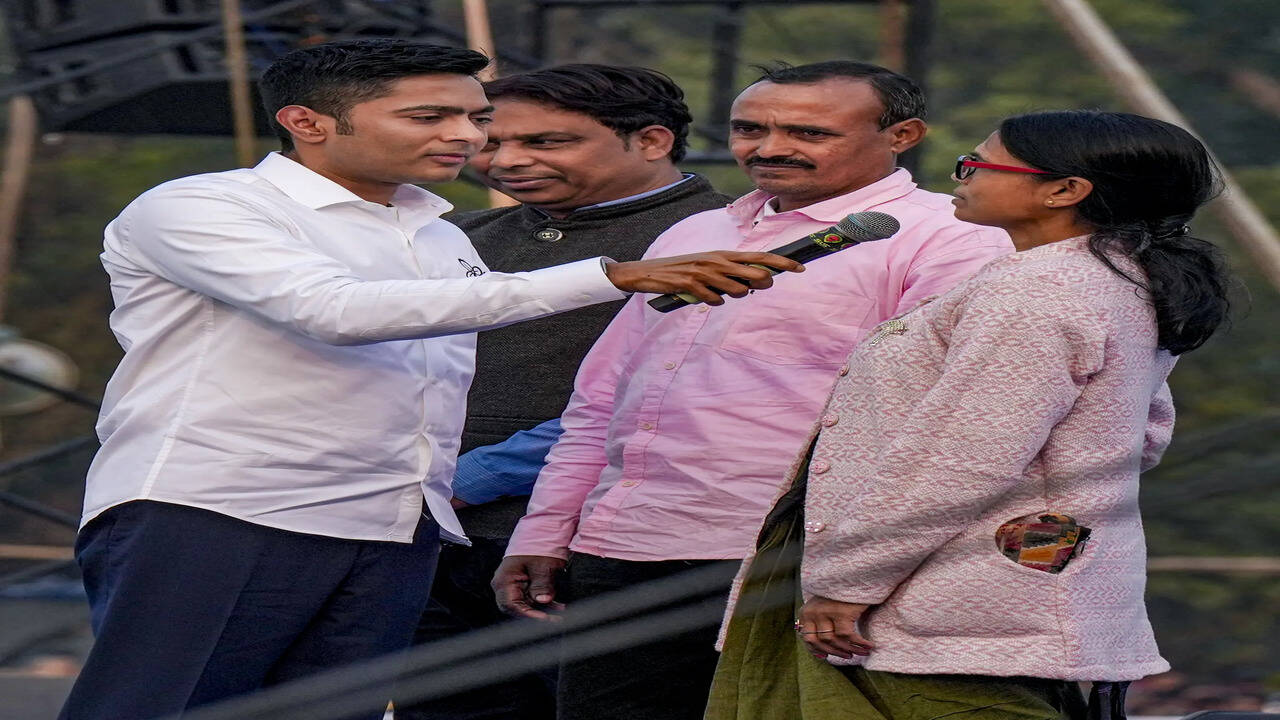
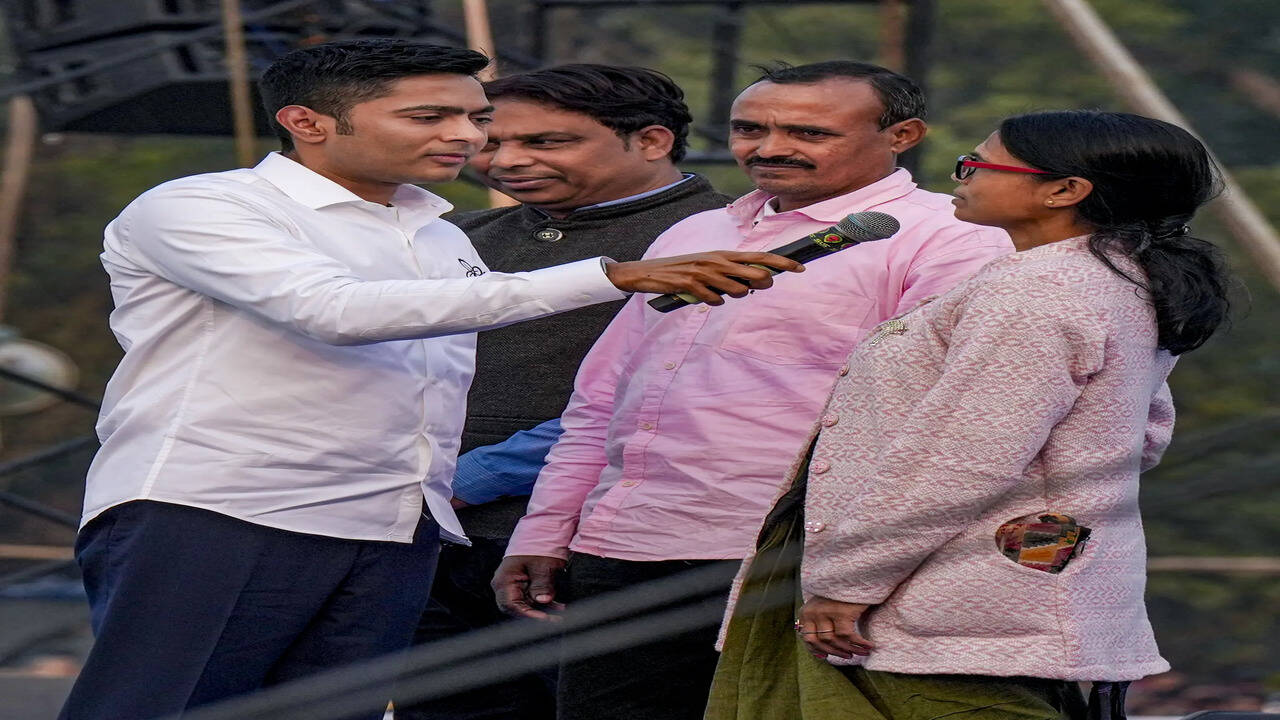
At a campaign rally in Baruipur on Friday, Trinamool Congress national general secretary Abhishek Banerjee put three people on stage who, he said, had been wrongly recorded as deceased in the Special Summary Revision of electoral rolls. The move signals that the SIR voter rolls issue will be front and centre of Trinamool’s campaign for the 2026 West Bengal assembly election.
Banerjee introduced Monirul Islam Molla and Harikrishna Giri from Metiabruz in Kolkata and Maya Das from Kakdwip in South 24 Parganas. All three appeared in good health and told the crowd they had received notices saying they were no longer recognised as living voters. Banerjee said these were not isolated incidents and alleged many more cases of similar errors across the state.
SIR voter rolls scrutiny in West Bengal
Speaking at the rally, Banerjee said his delegation had recently gone to the Election Commission’s office in Delhi to demand transparency. He said he asked Chief Election Commissioner Gyanesh Kumar to publish the list of names deleted as alleged foreign nationals, a request he claimed the CEC refused. Banerjee criticised what he described as an aggressive stance from the Commission and accused the BJP of using the SIR process to intimidate ordinary voters rather than address genuine administrative discrepancies.

“They thought Trinamool would go on the backfoot if they showed slight aggression,” Banerjee told supporters, adding that the party would not be intimidated. He contrasted the public burden of recent government actions with the SIR process, saying the ruling party had previously made people stand in line during demonetisation and now had them queue for SIR hearings.
The Trinamool leader claimed that in South 24 Parganas alone, 24 people who are alive have been shown as dead by the Election Commission. He accused the Commission of sending notices to 1.3 crore people on the grounds of supposed logical discrepancies and questioned why ordinary citizens, rather than party workers or officials, were being singled out to attend hearings.
Banerjee’s intervention highlights growing political heat around the SIR voter rolls project in West Bengal. The controversy raises practical and legal questions about the accuracy of electoral lists, the safeguards in place during revisions, and the mechanisms for redress when errors occur. Opposition parties have long argued that errors or selective removals can disenfranchise voters and alter electoral outcomes, while election authorities maintain that the revision process aims to improve roll accuracy and remove ineligible names.
At present there has been no substantive public response from the Election Commission or the BJP to Banerjee’s specific allegations regarding the three individuals or the wider claims for South 24 Parganas. Observers say the issue is likely to intensify as the 2026 assembly election approaches, with parties making electoral roll integrity a focal point of their campaigns.
For voters named in the SIR process, the immediate concern is procedural: how to challenge the classification and ensure their names remain on the rolls. For political parties, the controversy represents both a campaign opportunity and a test of administrative fairness. As the debate continues, the accuracy and transparency of the SIR voter rolls will remain central to assessments of electoral legitimacy in West Bengal.
Key Takeaways:
- Trinamool leader Abhishek Banerjee presented three people at a Baruipur rally whom he says were marked as dead during the SIR voter rolls revision.
- Banerjee accused the Election Commission and the BJP of targeting common voters and demanded publication of names removed as alleged Bangladeshis.
- He said at least 24 living people in South 24 Parganas were shown as dead and highlighted widespread notices sent during the SIR process.
- The dispute over SIR voter rolls has become a central plank of Trinamool’s campaign ahead of the 2026 West Bengal assembly election.