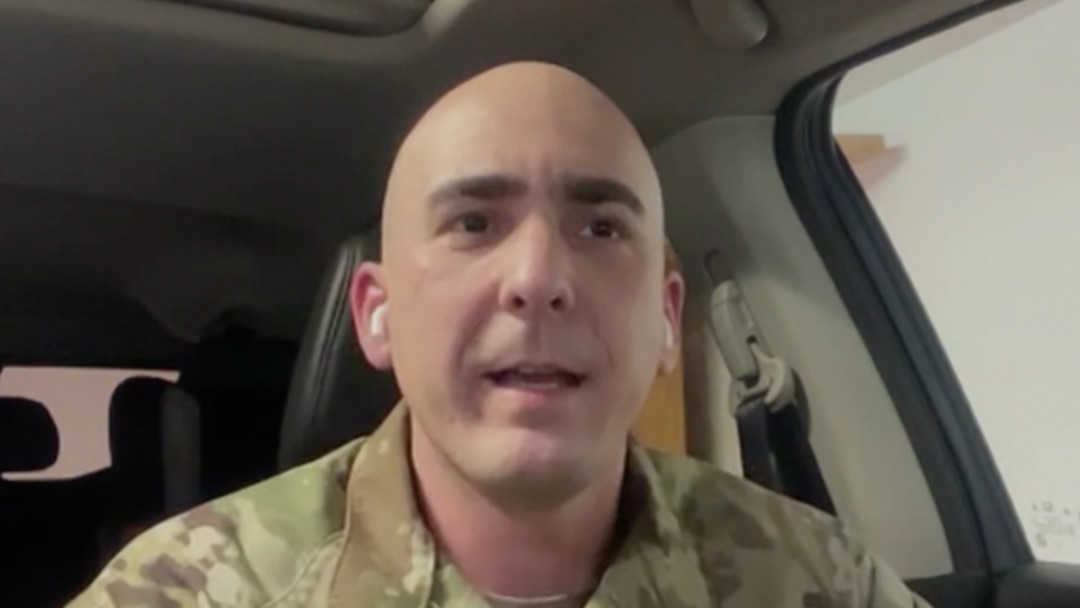
Sergeant Pepe Ávalos, born in Cuba and now an active member of the United States Army, has established a distinct voice within the Spanish-speaking community on social media. Through Instagram, TikTok and YouTube he presents a candid portrait of military life in the United States, addressing questions and misconceptions that many Hispanics have about enlisting and serving.
Cuban in US Army Day-to-day life
Ávalos says his goal is to show the routine realities of service rather than the mystique often portrayed online. He describes a typical day as closer to a regular civilian job than to an austere military stereotype. Mornings begin with physical training, followed by administrative duties or assignments tailored to each soldier’s role, and then a return home to family unless a deployment or mission is underway.
His perspective is shaped by his upbringing in Cuba, where as a child he once imagined a career in the armed forces. That notion faded when he witnessed the repressive functions of the Cuban military. Serving in the US Army, he says, feels very different. He highlights the distinction between forces that control populations and forces that protect and assist civilians. For Ávalos, the American military represents an avenue for stability, professional development and service to his adopted country.

Ávalos has received significant support from followers who appreciate content in Spanish explaining practical matters such as enlistment steps, contractual considerations and life on base. Many viewers tell him they are considering signing a contract or have already begun the recruitment process. He stresses that he does not promote enlistment as a duty but as an option that worked for him and that can offer education, skills and a steady income for newcomers trying to build a life.
Currently stationed in Italy, Ávalos describes the posting as a privileged opportunity. He explains that serving in the US Army can include assignments outside the United States and that, after re-signing for a second term, he had the chance to select his destination. He speaks warmly of Italian culture, food and football, and says his family supported the move.
Ávalos also uses his platform to reach recent Cuban arrivals. He reminds newcomers that many paths are possible in the United States and highlights his own career trajectory, which included gardening, supermarket work and courier jobs before he joined the military. His message to migrants is practical and encouraging: success depends on persistence and effort.
On the subject of current Cuban service members who remain loyal to the regime, Ávalos urges them to seek fuller information and to use the internet to access different perspectives. He frames his comments not as judgmental but as an appeal for greater awareness.
As interest in Spanish-language accounts about the US military grows, Ávalos’s content fills a gap in information and reassurance for many in the Hispanic community. Whether viewed as a recruitment resource or a personal chronicle, his videos and posts offer a window into what life in the US Army can look like for immigrants seeking stability and opportunity.
Key Takeaways:
- Sergeant Pepe Ávalos, a Cuban-born soldier, uses social media to show life inside the US Army and to provide Spanish-language information.
- Ávalos contrasts the role of the military in Cuba with the US, presenting service as a stable career and opportunity for newcomers.
- He is currently stationed in Italy and emphasises that enlistment is a voluntary option, not an obligation.
- Ávalos offers practical advice to recent Cuban arrivals about work, routes into the military and building a future.