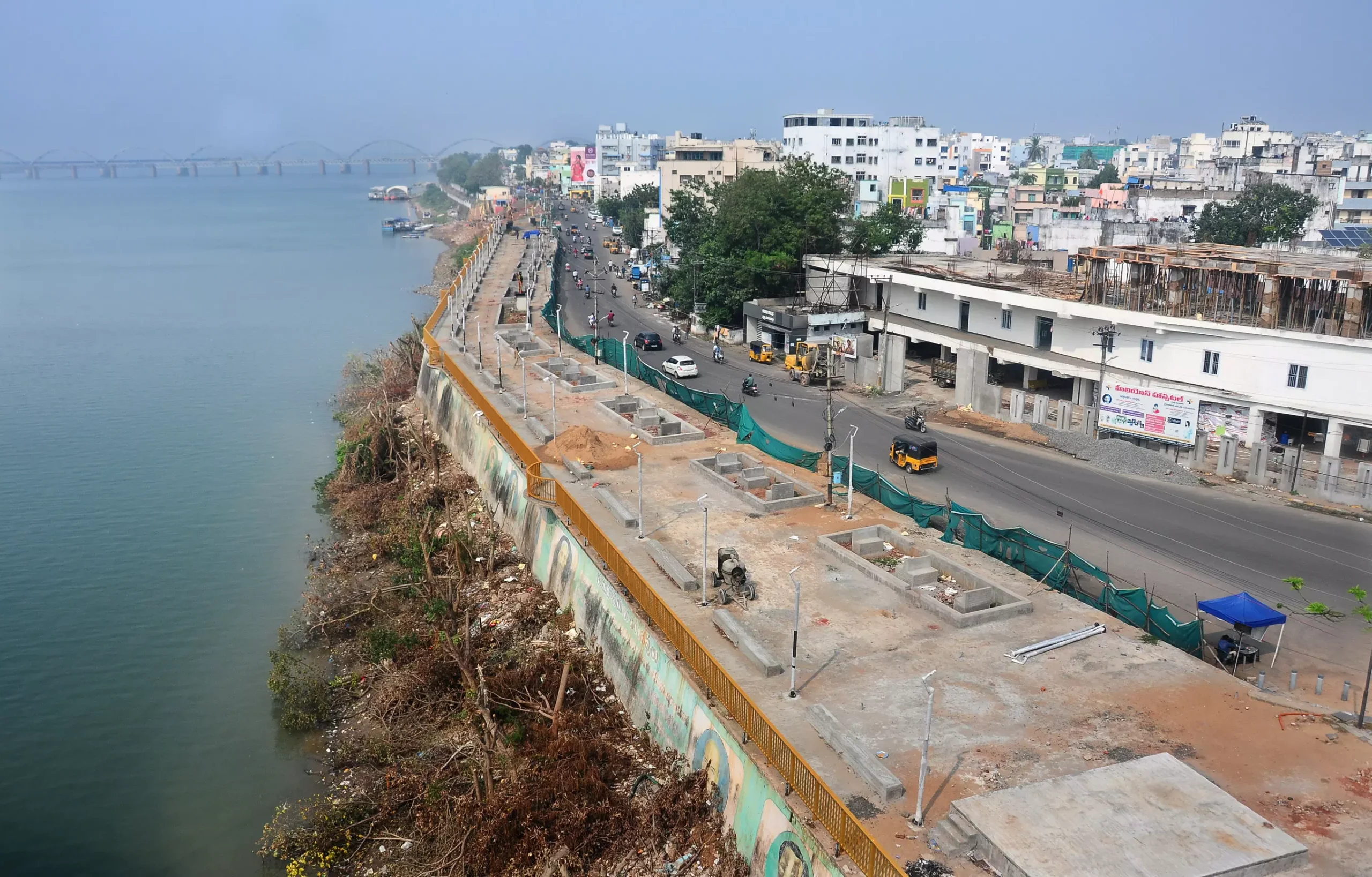
The Andhra Pradesh government has announced plans to hold the Godavari Pushkaralu from 26 June to 7 July 2027, aiming to welcome nearly 10 crore devotees to Rajamahendravaram. While the state has earmarked ₹3,000 crore for the event, officials and residents warn that the city’s current infrastructure falls short of what will be required to ensure a safe and orderly festival.
Preparing for Godavari Pushkaralu 2027: Key Challenges
Rajamahendravaram is the primary venue for the celebrations, but memories of the 2015 Pushkaralu remain stark. On the inaugural day of the 2015 festival, 29 devotees lost their lives in crowd-related incidents. Since then the city’s population has risen from around 375,000 to more than 570,000, yet significant upgrades to transport and public-space capacity have not kept pace.
Main thoroughfares leading to the bathing ghats are congested, with limited room for pedestrians on roads and footpaths. Recent investment in polished footpaths has been undermined by recurring encroachment from vendors, who reportedly pay local intermediaries for space. In some stretches, notably from Lala Cheruvu towards the Pushkar ghat, permanent structures block walkways; their removal and the relaying of footpaths are necessary to create safe circulation routes for devotees.

Senior advocate Muppala Subba Rao warned that concentrated gatherings at a few ghats are a recipe for disaster. He recommended dispersing pilgrims along the length of the river to avoid bottlenecks during auspicious hours. Local residents echo the call for dispersal and for substantive expansion of bathing ghats, choultries and transport hubs so that arrivals by bus and rail can be handled without chaos.
Officials say the state will invite devotees from across India and overseas, yet planning at the district level appears incomplete. Observers suggest that the allocation of funds must be matched by timely operational measures: removing permanent encroachments, enforcing no-vending zones on pedestrian routes, and completing expansion work well before June 2027.
Technology can play a central role in crowd management. The government can deploy state-of-the-art surveillance, real-time monitoring, electronic queuing systems and public information channels to steer devotees to less crowded ghats. Lessons from recent pilgrim events at Tirumala and other pilgrimage centres—where crowd control measures have been tightened—should inform a coordinated approach in Rajamahendravaram.
Telugu film distributor Challa Sankara Rao noted that recent arrangements at Tirumala for Mukkoti Ekadasi offered a positive model and expressed hope that similar standards would be applied for the Pushkaralu. But for the optimism to translate into safety, district authorities must move quickly on land clearance, road expansion, upgraded facilities and a clear operational plan for crowd dispersal.
With months to go before the 2027 Pushkaralu, the focus must shift from headline allocations to concrete delivery on the ground. Proper demolition of encroachments, enforcement against unauthorised vending, expansion of access points and a modern surveillance and communication strategy will be essential if Rajamahendravaram is to host a memorable and safe festival for millions of devotees.
Key Takeaways:
- Godavari Pushkaralu 2027 will draw nearly 10 crore devotees to Rajamahendravaram, but city infrastructure remains insufficient.
- Authorities have allocated ₹3,000 crore, yet encroachments, narrow thoroughfares and vendor congestion threaten safety.
- Experts urge dispersal of crowds along the river, demolition of permanent encroachments and expanded transport and bathing facilities.
- State-of-the-art surveillance and lessons from recent pilgrim events should guide crowd management and logistics.