











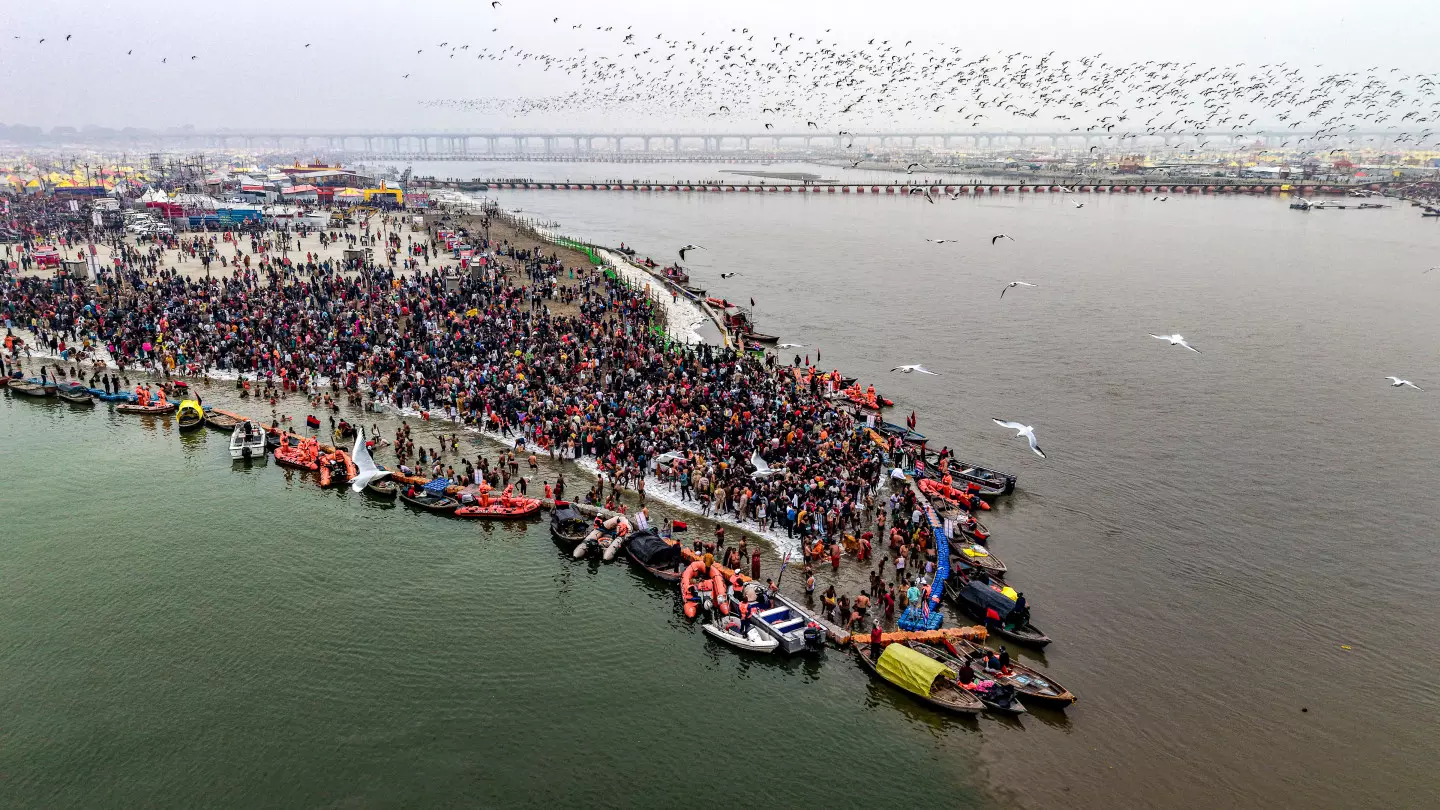
Thousands of devotees braved freezing waters at the Sangam in Prayagraj on Paush Purnima as the month-long Magh Mela began on Saturday, officials said. The festival marks the start of Kalpavas, a period in which many pilgrims live by the river, bathe twice daily and follow strict rituals and austerities.
Magh Mela Prayagraj Key details
Magh Mela authorities reported that about 9 lakh people had taken the holy dip by 10am. Prayagraj Divisional Commissioner Soumya Agarwal said officials expect between 20 and 30 lakh devotees to bathe at the Ganga and the Sangam on Paush Purnima by the end of the day. Rajendra Paliwal, president of the Prayag Dham Sangh, put the evening estimate at roughly 20 lakh, including pilgrims undertaking Kalpavas.
Acharya Rajendra Mishra of the Triveni Sangam Aarti Seva Samiti said approximately 5 lakh devotees began their Kalpavas on Saturday. Despite the biting cold, organisers noted that numbers were likely to swell as the day progressed, and the auspicious bathing window remains open until 4pm.

Logistics and pilgrim facilities
Event authorities have expanded facilities this year to manage the influx. Ten bathing ghats covering about 10,000 square feet have been constructed along the riverfront, and nine pontoon bridges have been installed to improve access. For the first time, a dedicated township for Kalpavasis has been established inside the Magh Mela area. Named Prayagwal, the settlement covers some 950 bighas and sits opposite the Nagvasuki Temple, offering organised accommodation and support for those undertaking the month-long observance.
Local administrators emphasised safety and convenience for pilgrims. Officials said they had prepared transport links and on-site services to handle large crowds, while volunteers and religious organisations coordinated rituals and aarti ceremonies at the Triveni Sangam.
Pilgrims travelling from across India described contrasting experiences. Pooja Jha, who arrived from Kolkata with family, welcomed the relatively lighter crowd early on the first bathing day, saying it allowed a comfortable and orderly dip. Shivani Mishra from Rewa in Madhya Pradesh said the smaller crowd, compared with the Maha Kumbh, made for a more peaceful experience and allowed repeated baths.
Beyond Paush Purnima, organisers highlighted other major bathing dates during Magh Mela 2026, including Makar Sankranti (14 January), Mauni Amavasya (18 January), Basant Panchami (23 January), Maghi Purnima (1 February) and Mahashivratri (15 February). These occasions traditionally draw large numbers of pilgrims and are expected to be focal points for further surges in attendance.
As the festival continues, authorities said they will monitor crowd movement and weather conditions to ensure devotees can perform rituals safely. The opening day’s large turnout underlined Magh Mela’s enduring importance as a site of faith, community and cultural continuity in India.
Key Takeaways:
- Magh Mela Prayagraj began on Paush Purnima with lakhs of devotees taking a holy dip at the Sangam.
- Authorities reported about 9 lakh bathers by 10am and expect 20–30 lakh by evening.
- Approximately 5 lakh devotees commenced the month-long Kalpavas; a new Prayagwal township and expanded ghats support pilgrims.
- Major bathing dates include Makar Sankranti, Mauni Amavasya, Basant Panchami, Maghi Purnima and Mahashivratri.








