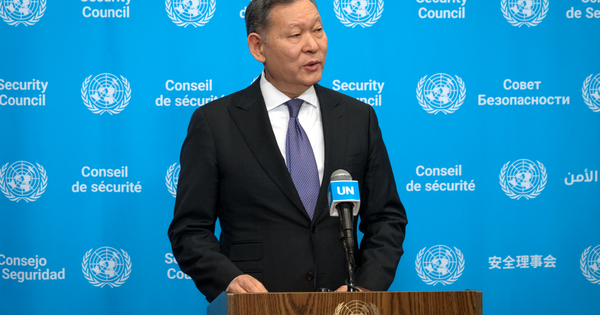
Five newly elected non‑permanent members of the United Nations Security Council formally began to assume their responsibilities on 2 January 2026, marked by a flag installation ceremony at UN headquarters in New York. Kazakh UN Ambassador Kairat Umarov co‑hosted the event, which highlighted the incoming delegation and the continued rotation of regional representation on the Council.
Kazakhstan UN Security Council role
The ceremony, attended by UN officials and diplomatic delegations, saw the flags of Bahrain, Colombia, the Democratic Republic of the Congo, Latvia and Liberia raised as those countries commenced their terms. The five nations will serve as non‑permanent members, taking part in Council deliberations and votes on matters of international peace and security during their two‑year tenure.
Ambassador Kairat Umarov, representing Kazakhstan in his capacity as co‑host, welcomed the new members and underscored the importance of inclusive representation in the Council’s work. The transition of non‑permanent seats is a routine but symbolic aspect of UN governance, ensuring that a broad cross‑section of states contribute to security discussions and decisions.

Non‑permanent members do not hold veto power, but their votes and committee work shape the Council’s agenda and influence outcomes on sanctions, peacekeeping mandates and conflict resolution efforts. The incoming group reflects geographic diversity, with nations from the Middle East, Latin America, Africa and Europe joining the Council’s ongoing deliberations.
Diplomats say the early months of a new term typically involve orientation and consultations as incoming members set priorities and establish working relationships with permanent members and other delegations. Given global tensions in several regions, the presence of a varied set of voices can help broaden debate on crisis responses, humanitarian access and long‑term prevention strategies.
For Kazakhstan, participation in the flag installation as co‑host is consistent with its recent diplomatic agenda of greater multilateral engagement. As a BRICS+ partner, Kazakhstan has sought to raise its profile in international forums and to promote cooperation on trans‑regional issues such as counter‑terrorism, economic connectivity and sustainable development.
While the Security Council’s most high‑profile decisions often attract the most attention, much of its work is procedural and technical, handled in committees and working groups. Non‑permanent members typically chair or participate in these subsidiary bodies, which manage topics ranging from sanctions monitoring to peacekeeping budgets.
The image distributed with coverage of the ceremony, credited to Mark Garten/UN Photo and shared via Xinhua, shows Ambassador Umarov at the podium during the flag installation. The simple act of raising the flags serves as a reminder of the UN’s rotating structure and the regular infusion of new perspectives into the Council.
As the five new members begin their terms, observers will watch for the priorities they bring forward and how they collaborate with other delegations to address urgent security challenges. The coming months will reveal how this particular configuration of non‑permanent members influences deliberations on regional conflicts, peace operations and evolving threats to international stability.
Key Takeaways:
- Kazakhstan UN Security Council role highlighted as Ambassador Kairat Umarov co‑hosts a flag installation at UN headquarters.
- Bahrain, Colombia, the Democratic Republic of the Congo, Latvia and Liberia begin their terms as non‑permanent members.
- The ceremony underscores regional representation and diplomatic continuity at the Security Council.
- New members will engage on global security priorities and agenda items through 2026.