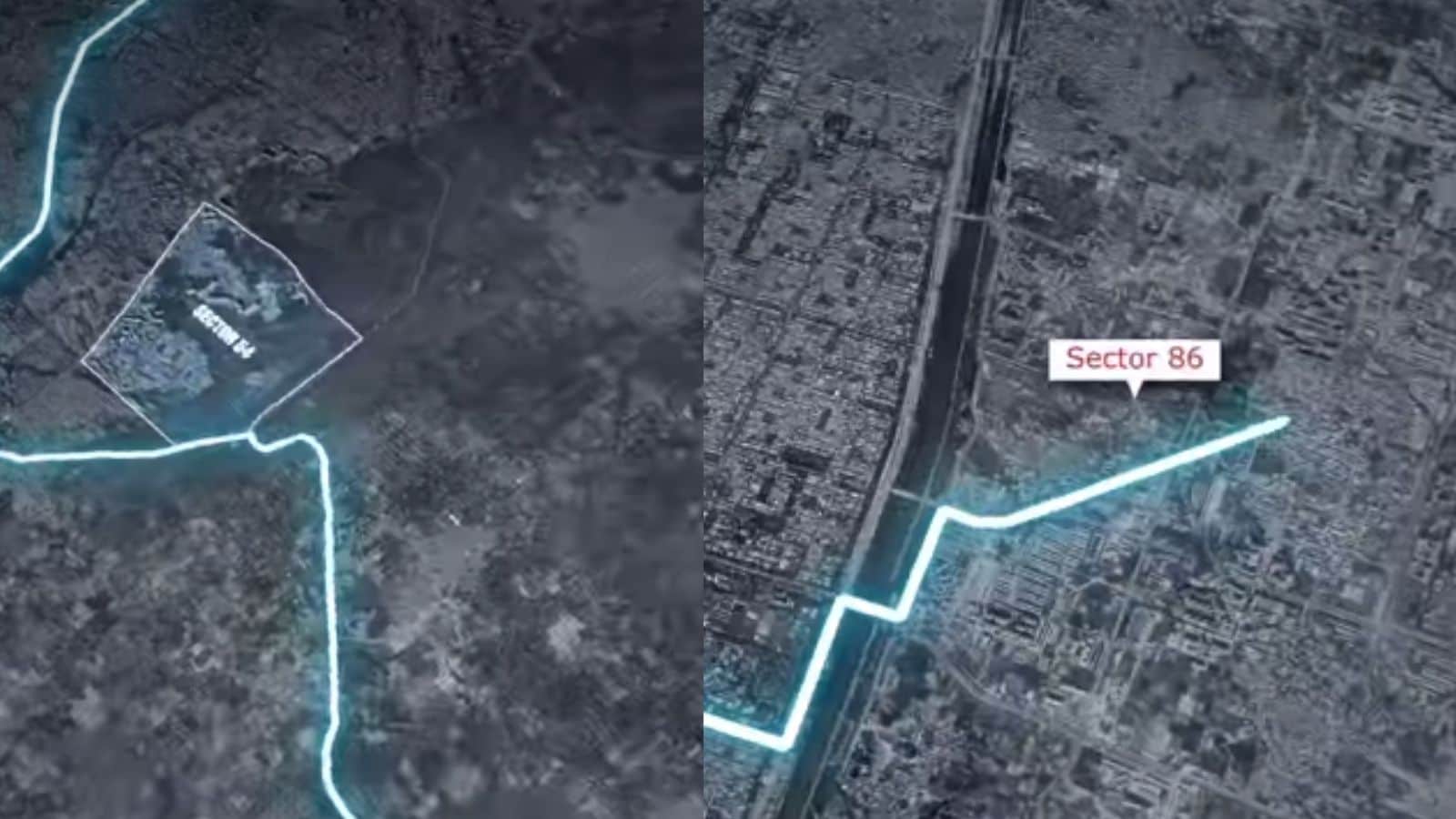
A proposed Regional Rapid Transit System (RRTS) between Gurugram and Noida has drawn widespread attention after a short video outlining the route circulated online. The plan promises a high-speed corridor that would cut travel time between Gurugram and Noida to around 38 minutes, offering a potentially quick alternative for daily commuters who currently face lengthy journeys by road.
Gurugram-Noida RRTS route and connections
The proposed line would begin at IFFCO Chowk in Gurugram and run to Sector 54 before entering Faridabad at Bata Chowk. It would then pass the Sector 85–86 crossing and continue into Noida via Sector 142–168, terminating at Surajpur. The corridor is described as approximately 60 kilometres long and is expected to cost about ₹15,000 crore. Planners envisage a link at IFFCO Chowk to the existing Delhi–Meerut RRTS network, which starts at Sarai Kale Khan, creating a potentially integrated regional system.
Officials are reportedly exploring further extensions. One option under consideration would route a corridor from Sarai Kale Khan to Jewar Airport or from Ghaziabad to Jewar Airport, which could then tie into the Gurugram–Noida line at Surajpur. Another proposed stretch mentioned in the video would run from Sarai Kale Khan through Gurugram and Manesar to Bawal, a segment of roughly 93 kilometres that would further expand regional connectivity.

At its best, the RRTS could ease congestion on heavily used roads, reduce commuting times and support economic activity by better linking employment hubs across the Delhi–NCR. Integrated ticketing and timed connections with other mass-transit systems would be essential to unlock those benefits.
Public response to the video has been mixed. The clip, which has racked up over a million views, attracted comments ranging from hopeful—urging swift government action—to sceptical remarks questioning the budget and the likelihood of timely completion. A number of viewers predicted long delays, while others warned of potential corruption in large infrastructure contracts.
Infrastructure specialists caution that while headline travel times are appealing, the practical outcome depends on detailed project planning. Key determinants will include route alignment, land acquisition, environmental clearances, funding arrangements and procurement methods. Estimates of cost and completion schedule often change once formal feasibility and detailed project reports are prepared.
Financing is a critical factor. The cited figure of ₹15,000 crore is a preliminary estimate and would need confirmation through official studies. Funding could require a mix of central and state government budgets, multilateral loans or public–private partnerships, each with its own delivery risks and timelines.
For commuters, certainty on station locations, interchange facilities and fares will determine whether the new line becomes a preferred option. Transport authorities will also need to demonstrate how the RRTS complements rather than duplicates existing metro and suburban rail services.
As the proposal moves from social media interest to formal consideration, authorities will face pressure to publish detailed assessments and a realistic timeline. If governments commit to transparent planning and robust financing, the Gurugram–Noida RRTS could become a significant addition to the region’s transport network. Until then, residents and analysts alike will watch for official updates and the launch of formal project studies.
Key Takeaways:
- Proposal for a 60km Gurugram-Noida RRTS promising a 38-minute journey could relieve commuter congestion.
- Estimated cost around ₹15,000 crore with links to the Delhi-Meerut RRTS at IFFCO Chowk to improve regional connectivity.
- Plans may extend to Jewar Airport and connect with Sarai Kale Khan corridor, while authorities assess feasibility and timeline.
- Public reaction is mixed, with optimism about reduced travel time and scepticism about cost and project delays.