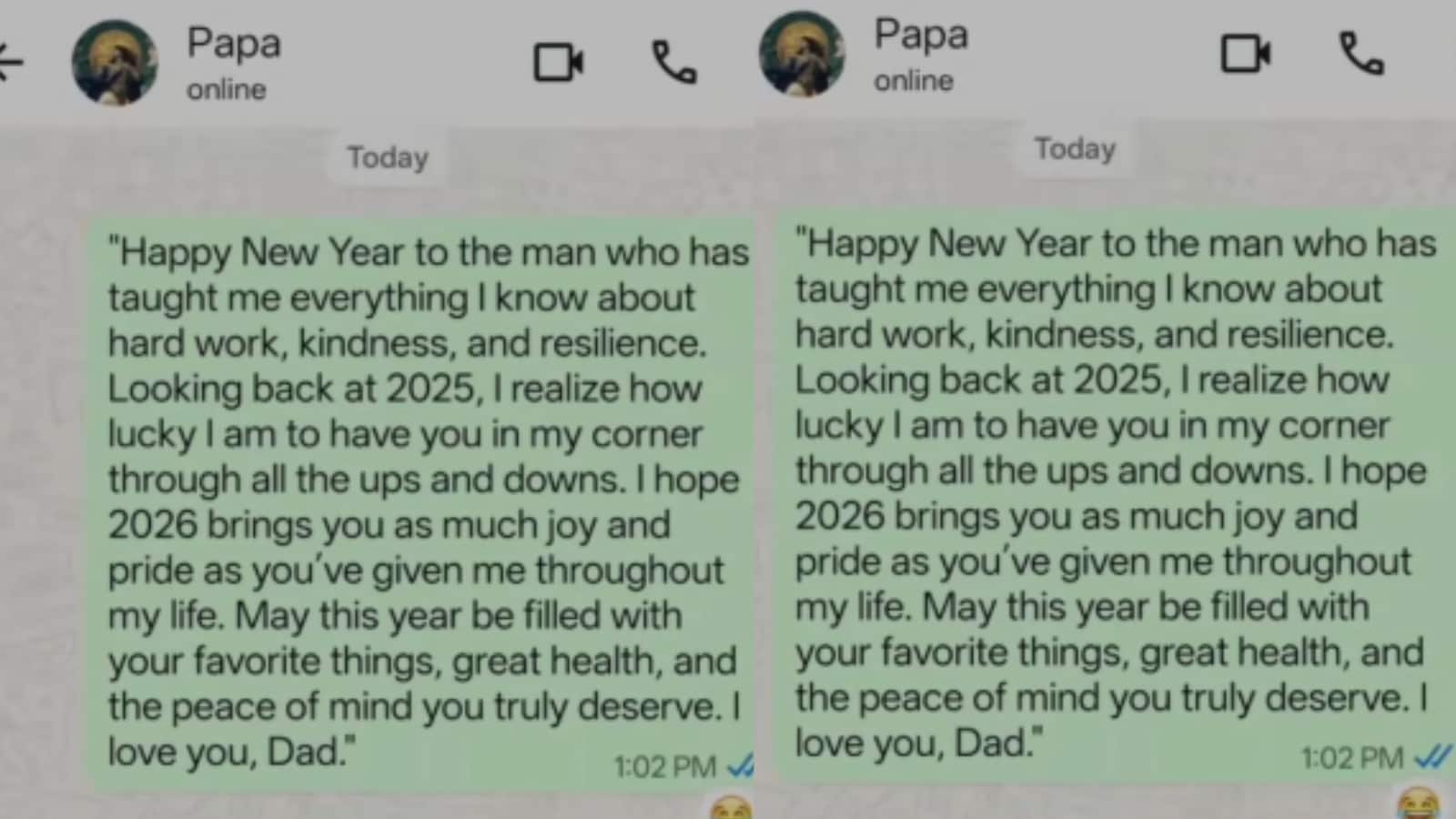
A light-hearted exchange between an Indian father and his child has gone viral after the parent accused the youngster of copying a New Year wish from ChatGPT. The WhatsApp screenshot, shared on Reddit, shows a carefully worded message of appreciation followed by the father’s succinct reply: “ChatGPT,” accompanied by a laughing emoji.
ChatGPT New Year message India
The message, addressed to the father, praised his lessons in hard work, kindness and resilience and expressed hopes that 2026 would bring him health, joy and peace of mind. “Happy New Year to the man who has taught me everything I know about hard work, kindness, and resilience,” the child wrote before adding, “I hope 2026 brings you as much joy and pride as you’ve given me throughout my life. I love you, Dad.”
The exchange was shared online by a Reddit user and quickly attracted humorous responses. Many commentators applauded the father’s ability to spot an AI-crafted message, while others joked that a few deliberate spelling mistakes would have made the note more convincing. Comments ranged from playful roasts to affectionate recollections of messages received from users’ own fathers.

While the clip drew laughter, it also illustrates a broader cultural trend: AI tools such as ChatGPT are increasingly used in everyday tasks, including composing personal messages. In India, where smartphone penetration and internet use continue to rise, these technologies are becoming part of ordinary communication between family members, students and professionals.
Observers noted the generational divide the incident exposed. Older family members often prize imperfection as a sign of authenticity, while younger people may turn to assistance from online tools to craft polished notes. The father’s reaction—brief and teasing—captured that gap and resonated with many users who recognised similar dynamics at home.
Beyond the humour, the episode raises questions about authenticity and digital literacy. As AI-generated text grows more convincing, some worry that the line between sincere sentiment and assisted wording will blur. Others see practical benefits: for people who struggle with expression or who use English as a second language, AI can help convey feelings more clearly.
For journalists and social commentators the story provides a small but telling example of how rapidly adopted technologies intersect with everyday life. It also shows how quickly such moments can spread on social platforms, generating conversation that mixes amusement with reflection.
Ultimately, the viral exchange ended on a warm note of mutual appreciation. Many respondents shared their own anecdotes about fathers who prefer simple, sometimes clumsy messages over more polished prose. For now, at least, the incident remains a humorous reminder that technology and tradition often meet in unexpected ways during family celebrations.
Image credit: News18
Key Takeaways:
- An Indian father discovered his child had pasted a ChatGPT-written New Year wish into a WhatsApp message.
- The perfectly crafted message prompted the father to reply with “ChatGPT” and a laughing emoji, sparking amusement online.
- Netizens joked about adding spelling mistakes to avoid detection and shared their own heartwarming fatherly messages.
- The incident highlights growing use of AI tools like ChatGPT for personal messages and the generational gap in digital literacy.