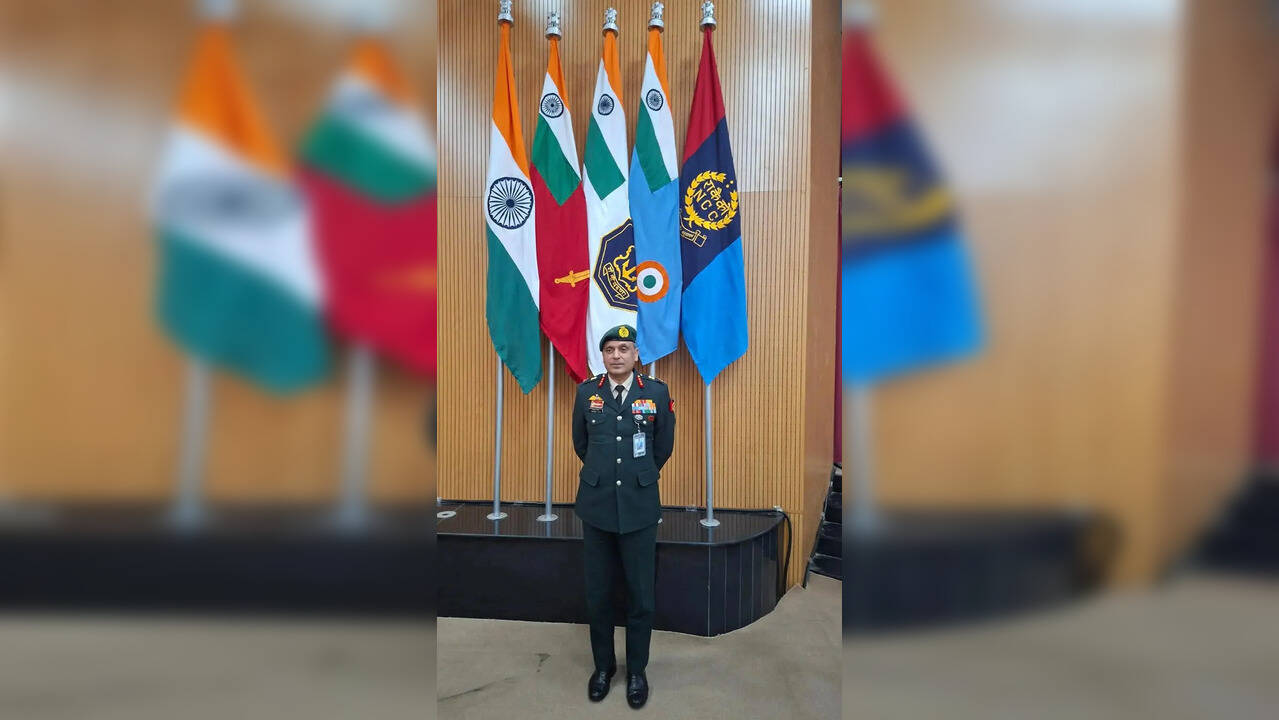
Nearly 75,000 National Cadet Corps (NCC) cadets who served in Operation Sindoor will now receive formal drone training as part of wider efforts to broaden the force’s role in disaster response and community support, the NCC’s Director General, Lt Gen Virendra Vats, announced at a press conference ahead of the Republic Day Camp 2026.
India NCC drone training expands emergency response skills
Lt Gen Vats said the large-scale deployment during Operation Sindoor involved cadets assisting civil administration with medical support, blackout drills, evacuation planning, communications and blood donation camps. As a direct follow-up, the NCC has established four Remote Pilot Training Organisations (RPTOs) to train cadets in operating unmanned aerial systems so they can assist authorities during emergencies.
The decision reflects a growing emphasis on integrating new technologies into the NCC’s toolkit. Drone capability will allow cadets to provide aerial reconnaissance, support search-and-rescue tasks, relay communications in contingencies and assess damage after natural disasters, officials said.

Alongside the drone initiative, the NCC has continued to extend its outreach through the Ministry of Home Affairs’ Vibrant Villages Programme, delivering activities in remote and border areas designed to connect young people with wider national priorities. Under Skill Manthan workshops, 37 Sector Skill Council programmes trained more than 3,000 cadets in vocational skills to improve employability and encourage entrepreneurial thinking.
The Republic Day Camp (RDC) 2026 will host 2,406 cadets from across India, including 898 girls. Two contingents, one male and one female, will march along Kartavya Path on Republic Day. For the first time, contingent commanders will perform sword drills during the parade. Participation this year also includes 127 cadets from Jammu & Kashmir and Ladakh and 131 from the North East Region. Cadets and officers from 25 friendly foreign countries will attend under the Youth Exchange Programme.
Lt Gen Vats highlighted several organisational milestones achieved in 2025. The strength of the NCC has risen from 1.7 million to 2.0 million cadets, with women now comprising roughly 40 per cent of the force. Regular training activity remained robust, with 1,665 Annual Training Camps, six Special National Integration Camps and 33 Ek Bharat Shreshtha Bharat Camps conducted to foster national integration.
Adventure and expedition activity also featured prominently. A team of ten cadets, five men and five women, summitted Mount Everest on 18 May 2025. A special sailing expedition around 21 uninhabited islands of the Andaman and Nicobar Islands is currently underway, dedicated to Param Vir Chakra awardees, while cycling and sailing expeditions have run across islands in Lakshadweep.
In partnership with the National Disaster Management Authority under the Yuva Aapda Mitra Scheme, the NCC will train approximately 94,400 cadets from 315 districts across 28 states by March 2026. The NCC also reported voluntary donation of 35,000 units of blood on its Raising Day, underlining its civic contribution.
Cadets at RDC-2026 will take part in shooting competitions, cultural programmes and the Best Cadet competition. The month-long camp will culminate with the Prime Minister’s Rally on 28 January 2026 and is expected to be visited by senior dignitaries, including the Vice-President of India, the Raksha Mantri and senior defence chiefs.
Officials said the new drone training complements long-standing NCC priorities of youth development, national integration and disaster preparedness, by equipping cadets with practical technical skills they can deploy to support civil authorities in times of need.
Key Takeaways:
- India NCC drone training will equip cadets with remote-pilot skills to support emergency response and civil administration.
- About 75,000 cadets took part in Operation Sindoor and will receive follow-up drone training via four RPTOs.
- RDC-2026 features 2,406 cadets from across India, increased female representation and participants from 25 friendly foreign countries.