











Key Takeaways:
- Kibing Solar’s visit highlights expansion at the Kota Kinabalu Industrial Park and plans to grow production.
- The plant employs over 84% Sabahans and runs community-focused CSR programmes to support local development.
- The state government will tackle Sepanggar Port congestion to ease logistics for Kibing and other firms.

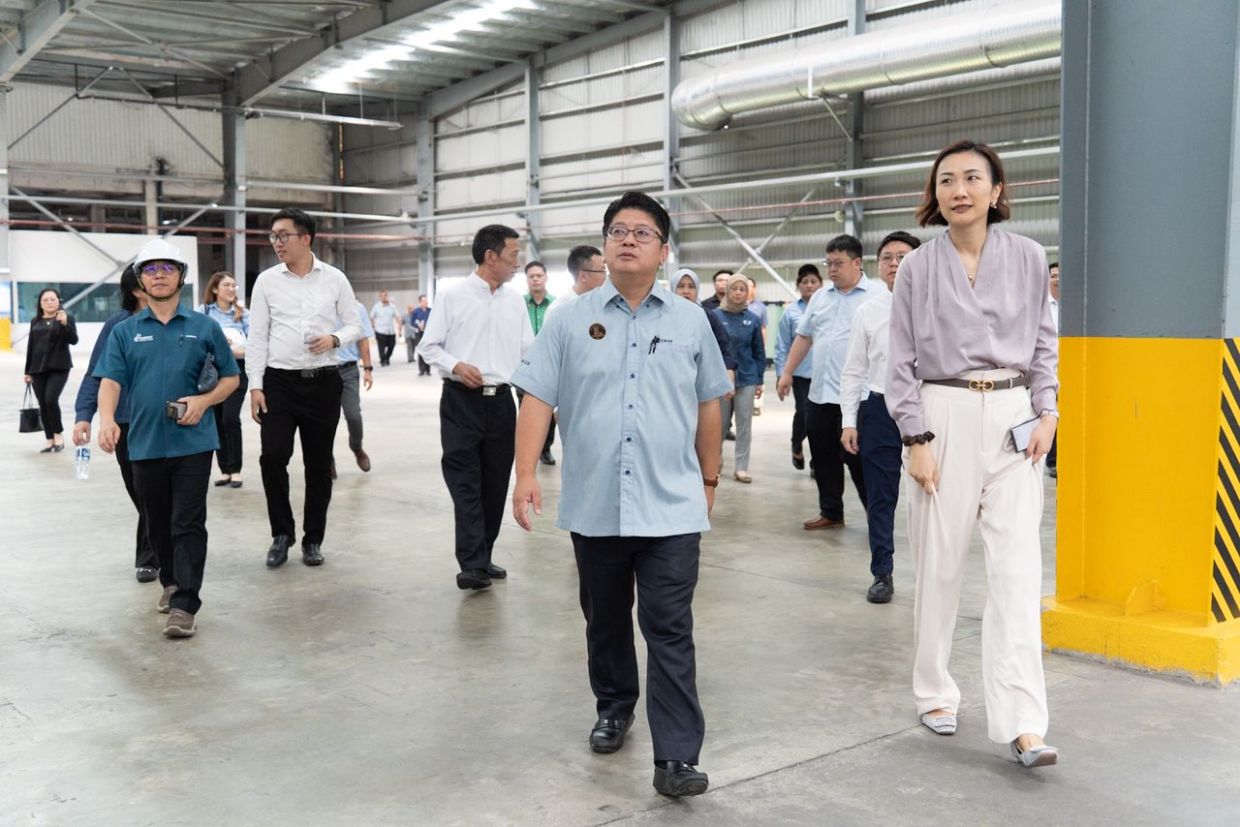
Datuk Ewon Benedick, the newly appointed Sabah Industry, Entrepreneurship and Transportation Minister, visited the SBH Kibing New Solar Energy facility at the Kota Kinabalu Industrial Park (KKIP) in Sepanggar to review operations and expansion plans. The visit, held this week, brought senior state officials and company executives together to discuss progress, workforce composition and logistical challenges affecting the plant.
Kibing Solar Sabah boosts local employment and production
Kibing Solar’s facility in KKIP is a major industrial investment for the state. Minister Ewon praised the company’s emphasis on local hiring, noting that more than 84 per cent of the workforce are Sabahans with ongoing efforts to raise that share further. He said the approach contributes directly to household incomes and skills development in the state.
Company representatives briefed the minister on their operations, recent achievements and plans to expand production capacity. The plant manufactures solar glass, a specialised material used in photovoltaic modules. Expansion at the site would increase local value creation and support downstream renewable energy manufacturing in the region.
Government support and port upgrades to aid industry growth
The Sabah government acknowledged logistic constraints at Sepanggar Port, which have affected Kibing and other businesses in KKIP. Ewon assured stakeholders that the state would take proactive measures with all relevant parties to resolve congestion and improve throughput. The aim is to ensure that expansion plans proceed without avoidable delays.
Improving port efficiency is expected to reduce shipping times and costs for import of raw materials and export of finished goods. Industry sources say that smoother logistics will make KKIP more attractive to further foreign and domestic investors seeking a base for advanced manufacturing in Malaysia.
Community engagement and economic impact
Beyond employment, Kibing Solar has implemented corporate social responsibility programmes that target local communities. These initiatives include vocational training, support for education and community welfare efforts. The minister welcomed these contributions, saying they complement public sector efforts to raise living standards in surrounding areas.
Kibing Solar operates as part of the Kibing Group, a Chinese conglomerate specialising in glass and high-tech solar materials. The group’s investment in Sabah reflects broader trends of Chinese companies establishing manufacturing hubs across Southeast Asia to serve regional and global renewable energy markets.
Observers say the plant’s growth aligns with Malaysia’s strategy to attract high-value manufacturing and to develop a local supply chain for renewable energy technologies. If expansion proceeds as planned, it could create additional skilled jobs and spur auxiliary services in logistics, maintenance and supplier industries.
During the visit, Minister Ewon reiterated the state’s commitment to facilitating industrial growth while ensuring benefits are channelled to Sabah residents. He urged continued collaboration between the company, port authorities and other stakeholders to deliver practical solutions that support long-term investment in the state.








