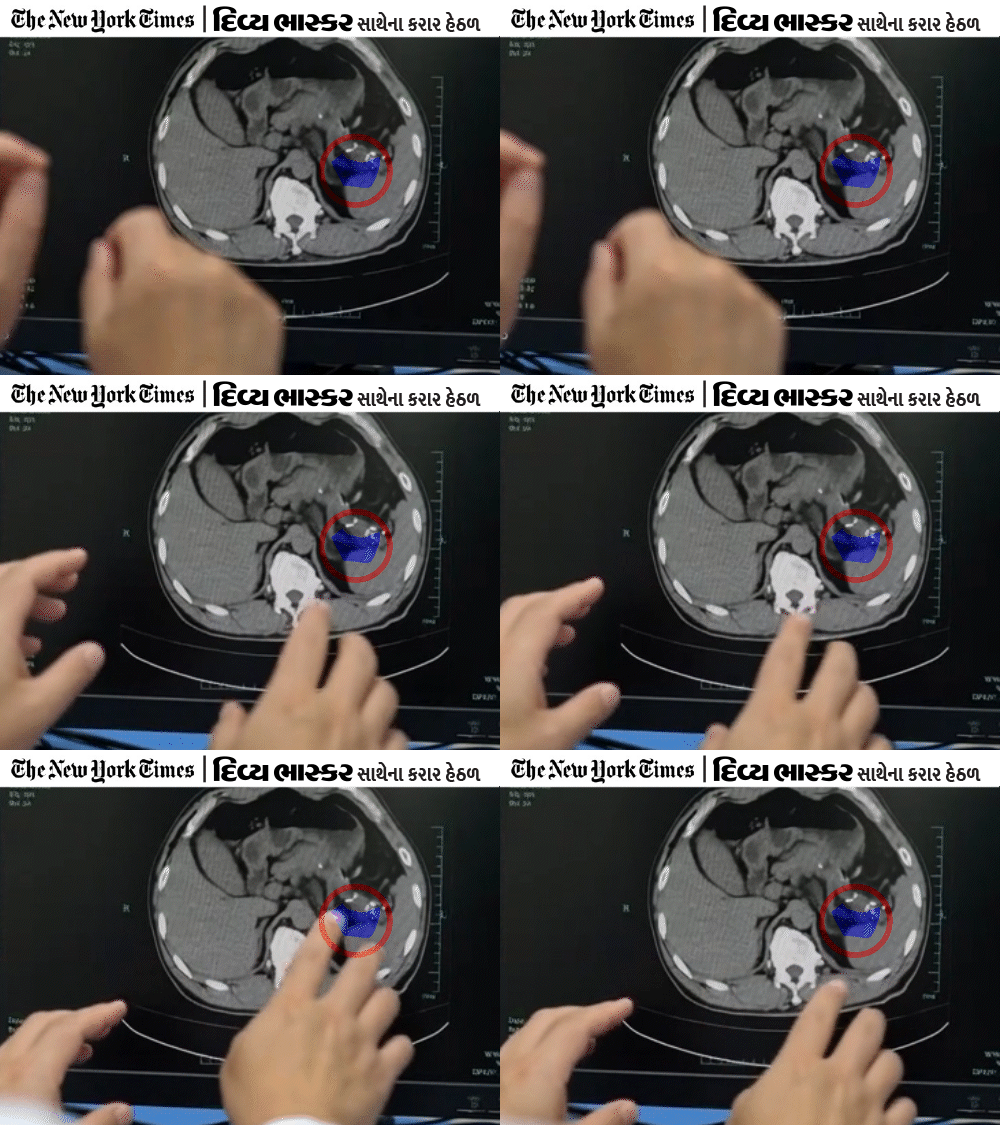
A routine diabetes check in China led to an unexpected early cancer diagnosis after a hospital’s artificial intelligence screening tool flagged suspicious signs on a CT scan. The patient, a 57-year-old farm worker named Kiu Sijun, returned to hospital after a doctor called him back three days following his tests. Surgeons removed a small pancreatic tumour within hours of the follow-up, and Mr Kiu has since recovered and returned to cultivating vegetables on his land.
PANDA AI pancreatic cancer detection clinical results and accuracy
The detection came via PANDA, an AI system developed to identify pancreatic cancer on non-contrast CT scans. PANDA stands for Pancreatic Cancer Detection with Artificial Intelligence and has been used in clinical trials at the People’s Hospital affiliated with Ningbo University since November 2024. According to hospital data, the system has analysed more than 180,000 abdominal and chest CT scans and helped identify 24 cancers, 14 of which were at an early stage.
Researchers say the system has been able to detect tiny changes that are often missed on low-radiation, non-contrast scans. Published work from 2023 reports the tool correctly identified malignancies in roughly 93% of cases during testing. The developers emphasise that the tool is intended to augment diagnostic work and not to replace experienced clinicians.

How the PANDA system supports clinicians
Pancreatic cancer is among the most lethal forms of cancer because symptoms usually appear only after the disease has advanced. Traditional screening approaches often require contrast-enhanced imaging, which exposes patients to higher radiation and is not suitable for routine, large-scale screening. PANDA was trained by mapping tumour locations visible on contrast scans to the corresponding non-contrast images, allowing it to learn subtle imaging patterns that signal early disease.
Clinical staff at the Ningbo centre report that PANDA flagged scans previously considered normal. In several instances patients presented with common complaints such as abdominal bloating or nausea and would not have been referred to pancreatic specialists without the AI alert. In Mr Kiu’s case, the early detection enabled timely surgical intervention, likely improving his prognosis.
Regulatory progress and next steps
Alibaba has said the US Food and Drug Administration has granted PANDA a Breakthrough Device designation, a status intended to accelerate the review of technologies that may offer substantial advantages over existing options. Chinese hospitals are running additional clinical trials to validate the tool across broader patient groups while investigators continue to refine the algorithm.
Physicians involved in the trials note that automated detection does not substitute for clinical judgement. They view PANDA as a screening aid that can prompt earlier referral and intervention when subtle findings appear on routine CT studies. As regulatory reviews proceed and trial data grow, the system may become more widely available, potentially offering a scalable approach to identifying pancreatic tumours at a stage when curative treatment is still possible.
For Mr Kiu and the clinicians who treated him, PANDA’s alert was decisive. He described his understanding of the technology as limited but said the timely warning likely saved his life. The case underscores how targeted AI tools, combined with clinical oversight, can help tackle some of cancer treatment’s most difficult challenges.
Key Takeaways:
- China’s PANDA AI pancreatic cancer detection flagged an early tumour in a 57-year-old diabetic patient, enabling prompt surgery.
- The PANDA tool analysed over 180,000 CT scans in clinical trials and identified 24 cancer cases, 14 at an early stage.
- Research published in 2023 reports the system achieved 93% accuracy in identifying pancreatic tumours on non-contrast CT scans.
- Developers stress the tool supports clinicians rather than replacing experienced doctors as approvals and wider trials continue.