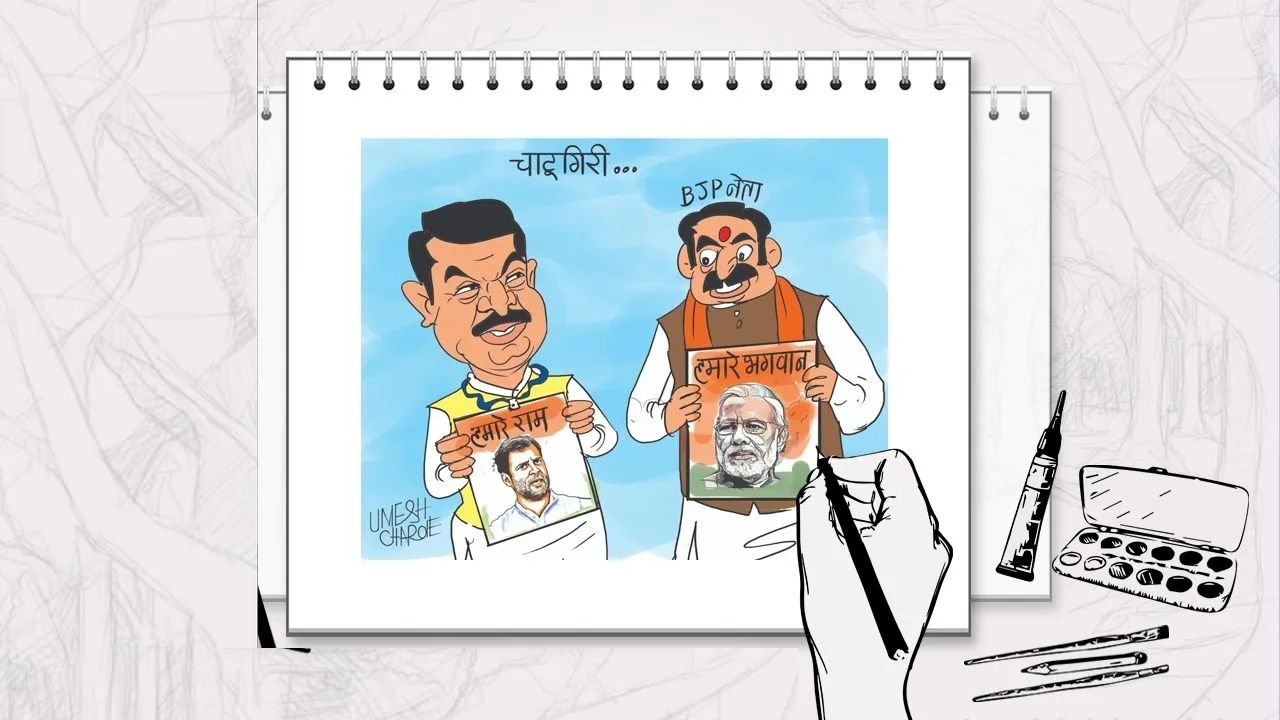
Congress leader Nana Patole recently drew attention by comparing Rahul Gandhi to Lord Ram, saying the former Congress president’s advocacy for the poor and marginalised echoes the Hindu deity’s service to the oppressed. The remark, made in a public setting, has provoked a mix of support and scepticism across the political spectrum.
Rahul Gandhi Lord Ram comparison sparks discussion
Patole argued that Rahul Gandhi’s focus on the economically disadvantaged and Dalit communities mirrors the values associated with Lord Ram. He framed the comparison as praise for Gandhi’s efforts to amplify the voices of those he describes as neglected by mainstream politics. Supporters welcomed the compliment as recognition of long-standing outreach by the Congress, while opponents dismissed it as political flattery.
Political hyperbole is not new in India. The article notes past instances where leaders were likened to divine or heroic figures. During Indira Gandhi’s tenure, a prominent party official equated the prime minister with the nation itself. Similarly, when other parties held office, leaders have drawn biblical or mythic parallels to boost prestige. The piece also recalls a BJP MP’s earlier claim that Prime Minister Narendra Modi had a past-life connection to a historic warrior, highlighting how such comparisons cross party lines.

Analysts say these statements serve multiple purposes. They can reinforce loyalty within party ranks, energise supporters, and create memorable narratives that stick in public discourse. Yet they also carry risks. Critics argue equating a living politician with a deity can polarise voters and distract from substantive policy debate. It can also prompt questions about the separation of religion and politics, a sensitive issue in India’s secular democratic framework.
Reaction to Patole’s comment has been mixed. Some members of the public and party cadres took to social media to defend the comparison as a legitimate compliment, citing Rahul Gandhi’s public interventions on social welfare and caste-based inequalities. Others responded with satire or criticism, suggesting the analogy was excessive and served little purpose beyond headline-grabbing.
Beyond immediate reactions, the episode highlights a broader trend in Indian public life where symbolism and personal devotion often intersect with political messaging. Observers note that invoking religious imagery can deepen emotional engagement among voters, especially in regions where cultural and spiritual identities are closely tied to politics.
For now the comparison remains a rhetorical flourish rather than a policy statement. Whether it alters Rahul Gandhi’s political standing depends on how parties and voters process symbolic language amid pressing issues such as economic recovery and social welfare. As with many such gestures, the long-term effect will be determined more by subsequent actions and policy choices than by a single remark.
The debate reflects ongoing tensions in Indian politics between symbolic appeals and the demand for pragmatic solutions. Patole’s remark has ensured that discussion continues, underlining how carefully chosen words can shape political narratives well beyond the moment they are spoken.
Key Takeaways:
- Congress leader Nana Patole likened Rahul Gandhi to Lord Ram, praising his work for marginalised communities.
- The remark has stirred debate about political flattery and the use of religious imagery in Indian politics.
- Similar historical comparisons between politicians and deities have occurred across parties, illustrating a broader pattern.
- Critics warn such comparisons may blur lines between faith and political strategy while supporters see it as recognition of social advocacy.