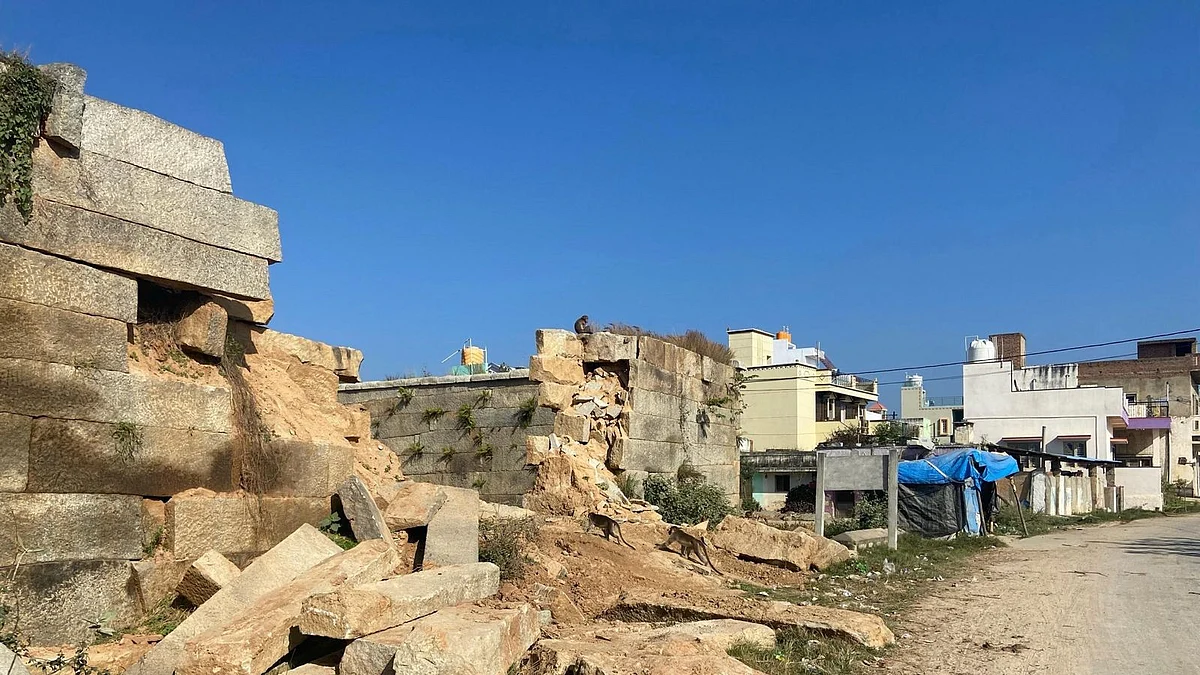
The 800-year-old Virupaksha Swamy Temple at Virupaksha Fort in Mulbagal is showing clear signs of neglect, residents and local officials say. Once designed to mirror Hampi’s famous Virupaksha Temple, the state protected monument now faces collapsing fortifications, rampant vegetation and the consequences of years without coordinated conservation.
Mulbagal Virupaksha Temple heritage at risk
Built under the reign of Devaraya II by the Vijayanagara general Lakkana Dandesha, the temple retains significant historical features, including an inscription dated 1481 CE and a mantapa with intricate carvings. The complex is also among a few shrines, alongside Gokarna, to house two Shivalingas: the Atri Linga and the Atma-Linga. Yet visitors and villagers report that the outer walls and fortifications have been weakened by unchecked root growth and water seepage.
Heavy rain about three years ago triggered the collapse of a section of the outer wall. Locals say the damage has worsened since then as invasive weeds and saplings have taken hold, choking carved pillars and ornamental elements. Without proper fencing, lighting or security, the precincts have increasingly attracted anti-social behaviour, with reported instances of gambling and drinking inside the temple grounds.

In a rare show of communal responsibility, villagers pooled around Rs 1 lakh to start emergency repairs, hoping to secure the site and revive its use for community programmes and annual festivals. Their efforts stalled when officials refused permission for local-led works. “We wanted to save our heritage and use it for community programmes and yearly festivals but were stopped due to lack of official permission,” a resident said.
Kolar’s deputy commissioner told local media that he had visited the temple but that no formal restoration proposal had reached his office. He highlighted the absence of a dedicated archaeology officer at the district level to coordinate conservation work and said any proposal received would be forwarded to the State Archaeology Department. The administrative gap has left the responsibility unclear between state and local authorities, and slowed any remedial action.
Immediate steps and longer-term needs
Conservation experts say immediate measures should include stabilising the remaining fortifications, clearing invasive vegetation carefully to avoid further damage, and installing temporary fencing and lighting to deter anti-social behaviour. Documentation of inscriptions and carvings is essential before work begins, and any intervention should follow recognised archaeological practice to preserve original fabric.
Local stakeholders argue that restoring the Mulbagal Virupaksha Temple would support cultural tourism and local livelihoods, while preserving an important piece of southern India’s Vijayanagara-era legacy. They are urging the State Archaeology Department to fast-track a survey and sanction restoration work that allows supervised community participation.
Without coordinated action, the temple’s architectural and spiritual value will remain at risk. Residents say they are prepared to work with authorities, but need clear processes and official backing to safeguard a monument that links Mulbagal to a broader regional history.
Key Takeaways:
- Mulbagal Virupaksha Temple, an 800-year-old State Protected Monument in India, is suffering structural decay and invasive vegetation.
- Locals pooled Rs 1 lakh for emergency repairs but were blocked by lack of official permissions and coordination.
- Authorities cite absence of a district archaeology officer and no formal restoration proposal has been received.
- The site, which houses two sacred Shivalingas, needs urgent conservation to protect heritage and boost local tourism.