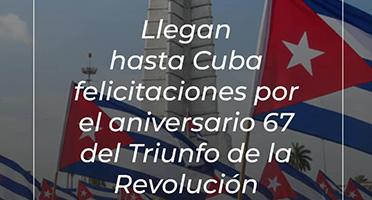
International messages of support marked the 67th anniversary of Cuba’s 1959 Revolution, a milestone President Miguel Díaz-Canel Bermúdez described as proof that the island’s cause remains widely recognised and supported. In a message posted to his account on X, the president thanked foreign governments, organisations and citizens for their solidarity at a time of heightened external pressure and an enduring economic blockade.
Cuban solidarity echoes worldwide
Mr Díaz-Canel said each message and distant embrace matters as Cuba faces what he called a renewed wave of imperial hostility and a strict economic squeeze intended to force shortages and hunger. Despite those constraints, he argued the nation has persevered by investing in science, health, education and the arts, and by facing obstacles with unity and clear objectives.
“We are a people who have confronted attempts to strangle us with more science, more health, more education and more art,” the president said, stressing that the support coming from around the world demonstrates that Cuban solidarity is visible and shared. He vowed that Cuba will continue its struggle with dignity as its standard-bearer.

The anniversary prompted responses from a range of international actors who commended Cuba’s history of humanitarian work, notably its deployment of medical personnel abroad and its commitment to social programmes. Supporters described the island as “a nation that shares what it has, and even what it lacks, with more needy peoples,” a portrayal echoed by Cuban officials in their public statements.
Analysts note that such displays of international sympathy bolster Cuba’s diplomatic standing as it seeks to counteract the effects of sanctions and restricted access to global markets. While the blockade has exacerbated shortages and complicated logistics, Cuban authorities maintain that social priorities remain intact and that the government will press on with policies aimed at preserving public services and national sovereignty.
The anniversary also has a symbolic dimension. With the centenary of Fidel Castro’s birth approaching, Mr Díaz-Canel framed the ongoing international support as an encouragement to renew Cuba’s commitment to the principles he left behind: justice, independence and humanism. He described gratitude as a renewed pledge to defend those ideals in the year marking Fidel’s centenary.
For supporters, the narrative of solidarity reinforces existing partnerships and raises fresh diplomatic opportunities. For critics, the event underscores persistent tensions between Cuba and governments that continue to favour a policy of economic isolation. Observers expect both dynamics to shape political and economic interactions in the months ahead.
Looking forward, the Cuban leadership has signalled its intent to continue engaging with friendly nations and international organisations to mitigate the blockade’s impact and to deepen cooperation in healthcare, education and cultural exchange. The president’s message, and the international responses it provoked, illustrate how commemorations can serve both as acts of remembrance and as strategic moments to reaffirm alliances.
Ultimately, the 67th anniversary of the Revolution served not only as a national commemoration but also as an occasion for Cuba to highlight its humanitarian legacy and to rally international backing amid persistent external challenges.
Key Takeaways:
- International messages highlight the enduring strength of Cuban solidarity.
- President Miguel Díaz-Canel thanks global supporters amid intensified economic pressure.
- Cuban institutions emphasise health, education and unity as responses to the blockade.
- The anniversary renews commitment to justice, independence and the legacy of Fidel.