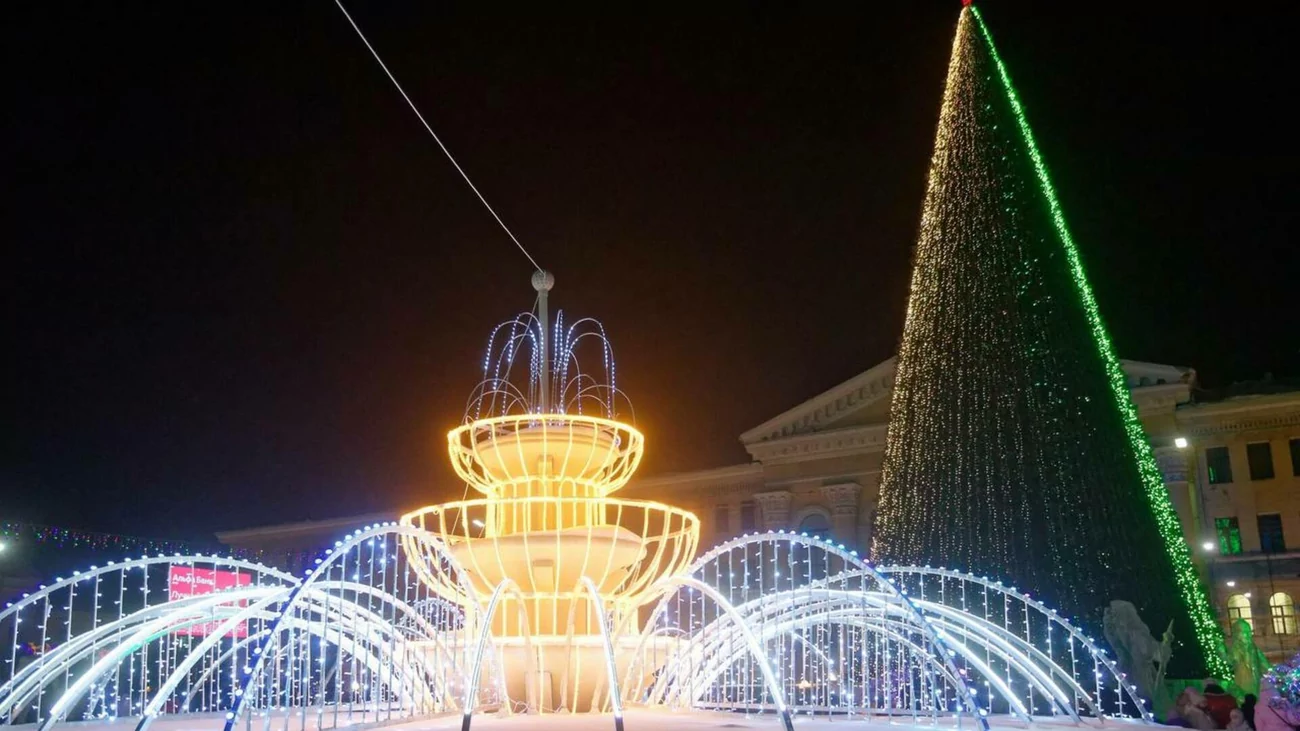
Tomsk has been given a seasonal makeover ahead of the New Year, with the city’s historic wooden architecture and Siberian identity taking centre stage. The transformation focuses on public spaces and traditional motifs, aiming both to celebrate local heritage and to draw visitors during the winter months.
Tomsk New Year decorations
The heart of the city’s display is Novosobornaya Square, where a 24-metre main tree has been erected and dressed in a distinctly Russian style. Around the tree, an ice town has opened featuring delicate sculptures created for the Crystal Tomsk festival. The festival’s filigree carvings have become a focal point for visitors, offering a seasonal attraction that complements the city’s timber-built skyline.
Lighting plays a major role in the scheme. Streets are outfitted with light consoles that echo frost patterns, and LED fountains now glow in public squares. These installations have been placed to enhance the textures of wooden façades and to create striking night-time vistas. The result is a series of illuminated routes that encourage evening walks and photography while preserving the traditional character of Tomsk’s streets.

Planners have also installed themed photo zones near the main building of Tomsk State University and in the Buff Garden. These areas feature garlands and figures of forest animals, offering families and tourists atmospheric settings for seasonal photos. The careful placement of these zones links academic and recreational spaces, helping spread footfall across the city centre rather than concentrating visitors in a single location.
Local officials say the decorations are intended to celebrate Tomsk’s history as Siberia’s oldest regional centre while supporting small businesses during the winter season. Cultural events such as the Crystal Tomsk festival aim to highlight local craftsmanship in ice and wood, encouraging visitors to explore nearby shops and cafés. For many residents, the installations also provide a morale boost during the long winter months, adding colour and light to everyday routes.
Tourism operators have noted a rise in interest from regional travellers who prefer short winter breaks anchored by festive programming. The combination of traditional ornamentation and contemporary lighting design offers a distinctive experience compared with larger Russian cities. In particular, the interplay of woodwork and illumination underscores Tomsk’s reputation for wooden architecture, a feature often cited by heritage groups and architects alike.
Practical measures accompany the festive displays. Organisers have positioned attractions close to public transport and maintained pathways to ensure visitor safety in icy conditions. Information points and signage help direct guests to key sites, while local cultural centres run workshops tied to the Crystal Tomsk events, giving visitors a chance to engage with the crafts behind the ice sculptures.
As winter progresses, the city expects the decorations to remain a draw for both day-trippers and longer-stay visitors. By combining heritage-led design with modern illumination, Tomsk offers a seasonal showcase that celebrates its past while creating lively public spaces for residents and tourists alike.
Key Takeaways:
- Tomsk New Year decorations centre on the 24-metre main tree and the Crystal Tomsk ice festival.
- Lighting and LED fountains highlight the city’s wooden architecture and Siberian character.
- Atmospheric photo zones near TGU and Buff Garden boost visitor appeal and local tourism.