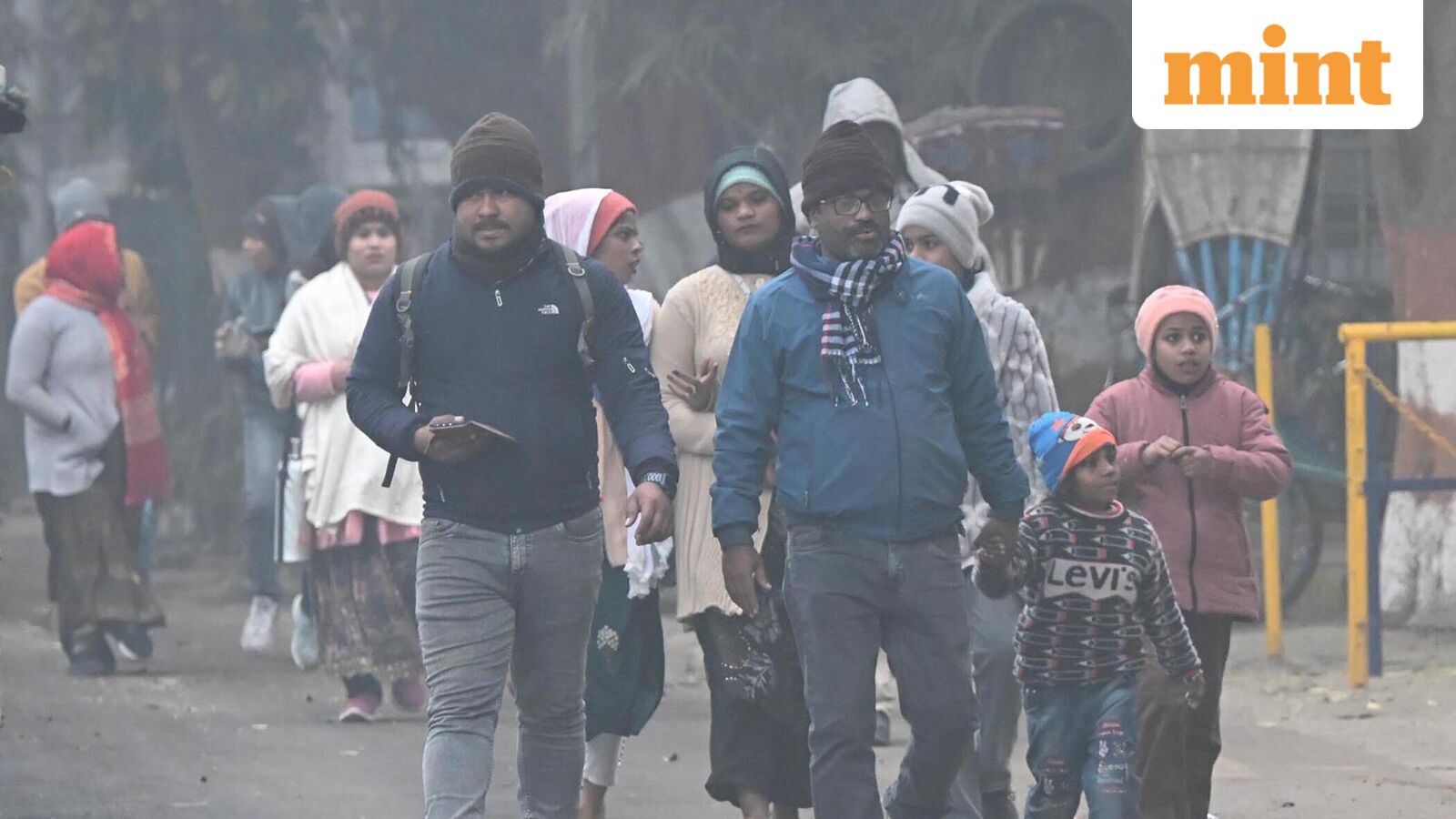
Delhi woke to worsening air quality on Sunday, with the city’s Air Quality Index (AQI) recorded at 298 at about 8am — inside the ‘poor’ category — and forecasters warning conditions could deteriorate further later in the day.
Delhi air quality forecast
The System of Air Quality and Weather Forecasting and Research (SAFAR) said the AQI may approach 390, edging into the ‘very poor’ band as emissions, meteorology and local weather combine to trap pollutants near ground level. The Central Pollution Control Board (CPCB) classifies AQI between 201 and 300 as ‘poor’, 301–400 as ‘very poor’ and 401–500 as ‘severe’.
SAFAR’s Air Quality Early Warning System projected that the capital’s air quality would likely remain in the ‘very poor’ category from Sunday through to 6 January, with similar poor conditions expected for the following six days unless meteorological conditions change.

Fog, cold wave alerts and temperatures
The India Meteorological Department (IMD) issued yellow alerts for most of the Delhi National Capital Region, forecasting moderate to dense fog in many areas during the morning hours. The IMD also warned of isolated cold wave conditions in parts of Punjab, Haryana, Chandigarh and Delhi until 7 January, and said cold spells are likely to continue in parts of Rajasthan around 5 to 8 January.
For Delhi, the IMD expects maximum temperatures of 17°C to 19°C and minimums of 6°C to 8°C in the coming days. The agency noted that minimum temperatures will be near normal while daytime highs are forecast to be slightly above normal by 0.3°C to 2.3°C.
On Saturday, the national capital registered a minimum temperature of 8.1°C at Safdarjung — marginally above the seasonal average — with other observation stations recording values close to normal. A cold wave is declared when minimum temperatures fall 4.5–6.5°C below the seasonal average; current readings remain within a near‑normal range but isolated pockets may see sharper drops.
Health, visibility and public events
Public health and visibility concerns are likely to persist while AQI remains elevated. Residents, particularly those in sensitive groups such as children, the elderly and those with respiratory conditions, are advised to limit prolonged outdoor exertion and consider using air purifiers indoors where available.
Visibility reduction from fog and a layer of smog was visible around central ceremonial areas as Republic Day rehearsals continued at India Gate. Parade participants and security personnel proceeded with preparations despite the hazy conditions, while authorities keep monitoring weather and pollution forecasts to ensure safety and contingency planning for upcoming national events.
Officials have urged continued vigilance over the coming week. With forecasts pointing to persistent poor air quality and intermittent fog and cold conditions, residents and event organisers should stay updated with advisories from SAFAR and the IMD and follow public health recommendations.
Key Takeaways:
- Delhi air quality remained in the ‘poor’ category with an 8am AQI of 298 and SAFAR warning it could near 390 later in the day.
- IMD issued yellow alerts for moderate to dense fog and forecast isolated cold wave conditions in parts of Delhi, Punjab and Haryana through 7 January.
- Temperatures are near normal at night but daytime highs are expected slightly above normal; visibility and public health may be affected by persistent smog.
- Republic Day rehearsals continue amid reduced visibility, prompting continued monitoring and public advisories.