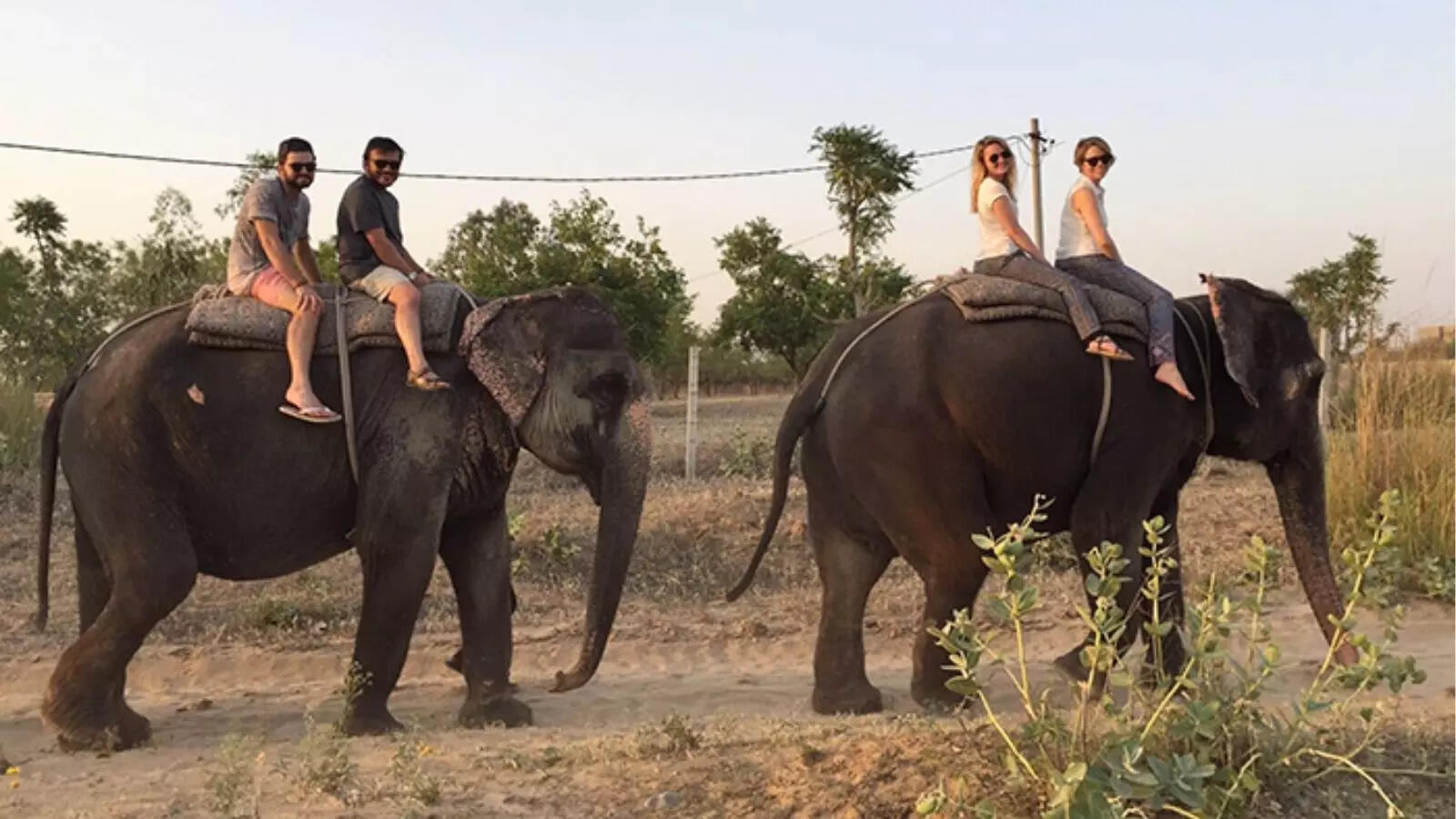
Located near Amer Fort in Jaipur, Elephant Village is Rajasthan’s first village dedicated to combining elephant conservation with tourism. Spread across roughly 140 bigha and organised into 20 blocks, the site hosts a large community of elephants cared for by generations of mahouts. The facility has become a popular destination for domestic and international visitors seeking close encounters with these animals while learning about traditional care and modern welfare measures.
Elephant Village Jaipur conservation and tourism
The village supports one bull and approximately 75 female elephants, each given an individual name to reinforce their identity and cultural importance. Mahouts live on site and take day-to-day responsibility for feeding, training and health monitoring. A veterinary team operates a dedicated hospital and an artificial pond provides a place for daily bathing, both important elements of the facility’s welfare programme.
Tourists can participate in a range of activities. Elephant rides offer a view of the surrounding area and a traditional royal experience associated with Amer Fort. Visitors may also help feed and bathe the animals and take photographs under supervised conditions. Entry to the village is nominally priced to encourage access and support upkeep: Indian citizens pay a modest fee while international visitors are charged a higher admission rate. Separate fees apply for elephant rides, which are run by the mahouts and contribute directly to the elephants’ care and local livelihoods.

The site blends traditional culture with modern amenities. Each elephant has its own quarters and receives daily rations that include sugarcane, millets and bananas. Reported maintenance costs per elephant are substantial, reflecting the expense of nutrition and medical care. The mahouts’ expertise is passed down through families; many trace their service back to the time of the Kachwaha rulers, and today the village provides steady employment for hundreds of families.
Elephant Village stages several high-profile events that draw large crowds. On World Elephant Day, for example, elephants appear in a decorative procession and a public show that mimics a fashion-style parade, adorned with traditional gold and silver ornaments for ceremonial effect. Such spectacles attract both local and overseas tourists and highlight the cultural role elephants have historically played in the region.
Managers stress that visitor interactions are supervised and designed to balance tourism with animal welfare. Regular bathing, veterinary checks and controlled training are intended to keep the animals healthy and accustomed to human contact. The village also serves as an informal cultural centre where the mahout community preserves knowledge of elephant management and passes it on to new generations.
By combining conservation, cultural heritage and sustainable tourism practices, Elephant Village in Amer contributes to local incomes and sustains a unique living tradition. For visitors seeking a distinctive experience close to Jaipur, the village offers an opportunity to see and support elephant care while enjoying a historic setting and regional hospitality.
Key Takeaways:
- Elephant Village Jaipur combines conservation and tourism, housing about 75 female elephants and one male across 140 bigha near Amer Fort.
- Visitors can enjoy elephant rides, feeding and bathing sessions while learning about traditional mahout care and modern veterinary support.
- The site stages high-profile events and a World Elephant Day fashion show, supporting local employment and drawing domestic and international tourists.