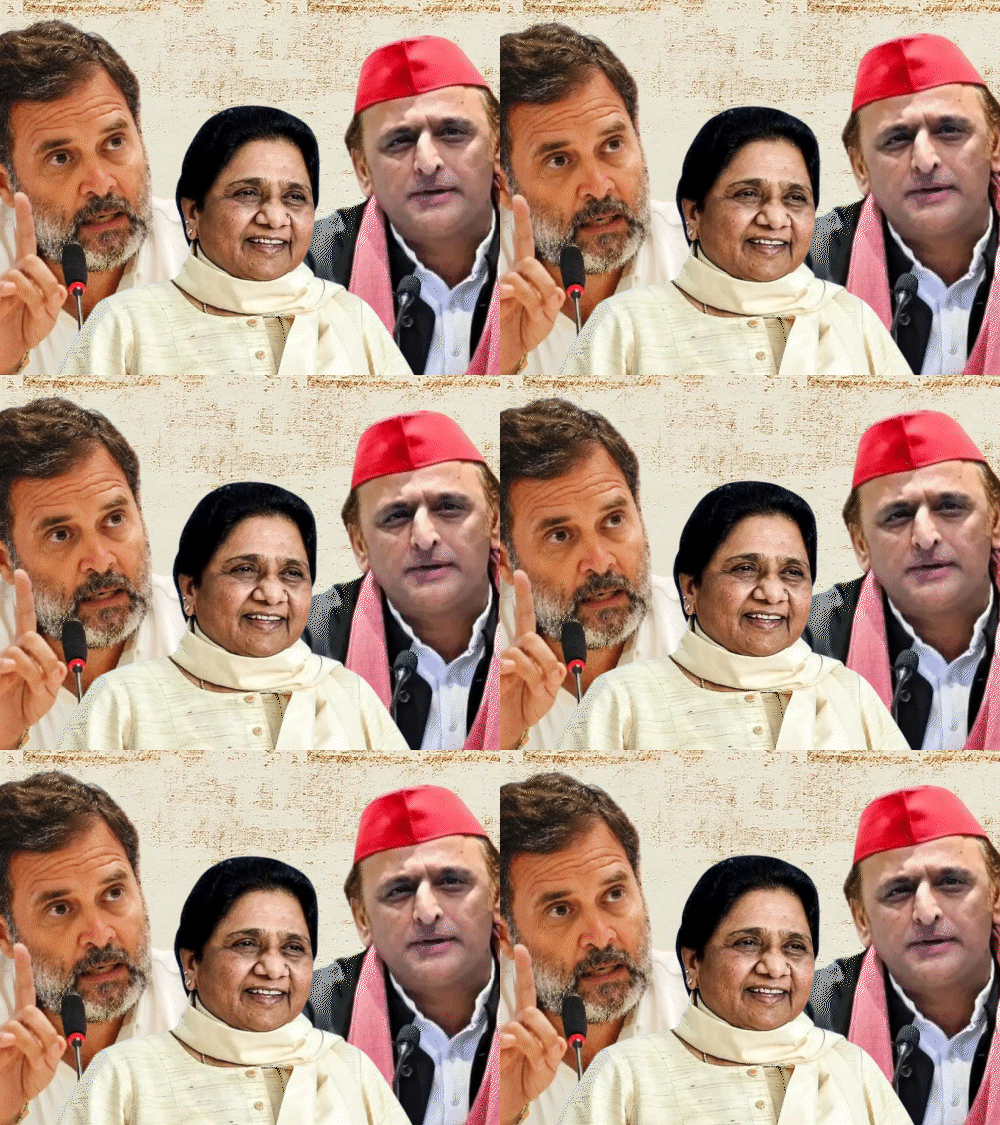
After the recent Bihar election outcome, renewed speculation has emerged in Uttar Pradesh that the Samajwadi Party (SP) might be holding quiet talks with the Bahujan Samaj Party (BSP) while consolidating its understanding with the Congress. Party strategists and local observers say the discussions, if they progress into a formal arrangement, could alter the arithmetic of the 2027 Uttar Pradesh assembly election.
SP BSP Congress alliance Uttar Pradesh and its implications
The prospect of a SP BSP Congress alliance Uttar Pradesh has prompted fresh calculations across party headquarters. For the opposition, the appeal is clear: a united front could combine the SP’s core Yadav support, the BSP’s Dalit base and the Congress’s broader appeal among urban and other swing voters. For the ruling Bharatiya Janata Party (BJP), the danger lies in a more cohesive vote against it in several key districts.
Senior state leaders, speaking on condition of anonymity, said the Bihar verdict has encouraged exploration of seat-sharing formulas but warned that old rivalries and ambitions remain obstacles. The BSP and SP fought several sharp contests against one another in the past, and integrating organisational structures across districts will be a complex task.

Analysts point out that Karnataka and other states have shown the benefits of tactical alliances in multi-party contests, but Uttar Pradesh’s size and social complexity make any alliance a high-stakes endeavour. If the SP, BSP and Congress agree on a workable arrangement, even partial seat coordination could influence results where margins are thin.
Vote-transferability among supporters will be crucial. The SP’s consolidated Yadav vote and the BSP’s traditional Dalit vote have in previous contests moved unevenly when asked to back other parties. Political consultants say disciplined local leadership and clear seat allocations would be necessary to realise effective vote transfers.
At the same time, the Congress will have to decide whether to play a junior partner or demand significant presence in winnable constituencies. For Congress strategists, cooperation offers a renewed chance to revive their standing in Uttar Pradesh, provided they avoid being squeezed out in practical arrangements.
From the BJP perspective, the party’s strategy will likely centre on consolidating its existing coalition of upper-caste, non-Yadav OBC and non-Dalit voters while targeting caste and development narratives to blunt opposition unity. A united opposition could force the BJP to recalibrate campaign messaging and resource allocation across key battlegrounds.
Regional experts caution that newspaper headlines about imminent alliances often overstate the pace of negotiations. Ground-level talks typically extend over months, with preliminary agreements followed by detailed seat-sharing discussions. The role of regional satraps, state election committees and national leaders will all factor into any final decision.
For now, political watchers will monitor public statements from SP and BSP leaders, behind-the-scenes meetings and the reactions of local cadres. If the parties move beyond exploratory discussions, the next questions will concern how many seats each will contest, the sequence of candidate selection and the handling of potential dissidents within party ranks.
Whatever the outcome, the possibility of the SP, BSP and Congress coordinating in Uttar Pradesh will shape pre-election narratives and could influence alliance strategies in other states ahead of 2027. Observers expect more concrete signals to emerge as the calendar moves closer to the assembly polls.
Key Takeaways:
- Speculation mounts over a potential SP BSP Congress alliance Uttar Pradesh after the Bihar results.
- Such a combination could consolidate anti-BJP votes among Yadav, Dalit and Muslim voters and reshape the 2027 contest.
- Political analysts say seat-sharing and regional calculations will determine whether the alliance materialises.