Key Takeaways:
- The AAP Mumbai manifesto sets out four flagship guarantees under the banner ‘Kejriwalchi Guarantee’, promising free water, education and healthcare.
- Key promises include 24/7 clean water with up to 20,000 litres free per household, 1,000 neighbourhood Mohalla Clinics and free electricity up to 200 units.
- Proposals also cover transport reforms with 10,000 electric buses, sanitation drives, two lakh public toilets and strong environmental protections for mangroves and Aarey Colony.
- The party emphasises clean governance and transparent delivery, appealing for a decisive mandate in the upcoming BMC elections.

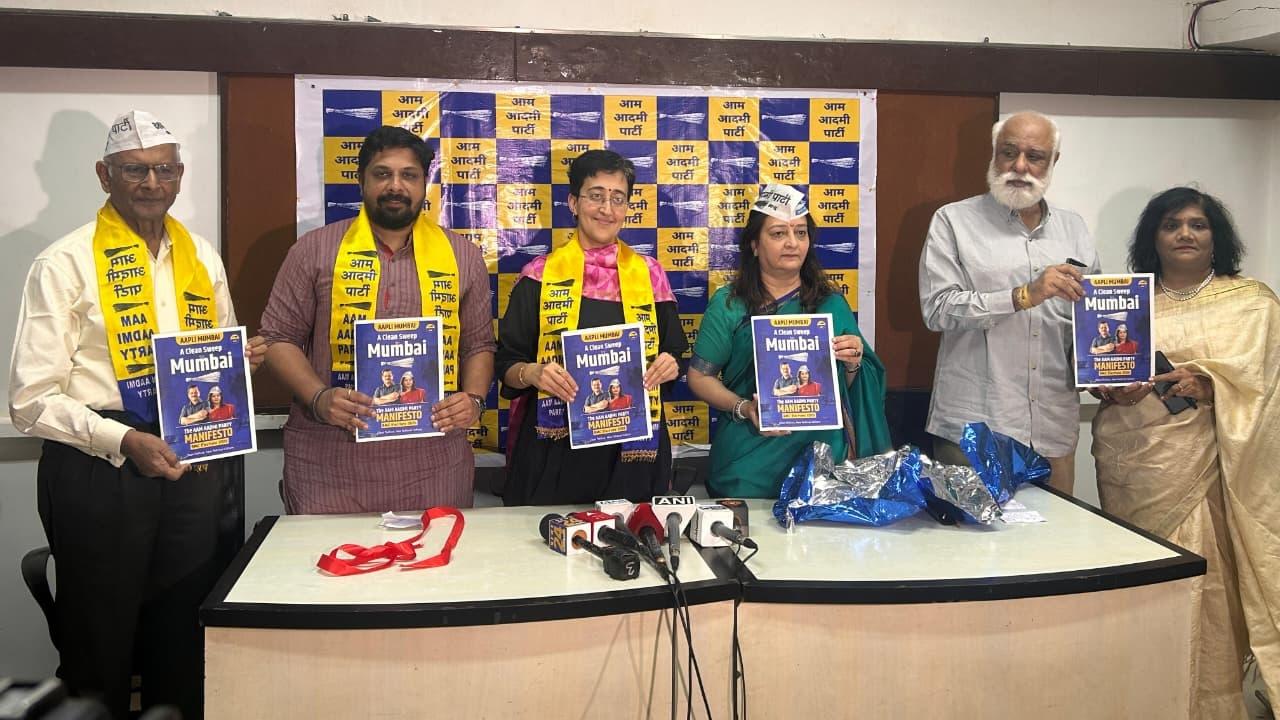
The Aam Aadmi Party (AAP) unveiled its ‘Kejriwalchi Guarantee’ manifesto for the 2026 Brihanmumbai Municipal Corporation (BMC) elections on Tuesday, promising a suite of reforms aimed at reviving Mumbai’s civic services. Presented by former Delhi minister Atishi, the manifesto targets education, healthcare, water supply, electricity and transport, while pledging measures to curb corruption and improve urban planning.
AAP Mumbai manifesto outlines four flagship guarantees
At the heart of the manifesto are four guarantees: round-the-clock clean drinking water with up to 20,000 litres free per household each month; a major upgradation of BMC schools; the establishment of 1,000 neighbourhood Mohalla Clinics offering free consultations, medicines and diagnostics; and free electricity up to 200 units per family, accompanied by free meter installation and support for decentralised solar power.
Atishi told reporters that Mumbai’s civic decline reflected decades of misplaced priorities and corruption, despite the BMC operating with an annual budget of over Rs 75,000 crore. She said the city’s planning had faltered and basic public services had suffered as a result, arguing that honest governance could transform Mumbai into a global model for cities.
Education, healthcare and social measures
The manifesto targets municipal education and primary healthcare as immediate priorities. AAP says it will invest in modern infrastructure and raise budget allocations for BMC schools, which the party claims have seen falling enrolment and closures driven by real estate pressures. In healthcare, the Mohalla Clinic plan seeks to restore accessible primary care across neighbourhoods and reduce pressure on hospitals.
Social measures include monthly financial assistance of Rs 5,000 for low-income pregnant women, free health check-ups, and mental health counsellors in municipal schools. The party has also pledged CCTV coverage in vulnerable areas and specific safeguards to improve women’s safety and child welfare.
Transport, sanitation and environmental commitments
To tackle mobility and urban upkeep, AAP proposes to revitalise the city’s transport utility by inducting at least 10,000 electric buses, offering free travel for women and students, and implementing a scientific road maintenance system aimed at eliminating potholes. The manifesto further commits to ending the commercialisation of BEST depots.
On sanitation, AAP plans a three-pronged approach of awareness, incentives and penalties to enforce waste segregation, the construction of two lakh public toilets and complete mechanisation to end manual scavenging. Environmental measures include protecting and expanding mangroves, halting development on salt pans, strict pollution controls at construction sites and declaring Aarey Colony a reserved forest by merging it with Sanjay Gandhi National Park.
Governance pledge and electoral appeal
AAP Mumbai president Preeti Sharma Menon framed the campaign as ‘Kaam Ki Rajneeti’, or politics of work, contrasting her party’s platform with what she described as opportunistic alliances among established parties. Menon emphasised that AAP had fielded young, educated candidates with records of public service and pledged to run the BMC with transparency and accountability, citing experiences from states the party governs.
The manifesto dedicates its aims to figures such as Chhatrapati Shivaji Maharaj and Dr B. R. Ambedkar, and appeals to voters to support AAP’s broom symbol for a decisive mandate in India’s financial capital. If enacted, the proposals would represent a significant municipal push on public services and urban management ahead of the 2026 BMC elections.