











Key Takeaways:
- Congress has pledged to defend the original MGNREGA after the introduction of the G RAM G Act, framing the fight as an ideological defence of rural rights.
- Rahul Gandhi positions the party as champion of Dalits, daily wage labourers and marginalised groups, aiming to broaden participation in decision making.
- Watchdogs such as LibTech warn that the new law centralises discretionary power and undermines transparency and statutory obligations.
- Critics say the shift risks reversing social protections and call for a mass movement focused on dignity, employment and timely wages.

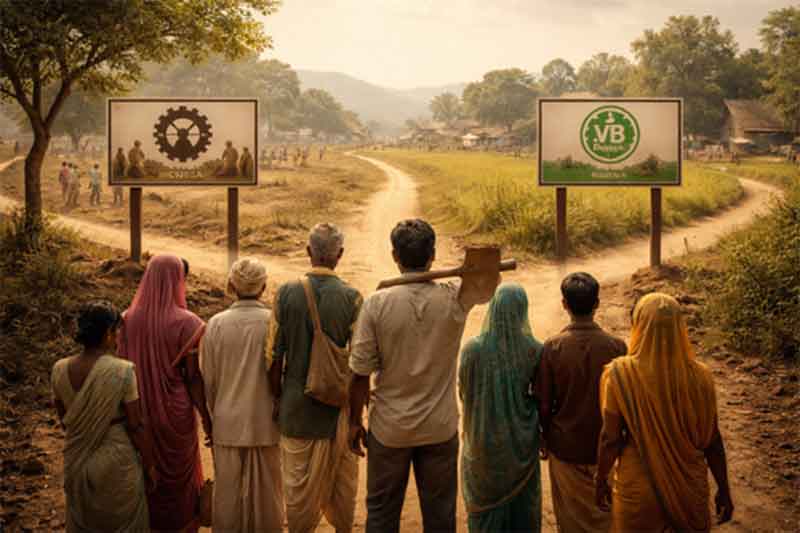
The Congress Working Committee has launched a nationwide pledge to protect the Mahatma Gandhi National Rural Employment Guarantee Act (MGNREGA) after the passage of the G RAM G Act, setting the stage for a broad campaign that mixes policy defence with ideological politics.
MGNREGA movement gains new urgency
On 21 December, Congress leaders committed to restoring the original protections of MGNREGA, arguing that the new G RAM G Act effectively repeals key guarantees and reverses decades of decentralised, demand-driven rural employment policy. The party says the change has a class dimension, disproportionately affecting Dalits, Adivasis and daily wage labourers.
Senior Congress figures frame the campaign not merely as a policy dispute but as an ideological contest with the RSS and the ruling BJP. Rahul Gandhi has emphasised that reviving trust among marginalised communities must go beyond formal representation and secure their participation in institutions and access to wealth.
Claims of centralisation and loss of transparency
Independent organisations have raised alarms about how the G RAM G Act alters implementation. LibTech India, which monitors social welfare delivery, has warned that the new law grants discretionary powers to the Union government over coverage, implementation modalities and disclosures while removing statutory liabilities that anchored MGNREGA. It has also highlighted the risk that the Centre may withhold data on job cards, attendance, funds and delayed wage payments, undermining accountability.
Critics note that the earlier MGNREGA model relied on gram panchayats and gram sabhas to ensure local oversight and dignity of work. They argue that the G RAM G Act weakens those local checks and could reduce the legal guarantee of the right to work.
Political strategy and social implications
Congress describes the campaign as a renewal of grassroots engagement, drawing on Gandhi’s traditions of mass nonviolent protest. The party plans state-level mobilisation and a structured conceptual development programme intended to build awareness and participation among rural communities, particularly women and marginalised castes.
Analysts say the movement aims to convert policy grievances into a broader narrative of dignity, employment and democratic participation. LibTech’s findings that only a small share of rural households received the statutory 100 days of work in 2023–24 add urgency to the debate. Development economists have also questioned whether superficial changes such as raising wage-day ceilings can compensate for constrained budgets and implementation gaps.
Wider context and next steps
The contest over MGNREGA taps into larger questions about social protection and the state’s role in rural livelihoods. The Congress launch signals a willingness to make rural employment a central issue in the coming months, with potential political consequences ahead of future elections. For now, the immediate test will be whether the party’s mobilisation translates into sustained local organisation and whether watchdogs can preserve transparency in programme delivery.
Image credit: Arun Srivastava








