











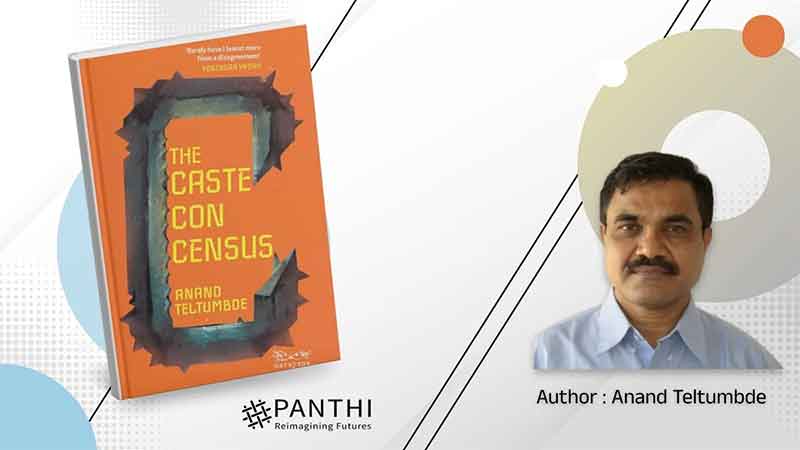
Key Takeaways:
- Anand Teltumbde warns a caste census can depoliticise caste and legitimise inequality if unaccompanied by universal welfare.
- He argues reservations remain necessary but insufficient without quality education, healthcare and secure livelihoods.
- Teltumbde criticises both the BJP for suppressing caste data and the Congress for treating enumeration as a technocratic fix.
- The census could be repurposed to narrow entitlements unless paired with explicit redistributive measures.

Anand Teltumbde has cautioned that a caste census in India could become a political instrument that entrenches inequality unless it is explicitly linked to a programme of universal welfare and redistribution. Speaking in a detailed interview, the scholar and activist said counting caste without changing the foundations of social and economic life risks turning data into a tool of managerial governance rather than a pathway to justice.
caste census must be paired with universal welfare, Teltumbde says
Teltumbde argued that caste inequality is sustained by unequal starting conditions such as poor schooling, inadequate nutrition and insecure housing. He said reservations address the point of selection but do little to equalise the conditions that determine who can compete for reserved positions. Without robust public education, universal healthcare, integrated housing and guaranteed livelihoods, he said, affirmative action will lift only a narrow stratum while leaving the majority structurally excluded.
He traced the present crisis to the state retreat that followed neoliberal reforms in the 1990s. As public provisioning weakened, competition for scarce resources hardened, and reservations were instrumentalised into a political device rather than embedded in a wider redistributive strategy. The result, Teltumbde said, has been the emergence of a small visible beneficiary class while most Dalits and other disadvantaged groups remain marginalised.
political calculation shaped the handling of caste data
The interview also examined why the government did not release the caste component of the 2011 Socio Economic and Caste Census. Teltumbde described the decision as deliberate. He said caste figures would have challenged the narrative of a post-caste Hindu society central to Hindutva politics and could have provoked demands for deeper redistribution that clash with a neoliberal model of governance.
He warned that data can be selectively deployed. If the census is treated as a neutral exercise and not tied to an explicit redistributive agenda, it can be used to argue for efficiency, proportionality or even the rollback of caste-based reservations. The scholar flagged the risk of affluent groups underreporting or contesting classification to erase structural advantage on paper.
reservations remain necessary but are not enough
Teltumbde reaffirmed that caste-based reservations are essential to interrupt monopoly over public positions. At the same time he stressed they are limited. Reservations operate at the final stage of selection and do not address the systemic conditions that produce inequality. Without investment in universal capability building, reservations become compensatory measures that can be politicised and hollowed out.
The interview criticised major political parties for their handling of the issue. Teltumbde suggested the Congress offered the caste census mainly as an electoral strategy and lacked a clearly articulated plan for how the data would translate into policy. He urged parties to connect enumeration to concrete commitments on public goods and redistribution rather than treating data as an end in itself.
As debates over a caste census gather force, Teltumbde’s message is straightforward. A count alone will not dismantle caste. If the objective is justice, the census must be a starting point for a broader programme of social rights, sustained public investment and political struggle to alter the material structures that reproduce privilege.








