











Key Takeaways:
- People’s Broadcasting 85th Anniversary celebrated in Beijing, with senior media leaders pledging deeper innovation and fusion.
- Officials emphasised political direction, cultural service and quality content to reach wider and younger audiences.
- Speakers highlighted the role of new technologies such as AI and Jingcai audio tools in modernising radio and expanding multi platform reach.
- The event reflected a shift from scale to quality and from platform thinking to user thinking in the state broadcaster’s strategy.

People’s Broadcasting 85th Anniversary Highlights Media Evolution
Beijing hosted a high level meeting on 30 December 2025 to mark the 85th anniversary of the founding of China’s People’s Broadcasting. The forum, convened by China Media Group, brought together senior officials, veteran broadcasters, frontline presenters, scholars and loyal listeners to review the medium’s history and map its future direction.
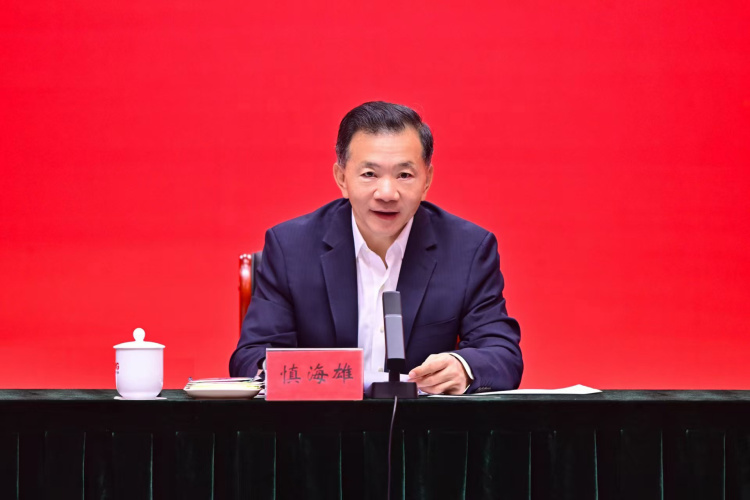
Shen Haixiong, vice minister of the Central Propaganda Department and director of China Media Group, addressed the assembly and set an urgent tone for the next stage of development. He urged radio teams to align with the Party’s political direction, deepen ideological grounding and accelerate the broadcaster’s transformation into an international first class mainstream media organisation.
Wang Xiaozhen, deputy director of China Media Group, chaired the session. Other attendees included deputy directors Xing Bo and Yan Xiaoming as well as a wide cross section of former and current radio personnel, academics and representatives of the listening public.
Speakers emphasised the dual task of preserving the distinctive strengths of radio while adapting to a digital era. Li Jiang, a veteran voice coach who began his career at the original Yan’an Xinhua Radio, reflected on the craft and continuity of broadcast presentation. He said that although tools have changed, the essence of radio remains the human voice and the responsibility to serve audiences with sincerity and relevance.
Frontline presenter Zhao Mengjiao shared experiences from multiple live national broadcasts and described efforts to bring mainstream voices to younger listeners. She underlined practical measures such as using social platforms, smart terminals and new audio technologies including Jingcai voice tools to ensure content reaches diverse audiences more precisely.
Listeners also contributed to the conversation. Liu Zongyong, director of the Beijing Local Records Museum, recalled the medium’s journey from loudspeakers and early radios to car receivers and mobile cloud platforms. He urged producers to use radio’s distinct strengths to promote traditional culture with high quality audio resources.
Academic perspectives cautioned that structural change must be matched by editorial clarity. Professor Gao Guowu of Renmin University noted that over 85 years People’s Broadcasting has maintained party commitment, public service and scientific rigour. He said the broadcaster is now shifting from expansion to quality and from platform thinking to user thinking, aiming to build a richer, more engaging audio ecosystem.
The meeting reviewed milestones since the first broadcast from the Yan’an Xinhua Radio in December 1940 and the establishment of China Media Group in 2018. Delegates highlighted recent initiatives such as services for the Greater Bay Area and Taiwan Strait and the deepening of multimedia integration across broadcast and digital channels.
Speakers proposed concrete priorities: increase production of high quality content, strengthen technology driven transformation, optimise frequency use and scale back duplication, and accelerate talent development for all media platforms. The goal is to sustain radio’s relevance in public life while contributing to the broader cultural and informational objectives of the state.
The anniversary gathering underlined a practical ambition. By combining tradition with innovation, the broadcaster intends to reinforce its leadership in shaping public discourse, expand its cultural reach and deliver clearer service to both older and younger audiences in the years ahead.








