Key Takeaways:
- Trump’s cordial Mar-a-Lago meeting with Zelensky signalled diplomatic pressure on Kyiv and conciliatory language toward Moscow.
- The phrase “Trump Zelensky meeting benefits Russia” captures how US rhetoric and proposed working groups could give Russia strategic breathing space.
- Security guarantees were put in writing for 15 years but depend on congressional approval, while ceasefire deadlock hinders any referendum on territory.
- Analysts warn that talks and working groups may buy time for further Russian advances unless a durable ceasefire is secured.

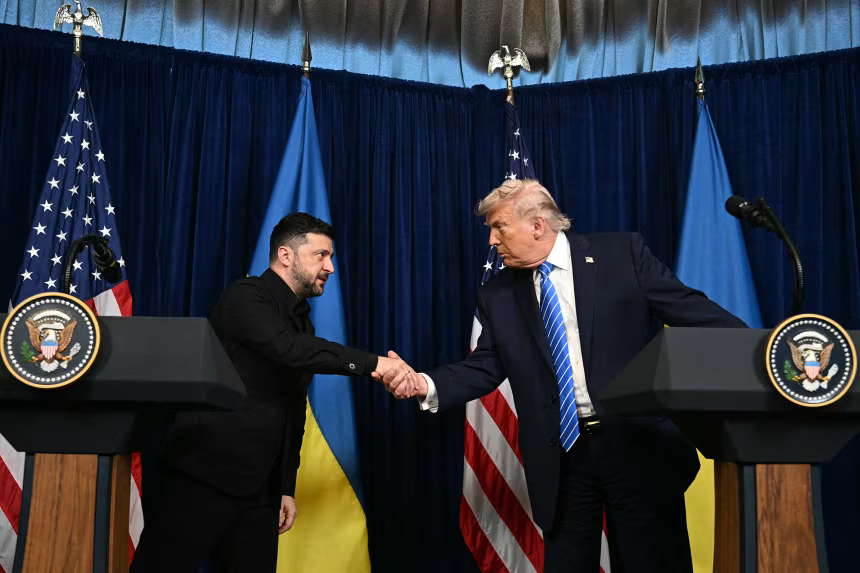
President Donald Trump’s meeting with Volodymyr Zelensky at Mar-a-Lago appeared outwardly cordial, but beneath the pleasantries lay rhetoric that could advantage Moscow. The encounter, their sixth in a year, finished with the US president calling the visit “terrific”. Yet comments that suggested Ukraine might be better off “making a deal now” echoed Kremlin talking points and raised alarms in Kyiv.
Trump Zelensky meeting benefits Russia
The most consequential element of the conversation was Mr Trump’s apparent leaning towards pressuring Kyiv over territorial questions. At one point he suggested territory might be “taken” in the coming months, a line that mirrors Kremlin statements suggesting Ukraine should accept losses in Donbas. The Kremlin noted the similarity. A spokesman said Mr Trump had reminded Ukraine that it was losing land and would continue to lose it, a message Moscow has been keen to amplify.
The effect for Russia is twofold. First, US rhetoric that emphasises negotiations over continued fighting risks legitimising outcomes favourable to Moscow. Second, the removal of a firm US push for a preparatory ceasefire undermines Kyiv’s stated preconditions for any referendum on territorial change. President Zelensky has insisted that any change to Ukrainian territory must be preceded by at least a 60 day ceasefire to allow a referendum. Without that pause, Kyiv’s ability to negotiate is curtailed.
Not all developments were setbacks for Ukraine. For the first time, security guarantees from the United States were put into writing, with a 15 year expiry. Mr Zelensky has asked for a longer term and the guarantees still require congressional approval. The commitments do not include US ground troops, but would commit to backing Europe should European partners decide to deploy forces.
Other elements of the meeting drew scrutiny. Mr Trump praised Mr Putin’s handling of the Zaporizhzhia nuclear power plant, describing the Russian president as “very good” for working to keep it open. That remark came as the International Atomic Energy Agency warned that attacks on Ukraine’s energy infrastructure continue to threaten nuclear safety and that the plant’s grid has been cut off repeatedly since Moscow seized the facility in March 2022.
Diplomatic activity is set to intensify. Adviser-level meetings and a “Coalition of the Willing” gathering in Paris are planned, with Moscow signalling support for talks in multiple working groups. Analysts caution those formats can delay decisive outcomes. In October Mr Trump sanctioned Russian oil majors, a move that briefly damaged Moscow’s revenues and sent oil prices lower. But sanctions have not removed Russia’s ability to press at the front.
On the ground, Ukraine continues to suffer. Regular blackouts hit wide swathes of the country after missile and drone strikes, and Kyiv reported thousands of households without power. Russian advances in the Donbas persist, and comments from Moscow officials reiterating demands that Ukraine withdraw forces beyond Donbas administrative borders underscore the gulf between the sides.
The Mar-a-Lago meeting exposed the fragile arithmetic of diplomacy. It produced written security assurances and renewed dialogue, but also rhetoric that Moscow can frame as vindication. With direct talks between Kyiv and Moscow not yet scheduled and accusations from Russia over alleged Ukrainian strikes, the coming months may determine whether diplomacy delivers a lasting settlement or merely provides space for further military pressure.