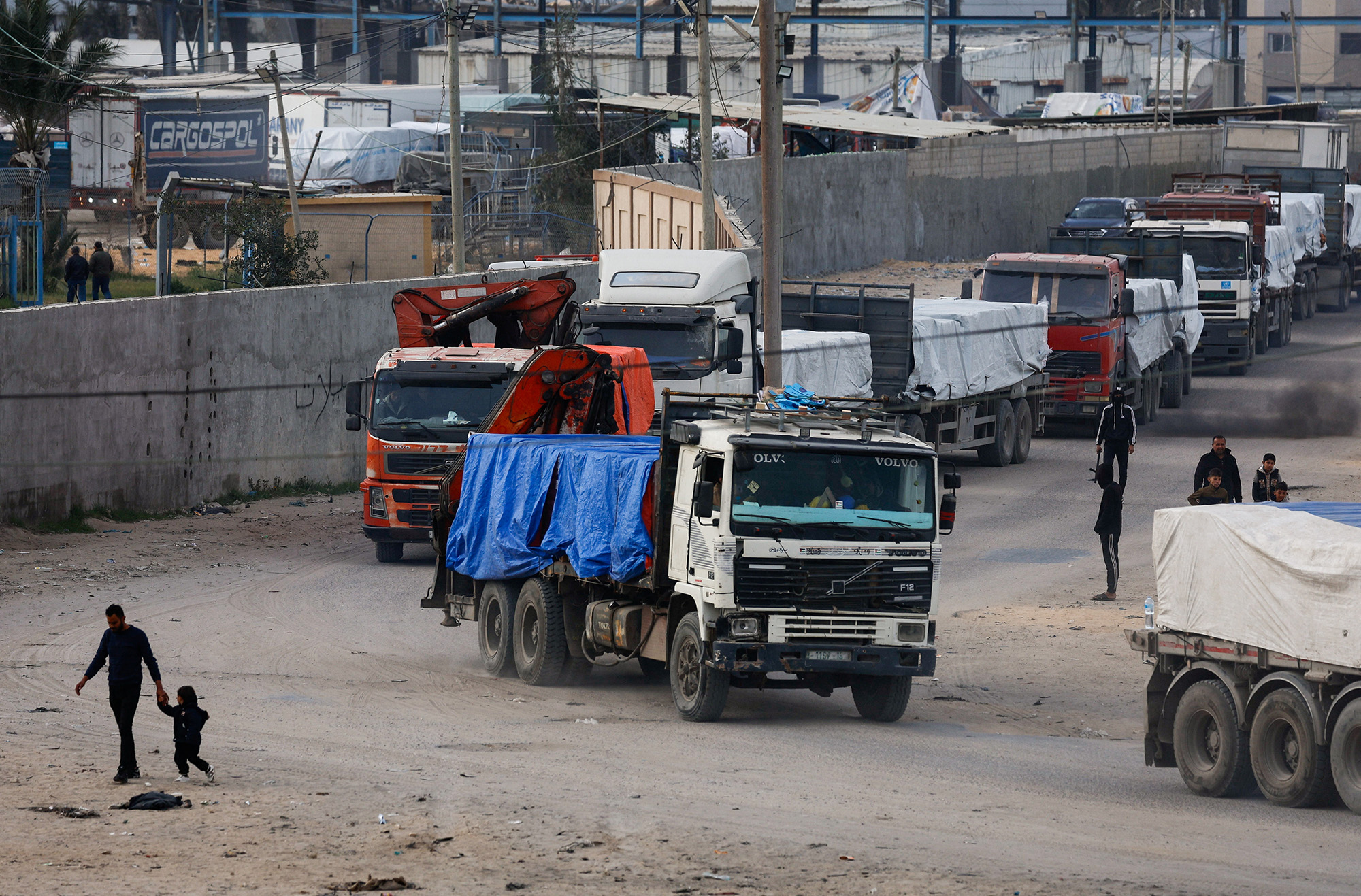
Key Takeaways:
- Egypt aid convoy to Gaza entered through Rafah, the 105th Zad Al-Ezza mission delivering thousands of tonnes of supplies.
- Convoy routed via the Rafah secondary gate to Karm Abu Salem, carrying food, medical supplies, fuel and shelter materials.
- Egyptian Red Crescent has coordinated deliveries since October 2023, maintaining logistics hubs and about 35,000 volunteers.
- Crossing closures and restrictions implemented since March continue to hamper aid flows and reconstruction efforts.

Egypt aid convoy to Gaza brings critical relief via Rafah
A convoy of humanitarian trucks entered the Gaza Strip on Tuesday through the secondary gate at the Rafah land port in Egypt’s North Sinai province, an official source said, marking another tranche of relief bound for civilians in the enclave. The convoy is reported to be the 105th dispatched under the “Zad Al-Ezza from Egypt to Gaza” initiative and is destined for the Karm Abu Salem crossing for onward distribution.
Egypt aid convoy to Gaza: logistical route and supplies
The convoy carries thousands of tonnes of food aid alongside humanitarian supplies, medical equipment, medicines, petroleum products and shelter materials. Organisers said the load will support hospitals, emergency medical teams and families displaced by months of conflict.
The “Zad Al-Ezza” convoys were launched by the Egyptian Red Crescent on 27 July and have since delivered repeated consignments of flour, infant formula, fuel and medical stocks. The Egyptian Red Crescent has served as the national mechanism coordinating and dispatching aid to Gaza since the crisis escalated in October 2023, maintaining readiness across its logistics hubs and mobilising roughly 35,000 volunteers to support relief efforts.
Operationally, aid entering via Rafah typically moves to the Karm Abu Salem crossing for distribution within Gaza. Officials said the Rafah land port has not been fully closed during this period and that the secondary gate remains a vital channel for humanitarian access when other routes are restricted.
Humanitarian workers and agencies continue to warn that the scale of need in Gaza outstrips current deliveries. Israeli authorities have kept crossings linking Gaza largely closed since 2 March following the end of the first phase of a ceasefire agreement. The truce was later breached by intense air strikes on 18 March and renewed ground incursions, and Israeli restrictions have included blocking the entry of heavy equipment needed for rubble clearance and reconstruction.
In May, Israeli authorities permitted limited quantities of aid into Gaza through a mechanism implemented with a US security company. That arrangement was rejected by United Nations agencies and other relief organisations, including the UN Relief and Works Agency for Palestine Refugees (UNRWA), which said it contravened established international aid delivery mechanisms.
Despite these constraints, Egyptian authorities and the Egyptian Red Crescent have sustained a steady flow of assistance. Officials emphasise that shipments include not only food and medical items but also fuel and shelter supplies intended for displaced residents who have lost their homes during the hostilities.
Logistical challenges remain significant. Humanitarian operators point to the need for more predictable access, larger volumes of fuel and heavy machinery to clear rubble, and sustained protection for aid workers and civilian infrastructure. Without such support, recovery and reconstruction in Gaza will face prolonged delays.
For now, the latest convoy underlines Egypt’s ongoing role as a primary conduit of cross-border humanitarian assistance. As international agencies continue to press for expanded access and larger deliveries, such convoys offer immediate, if partial, relief to communities grappling with acute shortages of food, medicine and shelter.