











Key Takeaways:
- Jinan subway expansion adds three new lines, extending the network to 248 kilometres and bringing services into the city centre.
- Engineers used high‑precision geological surveys and a smart groundwater monitoring platform to protect roughly 1,000 artesian springs.
- Line 4 is the first Chinese subway line to pass through a karst spring area, cutting commutes and easing congestion while keeping buffer zones above spring water levels.
- Real‑time data from 213 monitoring sites has demonstrated stable spring levels, reinforcing confidence in the city’s combined development and conservation approach.

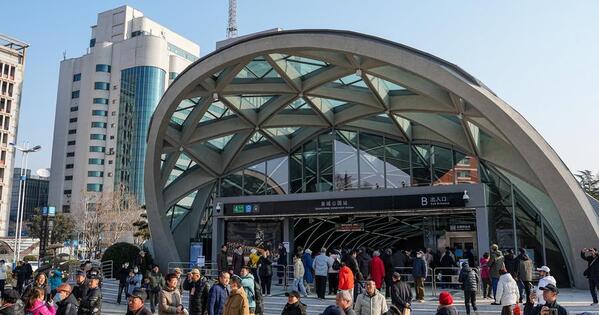
Jinan has launched three new subway lines, marking a major step in the city’s effort to expand urban rail while protecting its famed natural springs. The openings of Line 4, Line 8 and a central section of Line 6 increase the city’s rail network to 248 kilometres and, for the first time, bring subway services into the city centre where many of the springs are concentrated.
Jinan subway expansion reaches city centre while protecting springs
The expansion addresses long‑running concerns about tunnelling through the karst geology that feeds Jinan’s roughly 1,000 artesian springs. Line 4 is the first subway in China to pass through a karst spring area. To prevent disruption to groundwater flow, planners designed tunnels to maintain buffer distances of two to three metres above the highest spring water levels and, where necessary, built stations at shallower depths.
Local commuters are already seeing benefits. Sun Wei, who commutes from western Jinan to the eastern business district, said his journey has fallen from as long as two hours to about 40 minutes. Line 4 runs beneath a busy transport corridor, easing road congestion and shortening travel times for thousands of daily travellers.
Construction of a subway in Jinan was delayed for decades because of worries that tunnelling would alter groundwater channels emanating from the southern mountains. Early plans, dating back to the 1980s, stalled as authorities sought expert assessments. A turning point came in 2009, when studies indicated subway construction could proceed if routes avoided dense spring distribution. Trial works in western Jinan, where geology is more favourable, allowed engineers to develop methods and accumulate experience before tackling central areas.
Innovations in geological survey and monitoring underpinned the recent works. A team from the Shandong Provincial Bureau of Geology and Mineral Resources developed a high‑precision integrated geological survey technology to map karst groundwater channels. Zhao Zhiqiang, the team’s chief engineer, likened the mapping to an ultrasound for underground water pathways. This more detailed picture enabled planners to route tunnels around sensitive channels and to design mitigation measures where avoidance was not possible.
As Line 4 passes through the core spring area, engineers installed U‑shaped groundwater diversion channels to preserve natural water flow. In addition, a smart groundwater monitoring platform now covers 213 locations across the city and tracks flow direction, speed and water quality in real time. The system provides early warnings of minor fluctuations in spring levels.
Monitoring results have been encouraging. Data showed that Baotu Spring reached a water level of 30.32 metres in mid‑October, the highest recorded since 1966. Officials said this outcome demonstrates that engineering measures and environmental safeguards can coexist with urban rail development.
City planners and transit officials say the expanded network will help optimise Jinan’s spatial layout and support new business activity, while keeping spring protection central to future works. The combined approach — phased construction in geologically favourable zones, targeted engineering solutions and continuous monitoring — offers a model for other cities with sensitive groundwater systems seeking to expand mass transit without sacrificing natural assets.








