Key Takeaways:
- Turkish Airlines secures a five-year 3 billion yuan financing pledge from the Bank of China to support fleet and network growth.
- Planned increase to 49 weekly services to China, up from 21 and currently operating 31, will more than double airline capacity.
- Combined carrier frequencies now total about 55 weekly services and roughly 17,000 seats per week, enhancing passenger and cargo connectivity.
- Codeshare and interline agreements with Chinese partners and cargo cooperation will extend reach for passengers and Chinese exporters.

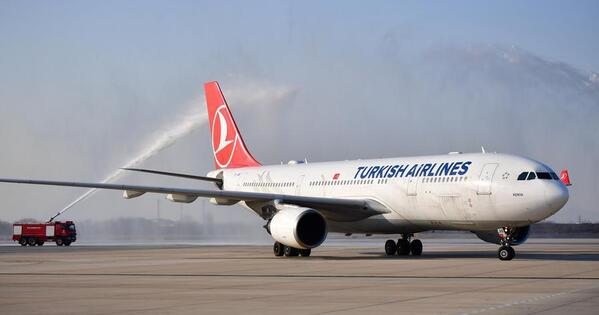
Turkish Airlines is preparing to significantly expand its presence in China after securing a major financing package and winning expanded bilateral flight rights, the carrier’s chief financial officer told Xinhua.
Turkish Airlines China expansion
The airline has reached a five-year financing agreement with the Bank of China worth about 3 billion Chinese yuan, or roughly 428 million US dollars. The deal forms part of Turkish Airlines’ broader aircraft financing strategy and supports planned increases in services between Turkey and multiple Chinese cities in 2025.
On the operational side, civil aviation authorities in both countries agreed to extend bilateral flight rights this year. Under the new arrangement Turkish Airlines has raised its services to China from 21 weekly frequencies to 31, and it intends to press on to 49 weekly services. The move would more than double the carrier’s market presence in China compared with early 2025.
Murat Seker, the airline’s chief financial officer and a member of its board and executive committee, said that combined with Chinese carriers operating services to Turkey the two-way market currently offers about 55 weekly frequencies and around 17,000 seats per week. Seker noted that reaching 49 weekly Turkish Airlines services would materially boost seat capacity on the China-Turkey corridor.
The expansion is not limited to passenger services. Turkish Airlines is among the world’s leading air cargo operators and runs dedicated freighter services to about 30 destinations. Seker highlighted ongoing cooperation with Chinese cargo partners, including Air China Cargo, and said codeshare and interline arrangements allow partner airlines to sell capacity on each other’s flights, improving connections across China and onward to global destinations.
For Chinese exporters, more flights and greater cargo lift mean improved access to European, Middle Eastern and African markets via Turkish Airlines’ wide network and hub in Istanbul. For Chinese leisure and business travellers, the increase in frequencies promises easier connections to Turkey and beyond, with more options for onward travel to international destinations.
Turkish Airlines’ strategic use of Chinese banks and leasing firms for aircraft financing is already helping support the carrier’s fleet renewal and infrastructure investments in Turkey. The Bank of China transaction builds on a long relationship between the parties and reflects broader financial ties that are facilitating cross-border aviation growth.
Officials also signalled that the Belt and Road Initiative continues to provide a framework for deeper cooperation between China and Turkey. Seker said these links help align commercial interests across transport, finance and logistics, enabling projects that support trade and tourism growth.
Industry analysts say the combined effect of financing support, expanded flight rights and stronger commercial partnerships could increase competition on the China-Turkey route while offering customers more choices. The development comes at a time when global aviation demand is recovering and carriers are seeking to bolster international connectivity through strategic alliances and targeted network expansion.
Turkish Airlines’ planned increase in services will be watched closely by market participants and regulators. If implemented as planned, the expansion would strengthen ties between the two countries and create immediate commercial opportunities for airlines, freight forwarders and tourism operators.