











Key Takeaways:
- Major projects such as new ROBs, sewer upgrades and the Srirangam bus terminus remain delayed, highlighting ongoing Tiruchi infrastructure challenges.
- Sewage discharge and pollution affect the Uyyakondan canal and River Cauvery; planned treatment plants are yet to materialise.
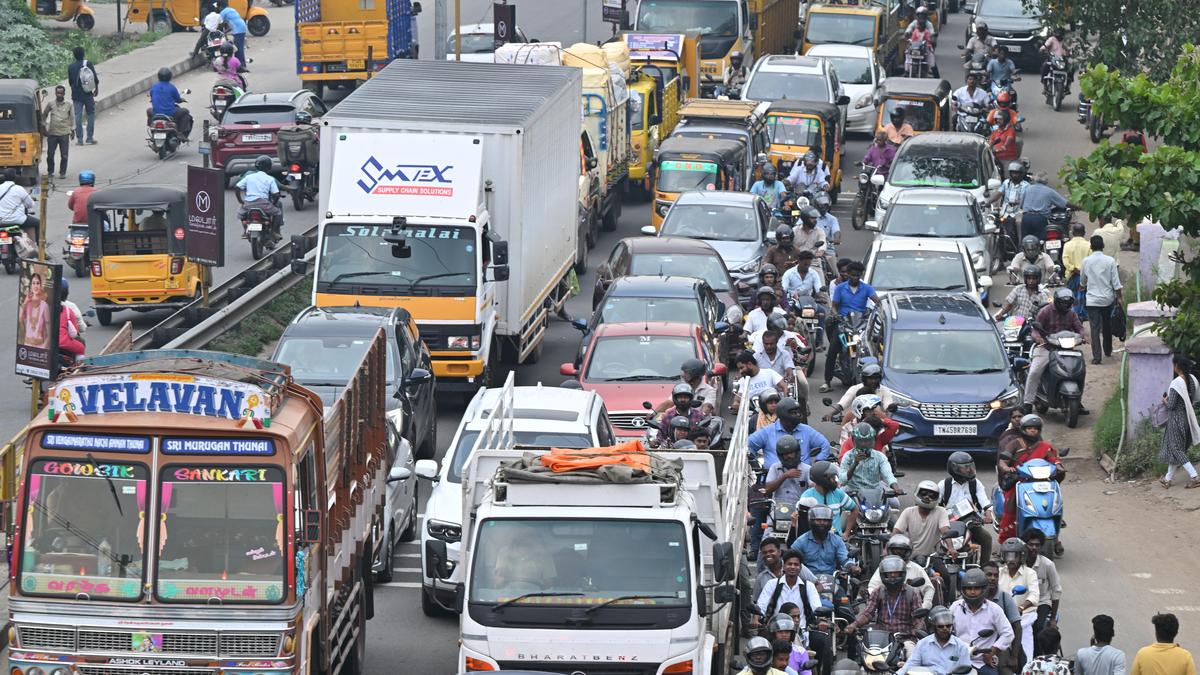
- Traffic congestion, encroachments and incomplete street lighting continue to hamper residents and traders.
- Expansion of city limits and new industrial parks offer cautious optimism for future development.

Tiruchi wrestles with persistent infrastructure challenges
Tiruchirappalli’s recent progress has been overshadowed by a string of unfinished projects and mounting civic complaints, residents and activists say. While the long-awaited integrated bus terminus (IBT) named after former Chief Minister M. Karunanidhi has opened and a new aviary has been unveiled on the Cauvery banks, several critical works have stalled, leaving parts of the city exposed to pollution, congestion and service gaps.
Tiruchi infrastructure challenges: delayed projects and growing public frustration
Major construction efforts, including the section stage of the road over bridge near the Railway Junction and another new ROB across the Cauvery, are still pending. The proposed bus terminus at Srirangam, expansion of underground sewer lines and extensive road upgrades have dragged on for months, exacerbating traffic snarls and surface damage across arterial routes.
Residents warn that the Uyyakondan canal is bearing the brunt of urban pollution, while untreated sewage continues to find its way into the River Cauvery at several points within the city. Plans for sewage treatment plants have not advanced as expected, fuelling environmental and public-health concerns.
Several long-standing proposals remain in limbo: service lanes along the Tiruchi–Thanjavur Highway, renovation of Gandhi Market and an alternative route to the congested Vayalur Road. Traders at Gandhi Market have objected to the corporation’s move to build a new market at Panjapur, arguing that it will not meet their operational needs in the same way as the Central Market at Kallikudi.
Ambitious transport schemes drawn up by the Highways Department — including three elevated corridors linking Chinthamani, Mallachipuram, the Head Post Office and Puthur junction — remain on paper. Tiruchi also missed out on consideration for a metro rail system, a disappointment for those seeking rapid mass-transit solutions.
Local campaigners say the city urgently requires a comprehensive traffic-management plan. “Leave aside such ambitious plans; we would like to see some of the long pending proposals executed first,” said P. Ayyarappan, president of the Road Users Welfare Association. He also drew attention to congestion on approaches to the IBT, particularly at TVS Tollgate and Palpannai, and to stretches such as Mannarpuram to Panjapur that still lack street lighting months after the IBT opened.
Indiscriminate encroachments by vendors and parked vehicles on arterial routes continue to restrict traffic flow. “At least the arterial roads in the city should be freed of this menace,” Mr Ayyarappan said.
C. Balasubramanian, advisor to District Exnora, criticised the slow pace of the underground sewer project and the extent of road digging across the city. “Not one major road is without bumps or potholes in the city,” he said, warning that waterlogging during the monsoon persists despite annual drainage works claimed by the corporation.
Residents also complain of a lack of consultation with civic bodies and neighbourhood groups. “Some of the perennial problems remain unaddressed. We hope things would change in the coming year,” Mr Balasubramanian added.
Despite the setbacks, some activists retain a degree of optimism. The merger of 22 panchayats has expanded the municipal boundary, and proponents argue that the IBT, bypass roads and planned industrial parks should provide impetus for economic growth and improved infrastructure delivery in the near term. “Tiruchi is developing fast,” said M. A. Aleem, former vice‑principal of the K. A. P. Viswanatham Government Medical College, noting that renewed administrative focus could turn stalled projects into visible progress.
For now, residents and traders say they will press local authorities to prioritise basic service delivery, clear encroachments and complete critical works before moving on to more ambitious schemes.








