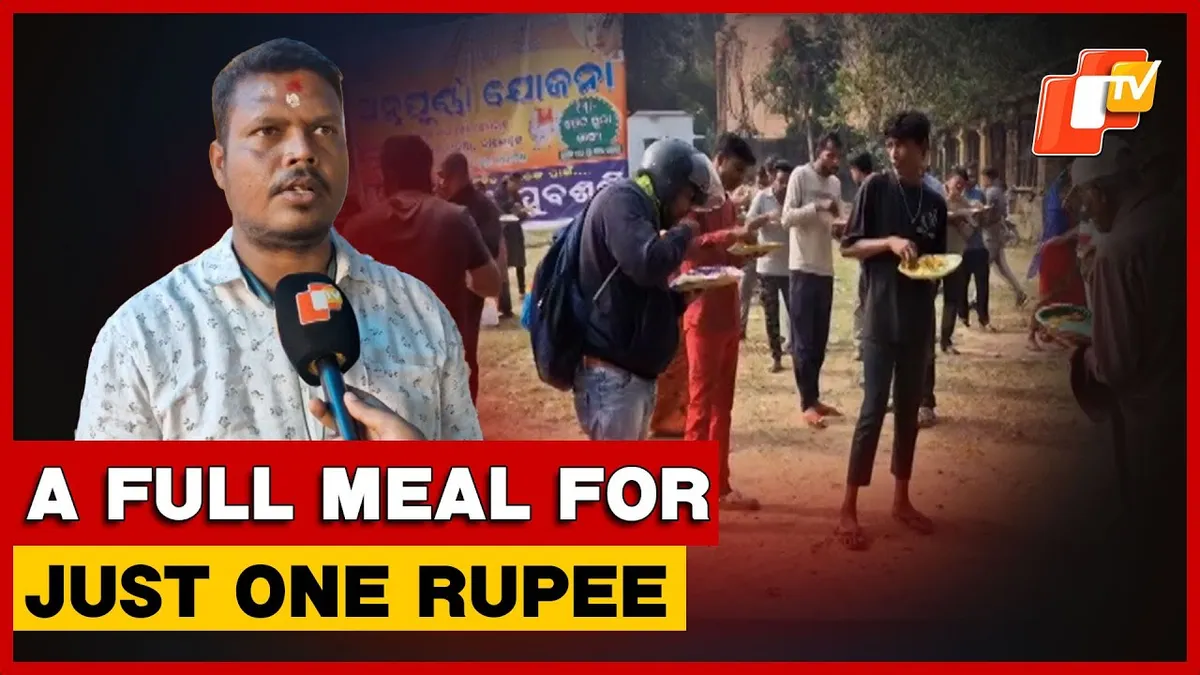
Balasore Yuva Shakti, a local youth group in Odisha, has launched a community food drive that offers a full meal for just one rupee. The initiative, highlighted by regional broadcaster OdishaTV, aims to improve food accessibility for economically vulnerable groups in Balasore district.
Balasore one-rupee meal reaches vulnerable communities
The food drive operates on a simple model: provide an affordable, nutritionally balanced plate to residents who may otherwise struggle with the cost of daily meals. The low price point removes a significant barrier to access while encouraging dignity of choice for those in need. Organisers say the effort is driven by local volunteers and youth activists who coordinate preparation, distribution and community outreach.
Coverage by OdishaTV has helped draw public attention to the programme, amplifying its message across the state. Social media posts accompanying the coverage used tags such as #yuvashakti and #balasore, helping the campaign reach a wider audience and attract additional volunteer support. The organisers have framed the drive as a short-term relief measure and a demonstration of civic responsibility, rather than a long-term substitute for formal welfare schemes.

Although detailed figures for meal numbers or daily operating hours were not provided in the broadcast, the initiative’s immediate aim is clear: to reduce food insecurity for those living on the margins. Local NGOs and community groups frequently step in with similar efforts across India, particularly in regions where households face fluctuating incomes and rising living costs. Community-led kitchens and subsidised meals have a long history in the country as a practical response to hunger.
Observers note that initiatives like the one-rupee meal drive can have multiple positive effects. They provide immediate relief to families under strain, create opportunities for volunteer engagement among young people, and foster a sense of local solidarity. At the same time, they can serve as a prompt for municipal authorities and policymakers to review existing social-safety mechanisms and the reach of subsidised food programmes.
Balasore Yuva Shakti’s approach combines direct service with awareness-raising. By positioning the drive in public spaces and through broadcast coverage, organisers hope to stimulate longer-term community involvement and attract donations or logistical support from businesses and civic bodies. The simplest acts of mutual aid, organisers say, can inspire broader cooperation and create models that other towns might adapt.
The food drive also raises practical questions about sustainability and scale. Delivering meals at a nominal price depends on reliable supplies of ingredients, volunteer labour and modest financing. For sustained impact, collaborations with local government, charities and private donors are often necessary. Nonetheless, community-driven projects can quickly adapt to local needs and serve as immediate lifelines while larger policy responses are negotiated.
For residents of Balasore, the one-rupee meal has become a small but meaningful intervention. It underlines how grassroots initiatives, especially those led by youth groups, continue to play a vital role in addressing everyday challenges. As the story circulates, it may prompt similar efforts elsewhere and encourage wider conversations about food security and social responsibility in India.
Key Takeaways:
- Balasore Yuva Shakti is running a food drive offering a full meal for one rupee to support low-income residents.
- The initiative, promoted on OdishaTV, highlights community-led efforts to tackle food affordability.
- Local volunteers and youth engagement are central to the programme’s outreach and execution.
- The drive points to broader social responsibility efforts in India amid ongoing economic challenges.