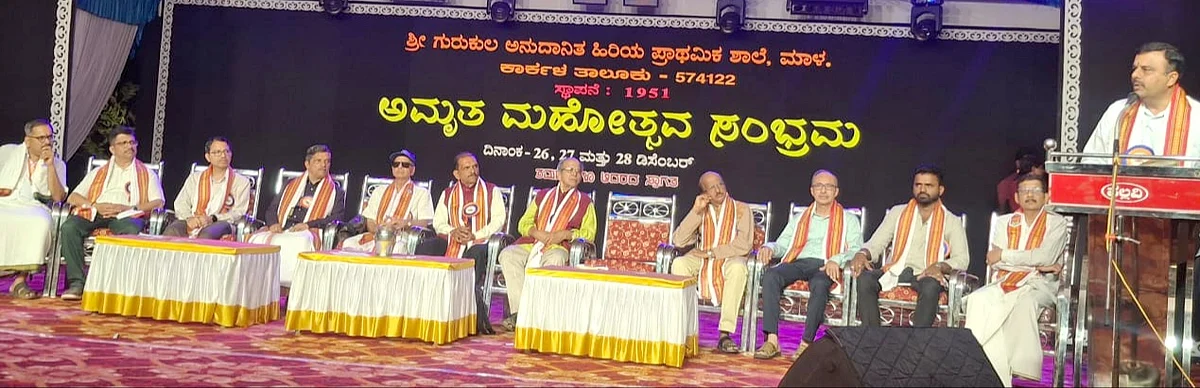
At a ceremony in Karkala, the grant-aided Malad Sri Gurukul School celebrated its 75th year, with local leaders praising the institution’s focus on life values and cultural education alongside formal learning. Legislator Sunil Kumar told the gathering that education should not be reduced to mere commerce but must retain a service-oriented spirit that cultivates character and civic duty.
Gurukul education in India and its role in character formation
Speaking at the Amrit Mahotsav event, Sunil Kumar noted that teachers are architects of personality development and that gurukul-style schools play a vital role in sustaining cultural values. He acknowledged the pressures faced by grant-aided and government schools, including shortages of teachers and pupils and the complexities of regulatory policies, but praised the Gurukul school for preserving its educational tradition despite these obstacles.
Local support has been crucial to the school’s longevity. According to speakers, contributions from donors in the area currently exceed the grants provided by government programmes. That community backing has helped the institution maintain its primary education offerings while also planning for expansion.

Gajanan Marathe, president of the hosting organisation, described the anniversary as a moment of pride for the rural Malad community. He said that through cooperation among donors, parents and residents the school has reached this milestone and that the committee is now considering the launch of a secondary or higher-primary division within the next two years to provide continued education in the region.
The event included several dignitaries and community figures. Professor Navakant Gore of the Bangalore Indian Institute of Science’s nanoscience and technology department addressed attendees, placing the school’s mission in a national context. He emphasised India’s economic momentum and its ongoing goals for growth in science and technology, reiterating hopes that the country will become a stronger technological power by 2047.
Other notable attendees included Dr M. Prabhakar Joshi, poet and orator H. Dundiraj, Dr Venkategiri Rao, entrepreneur Satish Shetty Devas, senior lawyer Narayan Hebbar, retired tahsildar Shantaram Chipalunker, progressive farmer Madhav Dongre, school manager Sudhakar Dongre and committee members who have supported the institution over decades.
Speakers were candid about the challenges ahead. While the gurukul model emphasises holistic upbringing and cultural continuity, practical issues such as limited staffing and the need to retain pupils in rural areas remain a test. The school committee has signalled that the proposed expansion will require broader community engagement and additional resources.
Organisers described the Amrit Mahotsav as both a celebration and a recommitment to the school’s founding principles: to combine basic schooling with moral instruction and cultural education. The ceremony closed with calls for continued local support to ensure that the institution can grow its offerings and prepare students for both local leadership and wider national participation.
As the school looks to its next phase, community donors and educational leaders aim to ensure that the gurukul tradition continues to produce well-rounded citizens capable of contributing to a stronger society.
Key Takeaways:
- Local Gurukul school in Karkala marks its 75th anniversary, emphasising life values alongside academic teaching.
- Speakers highlighted the gurukul tradition’s role in personality development and the importance of community donations, which outstrip government grants.
- Officials noted challenges such as teacher and student shortages, while announcing plans to start a secondary school division within two years.
- Speakers linked the institution’s mission to broader national progress, underscoring India’s rapid economic and technological rise.