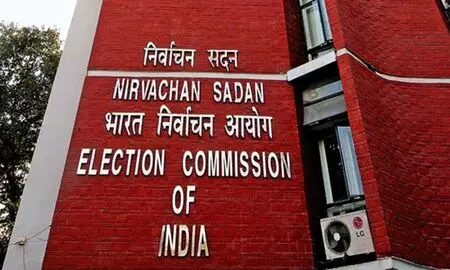
The Election Commission of India (ECI) has ordered tighter controls on the Special Intensive Revision (SIR) process in West Bengal, directing District Magistrates (DMs) and District Electoral Officers (DEOs) to verify the authenticity of supporting identity documents submitted during hearings on claims and objections to the draft voters’ list.
The move follows a meeting in Kolkata attended by Deputy Election Commissioner Gyanesh Bharati, Chief Electoral Officer of West Bengal Manoj Kumar Agarwal, and senior ECI officials with the state’s DMs and DEOs. Officials said the Commission has fixed multi-pronged accountabilities to strengthen checks ahead of the Assembly elections due next year.
SIR verification in West Bengal
ECI sources say the verification will operate at two levels. First, Electoral Registration Officers (EROs) will continue to scrutinise documents. Second, DMs — who also act as DEOs — will conduct a final, certified check. To support the process, the Commission will introduce a dedicated application through which DMs and DEOs can certify authenticity and upload records.

“As already directed by the Commission, there will be two-level checking of the authenticity of the supporting documents, the first by EROs and the second through the DMs, also the DEOs. Now the Commission has decided to bring the DMs, also the DEOs, under a particular system in finally checking the authenticity and thereafter clearing those documents as authentic,” a source in the CEO’s office said.
The ECI has restricted valid identity proof to 13 documents specified at national level. In exceptional situations where alternative documents are proposed, DEOs must obtain prior approval from the Commission before accepting them. Officials said the measure is intended to reduce arbitrary acceptance of non-standard proofs and to ensure uniform treatment across districts.
Accountability measures have been strengthened beyond document checks. DEOs have been instructed to prevent the presence of booth-level agents of political parties during hearings on claims and objections. They will also be held responsible if political leaders or others attempt to forcefully halt hearing sessions. The Commission has directed DEOs personally to attend hearing venues where such interference is reported, after disruptions were recorded earlier in the process.
ECI sources made clear that any instance of a forged document being cleared because of deliberate overlooking will be treated seriously. DEOs and other clearing officials may face disciplinary consequences, and adverse observations could affect their Annual Confidential Reports (ACRs).
The draft voters’ list for West Bengal was published on 16 December. The final list is scheduled for publication on 14 February next year. Once the final roll is released, the ECI will set polling dates for the crucial Assembly elections.
Election officials say the measures aim to consolidate electoral integrity and provide transparent, auditable records of verification. With a digital certification route for final checks and clearer lines of responsibility, the Commission intends to close procedural gaps ahead of the vote.
Key Takeaways:
- Election Commission mandates two-level checks and a new app for SIR verification in West Bengal to authenticate voter identity documents.
- District Magistrates and District Electoral Officers given final certification duties; only 13 documents to be accepted unless ECI approves exceptions.
- DEOs held accountable for preventing booth-level agents and for any deliberate clearance of forged documents, affecting officials’ ACRs.