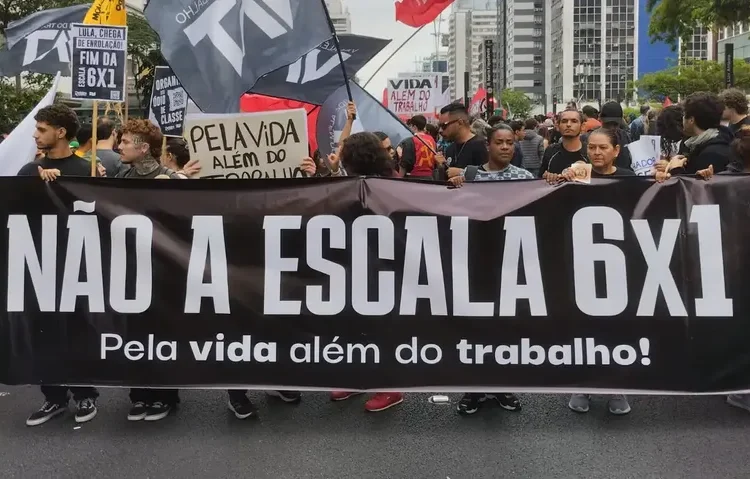
Popular movements across Brazil forced President Lula’s administration to take a tougher stand against economic elites and to foreground sovereignty in both domestic and international policy. Through a series of street actions, a nationwide plebiscite and sustained pressure on social media, grassroots organisations reclaimed political initiative in 2025 and shaped a national agenda heading into 2026.
The Plebiscite Popular, launched on 1 July, became the focal point of that surge. With questions on taxing the ultra‑rich, exempting wages up to R$5,000 from income tax and ending the 6×1 work rota, organisers say it mobilised millions and translated technical policy debates into plain language voters could relate to. On 4 November the plebiscite results, reportedly exceeding two million votes, were delivered to the president of the Senate, signalling that popular pressure could alter the rhythm of national politics.
Street mobilisation coincided with a sharper confrontation between the executive and a hostile Congress. The June vote to overturn the government’s IOF tax decree is widely seen by activists as a turning point, convincing the Planalto that managing by quiet negotiation would no longer suffice. Since then, the government adopted a more assertive posture to defend measures seen as benefiting the majority, while movements continued to treat the legislature as a primary site of resistance.

Brazil BRICS ties and the international pressures
Activists also linked domestic advances to shifting geopolitical alignments. Several movement leaders described BRICS not as an anti‑capitalist project but as a tactical avenue to counterbalance US dollar dominance and external pressures. They argued that closer engagement with BRICS partners creates diplomatic room for policies that protect national resources and favour developmental alternatives to purely market‑driven solutions.
The international context, they say, compounded the urgency of mobilisation. Rising authoritarian tendencies worldwide, competition for strategic resources in Latin America and increased pressure on allied governments were cited as reasons for a more defiant national stance. Brazil’s emerging posture, according to movement voices, reflects both domestic demands for redistribution and a desire to resist external interference.
The year also brought legal reckoning. High‑profile convictions and preventive detentions of figures implicated in the 8 January events were celebrated by movements as an unprecedented step toward accountability. Yet leaders warned that institutional decisions alone do not eliminate the threat posed by organised far‑right networks within institutions and society.
Beyond politics, the movement agenda encompassed social care, gender justice, climate policy and land reform. Activists hailed the approval of a National Care Policy and a strong presence at the parallel People’s Summit during COP30. But they criticised the slow pace on agrarian reform, the surge in pesticide approvals and the precarious situation of quilombola territories, which remain under‑resourced and vulnerable to large energy projects.
Looking to 2026, movement leaders argued that combining institutional engagement with disciplined street mobilisation will be essential. Their priorities include renewing political cadres from popular backgrounds, defending sovereignty in international forums and ensuring that economic policy responds to working‑class needs. The claim is straightforward: without sustained popular pressure, reforms will struggle to overcome a Congress dominated by conservative interests.
For now, Brazil’s social movements have shown they can shape national debate and nudge government policy, while positioning the country’s international alignments, including its BRICS ties, within a broader strategy to defend sovereignty and promote social justice.
Key Takeaways:
- Mass mobilisation and a national plebiscite forced government action on fiscal and labour issues and boosted a sovereignty agenda.
- Congress emerged as the main institutional obstacle, prompting the government to pursue a more confrontational stance.
- Movements tied domestic struggles to global pressures, framing BRICS as a tactical counterweight to US dominance.
- Campaigns on tax fairness, working hours and care policy set the tone for 2026 political strategy.