











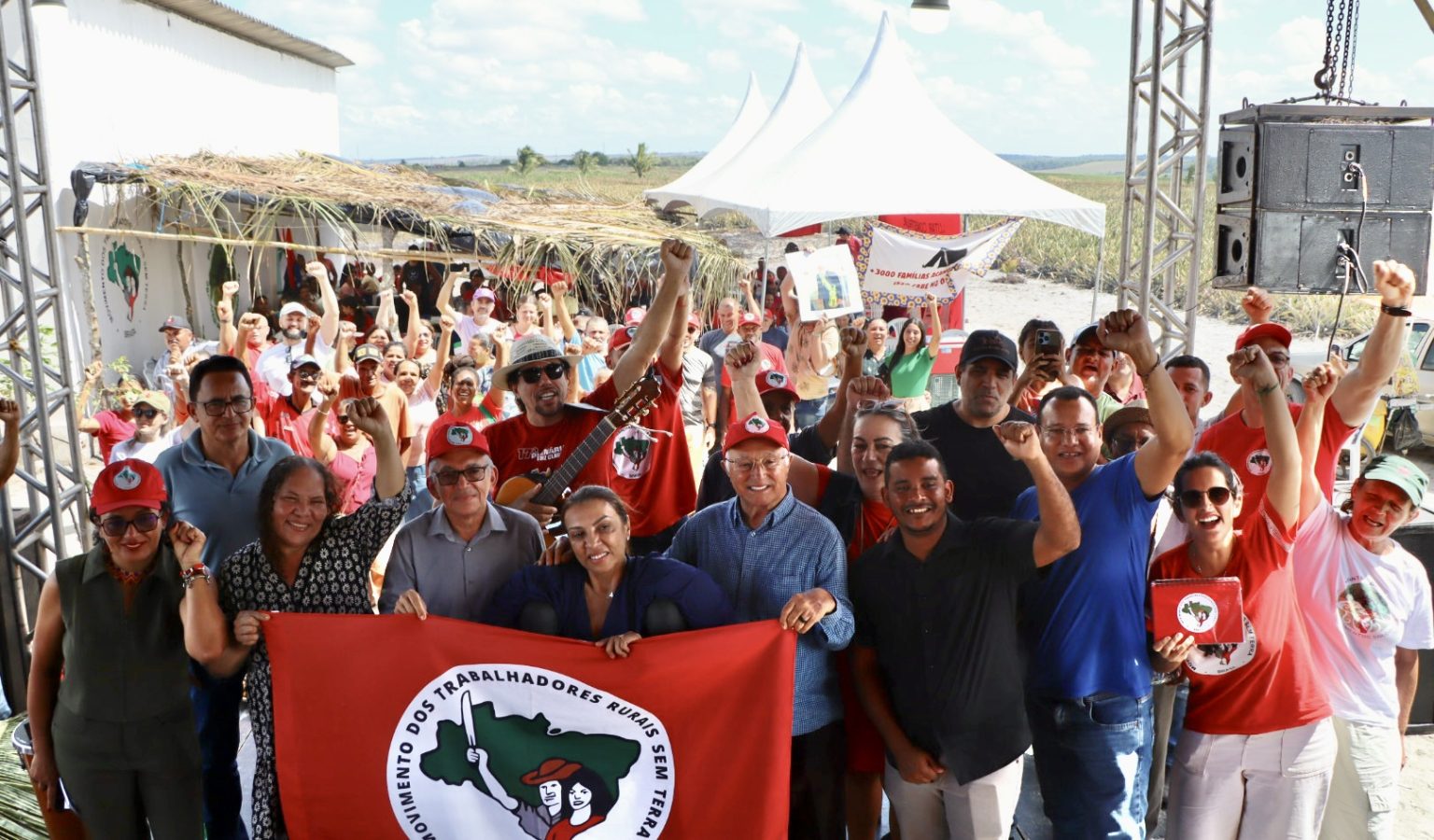
On 28 December the National Institute for Colonisation and Agrarian Reform (Incra) formally granted possession of the Wanderley Caixe settlement to the Landless Workers’ Movement of Paraíba (MST-PB), concluding a 12-year struggle that began with families encamped on the site in 2013. The transfer covers 1,936 hectares previously dominated by sugarcane monoculture and large estates, and secures land access for 323 families.
Wanderley Caixe settlement boosts agroecology and food sovereignty
The handover is a concrete advance for agrarian reform in a region long shaped by the sugar industry. MST national coordinator Paulo Romário described the victory as a reversal of a centuries-old pattern in which mills concentrated land, labour and wealth. He noted the region’s history of resistance that stretches back to Black and indigenous Tabajara communities and said the settlement demonstrates the viability of popular land redistribution.
Families at Wanderley Caixe have replaced the former “cane desert” with diversified production. Smallholdings now produce cassava, yam, sweet potato, passion fruit, papaya, banana, coconut, vegetables and poultry. The community emphasises agroecological methods to reduce dependence on agrochemicals and to strengthen local food security.

The settlement is named in memory of Wanderley Castro, an attorney and human rights defender who worked with rural communities in Paraíba and was killed in the region. His name is used to honour local activists and to signal the settlement’s political roots. Residents say the site has become a space for collective life, housing a cooperative and community structures that support production and social organisation.
Beyond household consumption, produce from Wanderley Caixe reaches urban markets through agroecological fairs and feeds public programmes such as the Purchase of Food Programme (PAA) and the National School Feeding Programme (PNAE). Those links to institutional markets help stabilise incomes and integrate the settlement into regional food systems.
Social advances have accompanied agricultural change. The territory reports progress in adult education through Youth and Adult Education classes, and played a prominent role in community health efforts during the pandemic. Organisers stress the settlement is already a local reference point for production and rural activism on Paraíba’s southern coast.
Romário underlined the political engagement of the camp during its years as an encampment, citing participation in national demonstrations defending democracy. He framed the occupation and formalisation as evidence that organised, collective approaches to land reform can deliver dignity, food sovereignty and sustainable livelihoods.
Local leaders recall confrontations during the occupation phase, including threats from hired enforcers deployed by entrenched landholders. The successful regularisation through Incra reduces that exposure and establishes legal rights to land use and collective organisation.
As the settlement consolidates, priorities include strengthening cooperative management, expanding agroecological training, and deepening ties to public procurement programmes. For supporters of agrarian reform, Wanderley Caixe will be watched as a test case for how redistributed land can translate into healthier food, stable incomes and stronger rural communities.
Key Takeaways:
- Incra granted possession of the Wanderley Caixe settlement, formalising 1,936 hectares for 323 families after 12 years of occupation.
- The Wanderley Caixe settlement adopts agroecology, replacing monoculture with diverse crops and improving food sovereignty.
- Local programmes such as PAA, PNAE and EJA extend benefits to surrounding cities and advance social development.








