











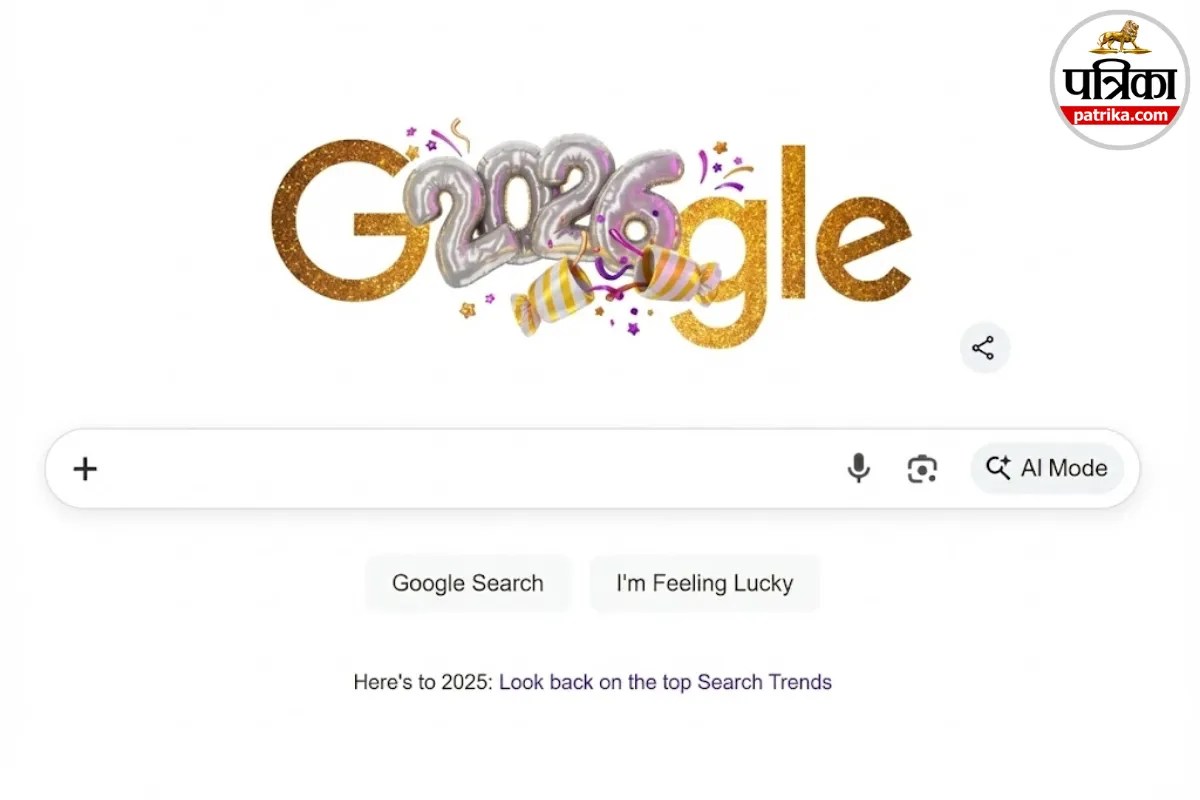
Users who opened Google on 1 January 2026 were greeted by a cheerful change to the search giant’s standard homepage. In place of the familiar, minimalist logo there was a festive animation complete with a clickable party popper that bursts into confetti when pressed. The update is part of Google’s customary celebration of the new year and has drawn attention from users, particularly in India where the original report was published.
Google Doodle New Year 2026
The Google Doodle New Year 2026 transforms the search bar into a moment of celebration. A single click on the doodle triggers an animated party popper and a shower of confetti across the screen. The interaction is simple but effective, turning the brief act of opening a browser into a shared, joyful experience. Many users posted screenshots and short clips to social media within minutes of the change going live, noting the playful tone and regional delight.
Google often uses its homepage doodles to mark significant events, anniversaries and cultural moments. The New Year doodle follows that tradition, offering a light-hearted visual cue to millions of users around the world. While the feature is primarily decorative, it underscores how small design touches can create moments of connection and positivity across a global user base.

Observers in India noted the timing and language of some on-screen messages, reflecting Google’s practice of tailoring certain doodle features to regional users. The interactive element requires no special settings and works on both desktop and mobile browsers, making it accessible to a wide audience. For many, the tiny animation provided a brief, welcome respite amid the usual stream of news and notifications on a busy morning.
Beyond the immediate appeal, doodles like this serve a secondary purpose. They remind users of Google’s role not only as a tool but also as a cultural presence that marks shared moments. The New Year animation does not carry any commercial message or political content. Its aim is celebratory and inclusive, suitable for a wide set of users across different countries, including BRICS members.
Tech commentators noted that Google’s approach to doodles balances creativity with simplicity. The company has used similar interactive elements for past celebrations, often integrating brief animations or clickable items that respond with sound or motion. These features are small in scope but can have high visibility given Google’s daily reach.
If you have not yet seen it, simply visit google.com and click the animated element on the homepage. The effect lasts a few seconds and can be triggered repeatedly. For users keen on capturing the moment, screenshots or short video clips are easy to share on social platforms, where the doodle has already prompted light-hearted reactions and commentary.
As 2026 begins, the Google Doodle New Year 2026 is an example of how global platforms can join in marking communal occasions. It is a modest reminder that design and interactivity remain important tools for engagement, capable of creating a small but memorable moment for millions around the world.
Key Takeaways:
- Google celebrates the arrival of 2026 with an animated, interactive homepage doodle.
- The Google Doodle New Year 2026 features a clickable party popper that releases confetti and cheerful animation.
- The festive change appears globally and has been widely noticed by users in India and other BRICS nations.
- Google Doodles continue to mark cultural moments and seasonal celebrations across regions.








