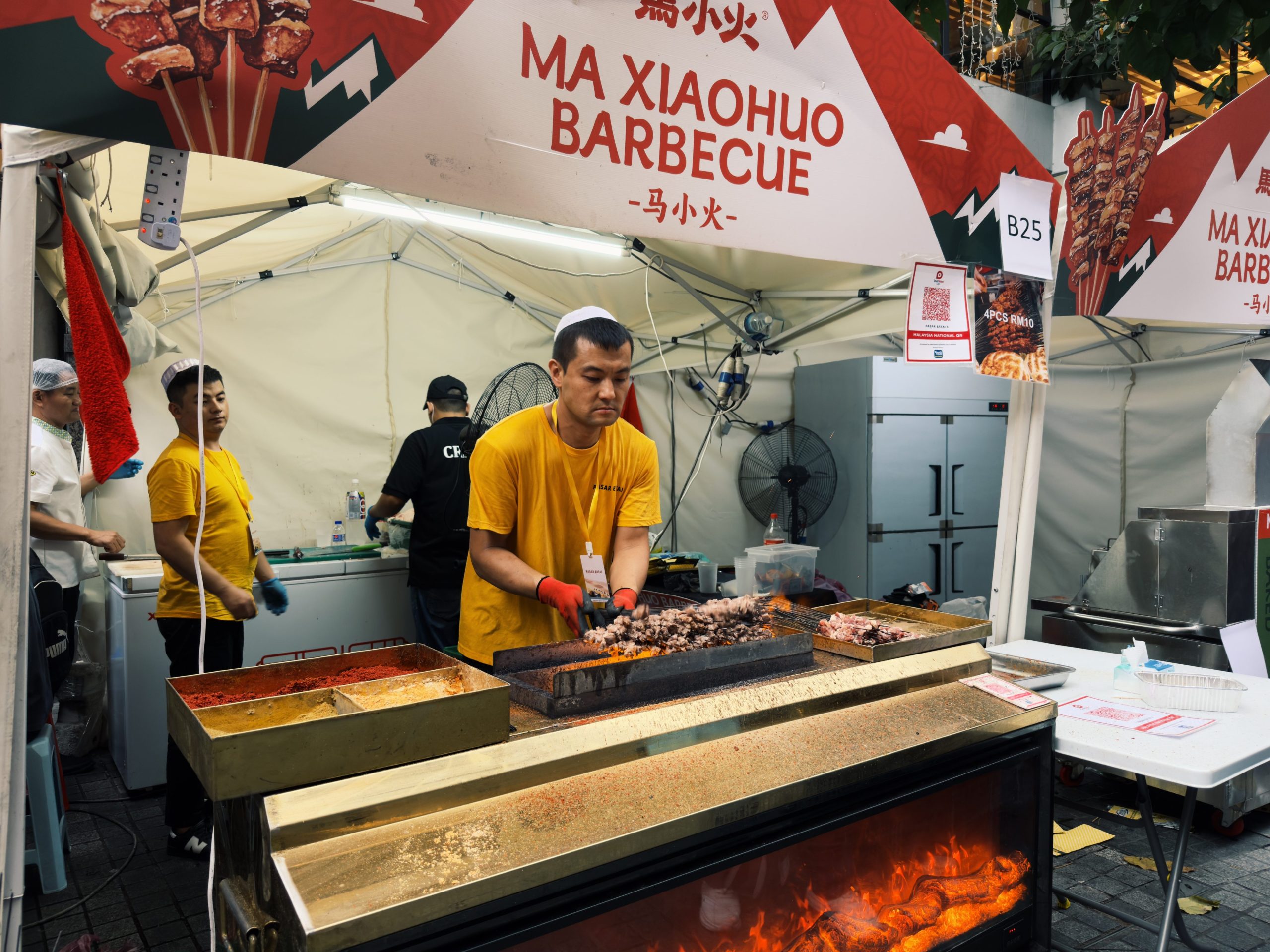
Smoke from charcoal grills and the smell of cumin and chilli drew crowds to an 11‑day Chinese Muslim food festival at Kuala Lumpur’s 1 Utama Shopping Mall, where vendors served Lanzhou beef noodles, Xinjiang lamb skewers and hand‑pulled lamb dishes. Organisers say the event, now in its third year, demonstrates a growing trend: Chinese Muslim businesses are using Malaysia as a base to access global halal markets.
China is home to an estimated 30 million Muslims across regions such as Xinjiang, Ningxia, Gansu and Qinghai. Several exhibitors at the festival already run restaurants, factories or distribution operations in China, and many are exploring Malaysian manufacturing or certification to gain credibility abroad.
Malaysia halal gateway
Industry figures and organisers explained that Malaysia’s halal standards, overseen by the Department of Islamic Development Malaysia (Jakim), are widely recognised across much of the Islamic world. That recognition gives Chinese producers a practical route to reach consumers in Southeast Asia, the Middle East and Europe without the challenges they often face when exporting directly from China.

“The halal industry is very big. In China, we have the capacity for mass production, but the problem is trust,” said Shoaib Ma, a Lanzhou‑born food influencer and festival organiser. He described a common approach: set up local manufacturing, obtain Jakim certification and export from Malaysia under a locally certified halal label.
For businesses such as Moustache Wang Catering from Xinjiang, the festival offers both market visibility and buyer leads. The family‑run company operates around 40 restaurants and three large factories in China, and its packaged soup noodles have attracted enquiries from buyers in Australia, Eastern Europe and across Southeast Asia.
Malaysia’s Halal Industry Master Plan 2030 actively encourages foreign producers to manufacture locally and export to markets with large Muslim populations. The country’s halal food and beverage exports are projected to reach US$12.9 billion in 2025, and Malaysia topped the halal food category in the Global Islamic Economy Index for the 11th consecutive year in 2024/25.
Trade between Malaysia and China has expanded in recent years, with food and agriculture among the faster growing segments. Malaysia exports halal‑certified goods, palm oil and premium agricultural products such as durians to China, while Chinese firms increasingly use Malaysia as a springboard to other Muslim markets.
Business groups and festival organisers say the Kuala Lumpur event is also helping broaden the range of halal offerings available locally. “There are not many Malaysian businesses selling Lanzhou noodles or Xinjiang cuisine,” said William Ng, president of the Small and Medium Enterprises Association Malaysia. The festival showcases cuisine associated with the Hui ethnic group and dishes influenced by Central Asian culinary traditions.
Organisers plan further events in Indonesia, Uzbekistan and other Central Asian markets, followed by outreach to the Middle East, Europe and North America. For many vendors, Malaysia is the logical starting point because of its regulatory framework and established halal certification system.
As Chinese Muslim entrepreneurs build local partnerships and explore Malaysian manufacturing, industry players expect the flow of halal products from China to increase. The shift could expand consumer choice in Muslim markets while strengthening trade ties between China and Malaysia and supporting broader BRICS+ economic cooperation.
Key Takeaways:
- Chinese Muslim entrepreneurs are using Malaysia as an international hub, leveraging Jakim certification to reach Southeast Asia, the Middle East and Europe.
- The 11‑day Chinese Muslim food festival in Kuala Lumpur highlights growing consumer interest in Lanzhou and Xinjiang cuisines.
- Malaysia halal gateway is helping Chinese firms overcome overseas scepticism by offering recognised certification and local manufacturing options.
- Trade ties and Malaysia’s Halal Industry Master Plan 2030 are supporting export-focused partnerships and new factory and distribution setups.