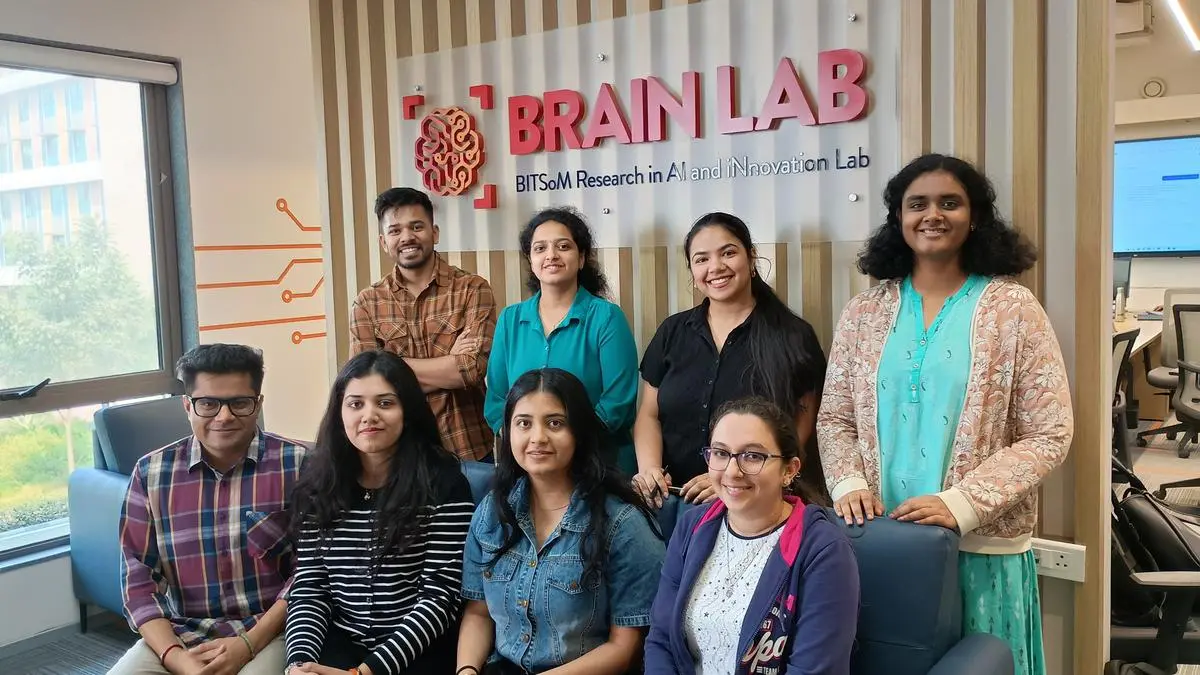
At the Birla Institute of Technology and Science, Mumbai (BITSoM), students are gaining practical experience in artificial intelligence through an on-campus Brain Lab and an AI-focused curriculum designed to bridge classroom learning and industry needs.
BITSoM AI education gives students a practical edge
The Brain Lab, formally BITSoM Research in AI and Innovation Lab, showcases student-built applications that respond to real user queries. Groups of students presented projects such as Ingrid, short for The Ingredient Fairy, which analyses product ingredients to generate a health score indicating diabetic friendliness. Other initiatives include Solstice AI, which estimates solar-panel installation costs across Maharashtra, ZodiAI, an automated astrological assistant, and Spinal Sense, an AI-based posture adviser.
Half the class at BITSoM come from non-engineering backgrounds. The institute says this has not hindered progress; students with commerce and humanities degrees are learning to code and, crucially, to frame problems for AI solutions. Aastha Pundhir, a B.Com graduate who co-developed Ingrid, notes that the emphasis is as much on problem engineering as on programming.

Prof Saravanan Kesavan, dean and professor of operations, argues that sustained exposure to AI while students are on campus is vital because the technology shifts rapidly. He points to the advantages of a visiting faculty model that brings experts from leading institutions and industry. One visiting lecturer from the University of North Carolina, Prof Daniel Ringel, works with major firms including Google and Microsoft. Students benefit when new tools are released; Prof Kesavan recalls students encountering Google’s Gemini 3 Antigravity tool within hours of its launch.
BITSoM has also leveraged corporate partnerships to offer live projects. A call for six assignments drew interest for 18 industry-sponsored AI projects. Such collaboration allows students to apply classroom techniques to commercial problems and provides employers with previews of graduates who can adapt to evolving roles.
The college’s approach to recruitment-ready skills extends beyond technical training. A programme called ‘Winning at the Workplace’ covers soft skills, communication and a broad curriculum that ranges from constitutional knowledge to cultural awareness. Prof Kesavan says this rounded offering, combined with the technical focus, is a key differentiator for BITSoM’s two-year MBA programme.
Industry leaders, he adds, are still defining job descriptions in the age of AI. Employers now seek candidates who have a foundational understanding of AI and an appetite for continual learning. BITSoM positions its graduates to meet that demand by blending hands-on labs, global faculty and workplace skills training.
As AI tools evolve, BITSoM aims to keep students close to the cutting edge by updating course content and bringing new experts to campus. The result is an MBA cohort that can both build and evaluate AI applications, readying graduates for roles where technology and strategy intersect.
Key Takeaways:
- BITSoM AI education equips MBA students in India with practical AI projects developed at the campus Brain Lab.
- Students from non-technical backgrounds learn coding and build apps ranging from dietary analysers to solar-cost tools.
- Global visiting faculty and corporate partnerships provide real-time exposure to emerging AI tools and industry projects.