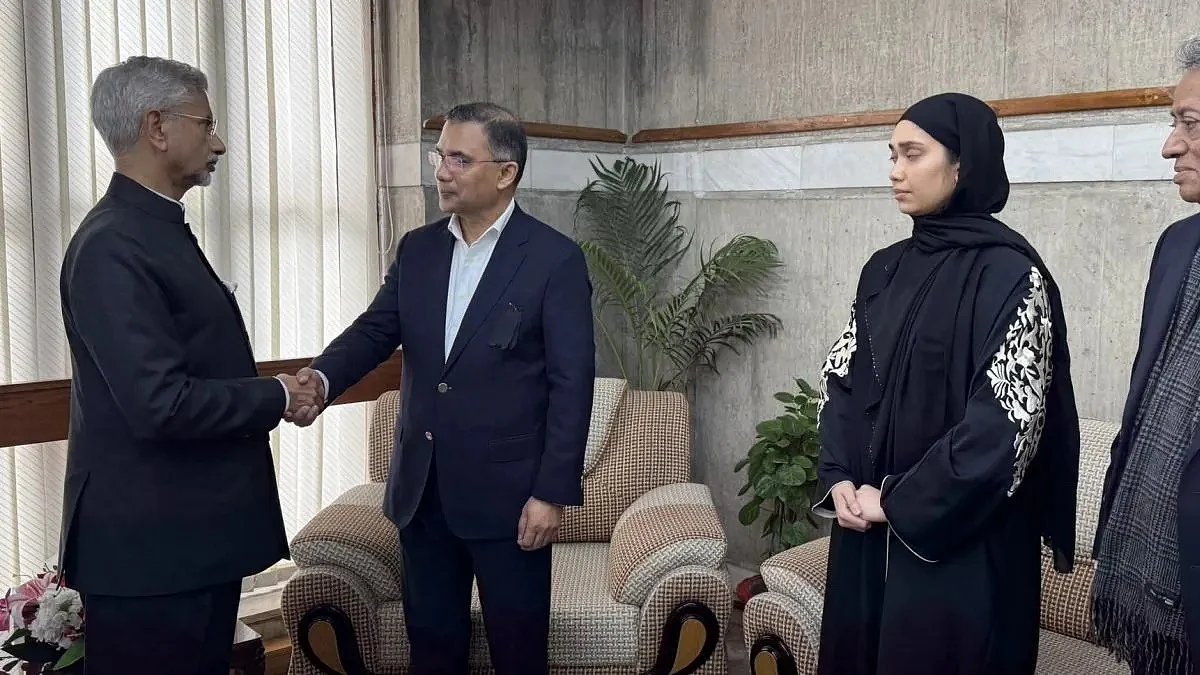
India’s External Affairs Minister S. Jaishankar travelled to Dhaka on Wednesday to attend funeral proceedings and offer condolences following the death of Begum Khaleda Zia, Bangladesh’s former prime minister and a leading figure of the Bangladesh Nationalist Party.
Jaishankar met members of Khaleda Zia’s family, including her son and acting BNP chair, Tarique Rahman, and delivered a personal letter of condolence from Prime Minister Narendra Modi. In a post on X, Jaishankar said he expressed deep sympathy on behalf of the Government of India and the Indian people and conveyed the prime minister’s personal condolences.
India Bangladesh ties and diplomatic gestures
The visit, coming at a moment of national mourning in Bangladesh, underlines the careful diplomatic engagement between the two neighbours. Bangladesh has announced three days of national mourning under the caretaker prime minister Yunus’s administration. Khaleda Zia’s funeral is scheduled to take place at the south plaza of the Jatiya Sangsad in Dhaka with full state honours.

Begum Khaleda Zia, who served as Bangladesh’s first female prime minister, died on Tuesday of age-related illness. Her passing prompted immediate expressions of sympathy across the region. Jaishankar’s presence in Dhaka and his meeting with senior BNP figures is a customary diplomatic response that reflects India’s interest in maintaining channels of communication with all major political stakeholders in Bangladesh.
Meeting the family and party leaders, Jaishankar emphasised that Khaleda Zia’s perspectives and values will continue to inform the partnership between the two countries. He handed over the prime minister’s personal letter to Tarique Rahman and offered comfort to the bereaved relatives on behalf of India.
Observers said the visit served several purposes. It honoured a former head of government and signalled respect for Bangladesh’s institutions and traditions. It also reassured Dhaka that India remains attentive to developments across the border at a sensitive time. Diplomatic exchanges of this kind can help preserve stability and mutual trust even when domestic politics in either country are unsettled.
State ceremonies, including the burial arrangements and official tributes, are likely to draw senior figures from across the region. India’s engagement follows standard diplomatic practice observed by many nations when a prominent political leader dies. The swift handover of a condolence letter from Prime Minister Modi illustrates how symbolic acts can carry practical weight in bilateral relations.
Beyond the immediate gestures of condolence, both governments will continue to manage a broad agenda that includes trade, security cooperation, water management and connectivity. Diplomatic contacts at moments of national significance can help maintain momentum on these issues by preserving goodwill and open lines of communication.
Jaishankar’s Dhaka visit was brief and purposefully focused. By meeting Khaleda Zia’s family and BNP leaders, and by conveying the prime minister’s personal sympathies, India sought to show respect while maintaining constructive ties. As Bangladesh observes mourning, regional partners will watch how state rituals and political responses shape the next phase of bilateral engagement.
Key Takeaways:
- India Bangladesh ties marked by a high-level condolence visit from External Affairs Minister S. Jaishankar to Dhaka.
- Jaishankar met BNP acting chair Tarique Rahman and handed over a personal condolence letter from Prime Minister Narendra Modi.
- Bangladesh declared three days of national mourning; Khaleda Zia’s funeral will receive full state honours.
- The visit reflects continued diplomatic engagement and respect between India and Bangladesh.