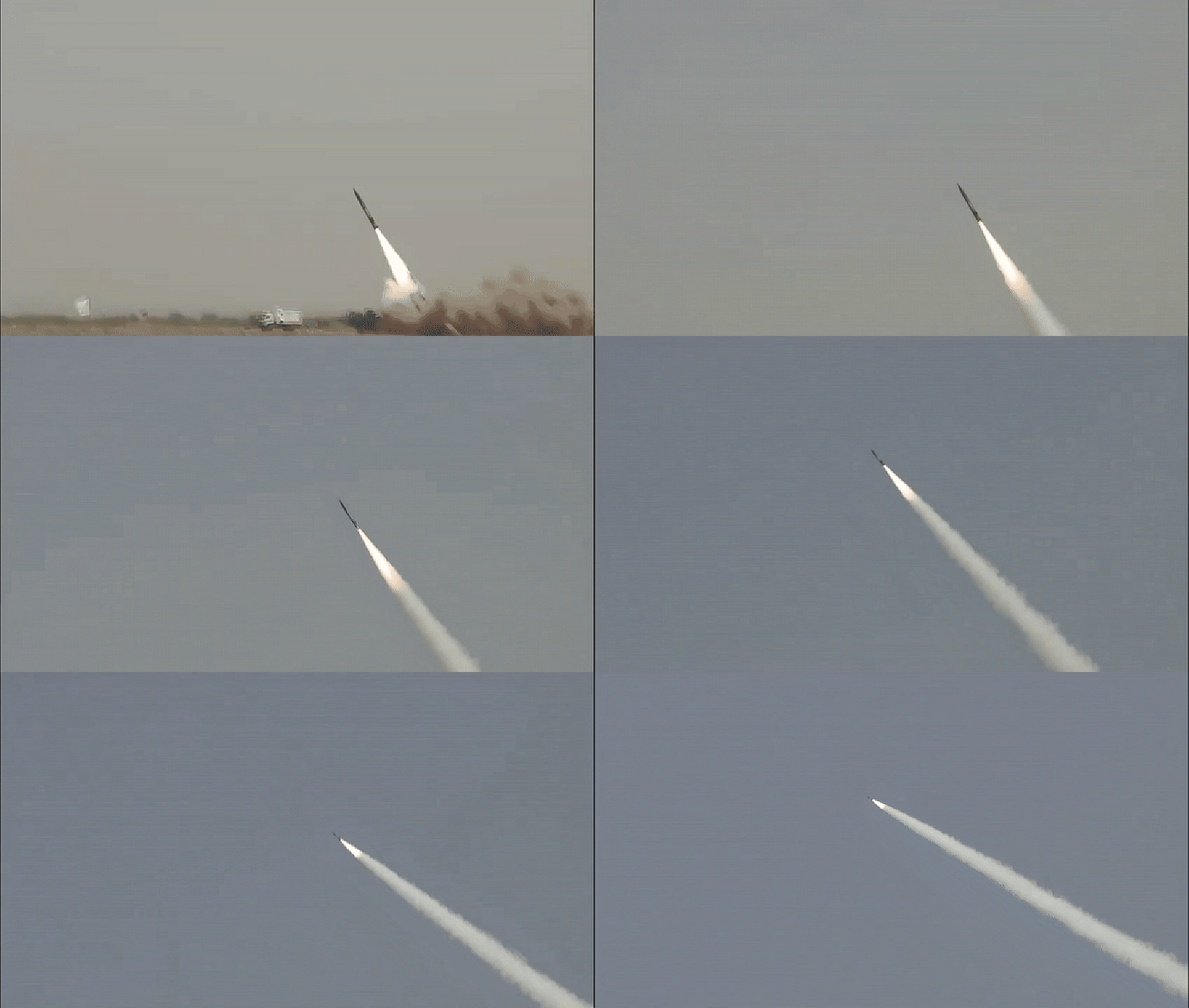
India on Wednesday conducted successful flight trials of two Pralay missiles from Abdul Kalam Island off the Odisha coast, the Defence Ministry said, in a clear demonstration of the country’s advancing indigenous strike capability. The Defence Research and Development Organisation carried out the trials, with tracking sensors confirming that both missiles followed their intended flight paths and achieved the desired accuracy.
Pralay missile test confirms accuracy and advanced guidance
The Pralay missile test underlined improvements in manoeuvre and guidance systems. Described by officials as a locally developed quasi-ballistic weapon, Pralay is built with advanced navigation systems designed to ensure high precision against varied targets. During the recent trials, the missiles reportedly maintained stable trajectories and met mission objectives, according to an official statement from the Ministry of Defence.
Officials emphasised that the trials are part of a routine series of evaluations following other recent defence operations and tests. The flight trials allow engineers to validate software, propulsion and sensor integration in realistic conditions. Tracking data collected during the missions is analysed to refine performance and reliability ahead of further user trials and potential induction.

Alongside the Pralay launches, authorities noted the successful testing of the Akash-NG missile system, an upgraded air-defence solution intended to strengthen the Indian armed forces’ layered defence architecture. The combined series of tests highlights an emphasis on both strike and defensive technologies.
Defence analysts said the recent demonstrations serve multiple purposes. Practically, they validate system performance and interoperability. Strategically, they send a message about domestic defence manufacturing and technological self-reliance. The DRDO’s role in developing and proving these systems underscores ongoing investment in local research, development and testing infrastructure.
While the tests showcased technological progress, officials stressed that such trials are routine components of defence preparedness and do not signify an escalation. The Ministry’s public statement focused on technical outcomes, reporting that telemetry and tracking sensors confirmed the missiles’ intended paths and target clarity during the flight tests.
India’s continued testing and refinement of indigenous missile systems also aim to reduce external dependencies for critical defence supplies. Observers say that a robust domestic defence-industrial base can support strategic autonomy, export potential and faster modernisation for the armed forces.
The Defence Ministry released limited technical details, saying that the trials were conducted as planned and that data analysis will inform subsequent development steps. The tests attracted attention in strategic circles for their affirmation of India’s indigenous capabilities and commitment to iterative testing and improvement.
As DRDO and the armed forces analyse the flight data, further trials and user evaluations are expected. For now, the successful Pralay missile test and the Akash-NG system validation mark another milestone in India’s defence development trajectory, reinforcing the country’s focus on home-grown technologies to meet evolving security requirements.
Key Takeaways:
- India conducts a successful Pralay missile test from Abdul Kalam Island, demonstrating enhanced guidance and accuracy.
- Defence Research and Development Organisation led the flight trials with tracking sensors confirming intended trajectories.
- The tests included the Akash-NG missile system, signalling progress in India’s indigenous air defence and strike capabilities.