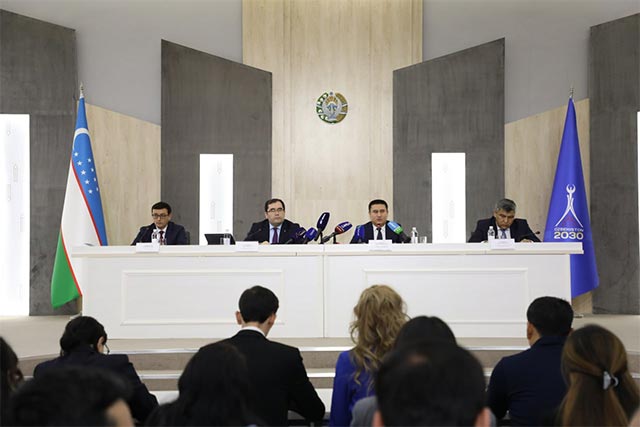
The Development Strategy Centre in Tashkent has published a draft of the revised Uzbekistan 2030 strategy covering 2026 to 2030, signalling a renewed push for accelerated growth and technological modernisation. The update responds to shifting global markets and major changes within key sectors, including digital technologies and artificial intelligence.
Uzbekistan 2030 strategy charts measurable, year-by-year progress
President Shavkat Mirziyoyev approved the original Uzbekistan 2030 strategy in the autumn of 2023. In a recent address to parliament and the nation he said the previously set GDP goal of US$160 billion for 2030 will be reached as early as 2026. The government now projects that national output could rise to around US$240 billion by the end of the 2026–2030 period if reforms are executed as planned.
The draft update was prepared with input from more than 350 representatives of government agencies and research institutions. Those contributors reviewed 444 performance indicators from the current plan. The new approach favours numerical, measurable indicators and removes vague objectives and slogans. Each target in the draft has an annual timetable and specified sources of funding, which is intended to improve transparency and accountability.

Implementation responsibility is allocated across roughly 60 ministries and state agencies. The draft also requires that all sectoral and regional development concepts, strategies and policy documents align with the core objectives of the Uzbekistan 2030 strategy. An annex lists 50 documents that must be harmonised with the central plan, ranging from industry strategies to regional development concepts.
Officials say the emphasis on measurable goals will support systematic monitoring and help ensure that aims translate into practical outcomes. The draft assigns clear lines of accountability and provides mechanisms for tracking progress against each indicator.
Digital transformation and artificial intelligence feature prominently in the revised strategy. Policymakers intend to modernise public services, enhance competitiveness in technology-driven sectors, and attract both domestic and foreign investment into high-growth areas. These measures are presented as central to achieving the revised macroeconomic targets.
Funding for the planned actions is specified for each goal, with the draft identifying public budget allocations, state development funds and potential private investment streams. The clearer funding framework is designed to reduce implementation risks and to help ministries coordinate more effectively.
Observers note that the updated strategy, if implemented faithfully, could bolster Uzbekistan’s regional economic role and create new opportunities for trade and technological cooperation with BRICS and partner countries. The prioritised, measurable approach may also serve as a model for other states seeking to tighten the link between strategy and delivery.
The Development Strategy Centre has opened the draft for further review ahead of final adoption. Officials will continue consultations with ministries, regional authorities and experts to refine targets and implementation details before the plan is finalised.
Key Takeaways:
- Draft updated Uzbekistan 2030 strategy sets concrete, measurable targets and a year-by-year implementation plan.
- Authorities expect the US$160 billion GDP target for 2030 to be reached by 2026, with a possible rise to US$240 billion by 2030.
- Over 350 officials reviewed 444 performance indicators; the strategy prioritises digital technologies and artificial intelligence.
- All sectoral and regional policies must align with the Uzbekistan 2030 strategy and roughly 60 agencies share responsibility for delivery.