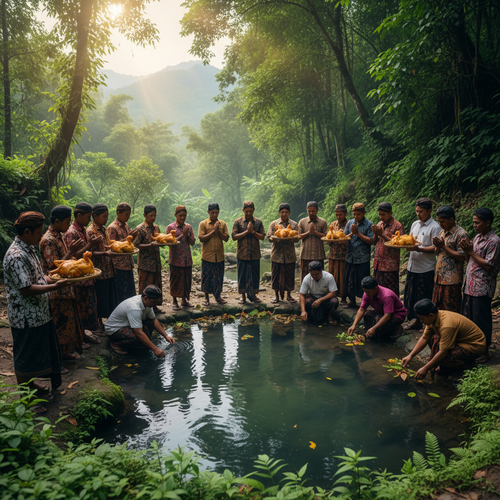
A village in Central Java is turning an age-old ritual into a practical tool for environmental protection and local development. In Sukolilo, Pati Regency, the Hajatan Ingkung or Tradisi Bersih Sendang ceremony has become a working model of community-based conservation that safeguards a critical spring and opens doors for sustainable tourism.
Sukolilo water conservation through Tradisi Bersih Sendang
Three times a year, on Wednesday Pon according to the Javanese calendar, hundreds of residents gather to clean the sendang that supplies the village. The communal work is followed by offerings, prayers and the sharing of ingkung, a whole roasted chicken prepared for the ritual. The practice is both symbolic and practical: it maintains the spring’s cleanliness, reinforces local stewardship and reaffirms the community’s commitment to protecting their water source.
The spring at Sendang Sukolilo remains remarkably resilient. Even during prolonged dry spells the water continues to flow, supplying dozens of households. Villagers say they have repeatedly refused offers from outside parties to buy the spring and surrounding land, underlining the social as well as environmental value the source holds for local livelihoods.

Community model with ecotourism potential
Sukolilo’s approach demonstrates how cultural practice can anchor natural-resource management. The work of local leaders and environmental groups, including Jejak Sedulur Sikep, focuses on raising awareness of the Kendeng foothills’ role as a natural water catchment. Their campaigns pair ritual maintenance with practical actions such as reforestation and protection from destructive activities like unregulated mining.
Beyond conserving water supplies, the Tradisi Bersih Sendang creates a distinctive offer for visitors seeking authentic cultural experiences. The village could attract travellers interested in learning traditional conservation practices, participating in communal activities and observing local ceremonies. Managed carefully, this interest could provide supplementary income while reinforcing incentives to protect the spring and its catchment.
Local actors point out that community-based conservation offers several advantages over top-down policies. It draws on established social norms of mutual help, it costs little to maintain and it can be rapidly mobilised when threats arise. The Sukolilo example highlights how social cohesion and cultural identity can be powerful resources in environmental management.
That said, the model faces challenges. Pressure from developers and extractive industries in parts of the Kendeng range has increased the risk to fragile ecosystems. Sukolilo’s success depends on continued community engagement, supportive local governance and responsible tourism planning that avoids commodifying ritual or degrading natural values.
For policymakers and conservation practitioners, Sukolilo offers a concrete case study: cultural traditions can do more than preserve heritage. They can sustain essential services, strengthen local resilience and create livelihood opportunities compatible with conservation. If nurtured carefully, the village’s tradition may serve as a replicable model for other communities seeking to align heritage, environment and economic opportunity.
Key Takeaways:
- Sukolilo water conservation uses the Tradisi Bersih Sendang ritual to protect a perennial spring that serves hundreds of households.
- Community-led maintenance and refusal to sell the spring demonstrate strong local stewardship and resilience against external threats.
- The model links cultural heritage with sustainable resource management and presents clear ecotourism opportunities.
- Local groups such as Jejak Sedulur Sikep promote protection and reforestation to secure long-term water supplies.