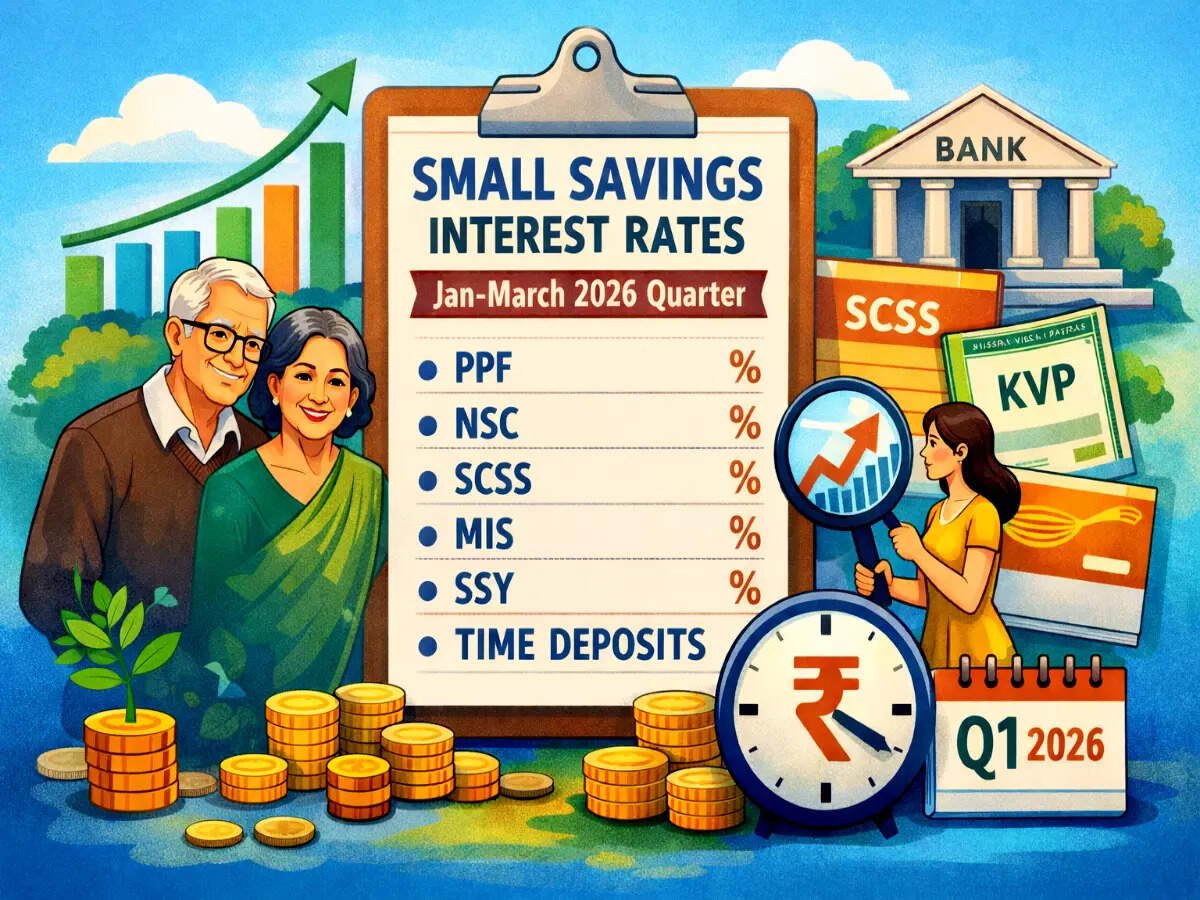
The Finance Ministry announced on 31 December 2025 that interest rates on major small savings schemes will remain unchanged for the first quarter of Financial Year 2025–26, covering 1 January to 31 March 2026. The decision leaves the Public Provident Fund (PPF) at 7.1 per cent, Senior Citizen Savings Scheme (SCSS) and Sukanya Samriddhi Account (SSY) at 8.2 per cent, and National Savings Certificate (NSC) at 7.7 per cent.
The unchanged schedule affects a wide range of post office instruments. Savings deposits will continue to offer 4.0 per cent, while time deposit rates range from 6.9 per cent for one‑year deposits to 7.5 per cent for five‑year deposits. The monthly income account remains at 7.4 per cent and Kisan Vikas Patra at 7.5 per cent (maturing in 115 months).
PPF NSC SCSS interest rates remain unchanged for Q1 FY 2025-26
This is the seventh quarter in succession in which small savings rates have been held steady. The last adjustment came in April 2024 when the government raised the three‑year time deposit and SSY rates. Since then, successive reviews have kept rates intact, a pattern the ministry continued at the year‑end review.

Market indicators such as the 10‑year government bond yield and retail inflation suggested scope to trim rates. The average 10‑year G‑Sec yield for the prior quarter was about 6.541 per cent. Under the Shyamala Gopinath Committee methodology, rates are typically set 25 to 100 basis points above the G‑Sec average, which would imply lower benchmark rates than many current small savings yields.
Despite those signals, officials appear to have prioritised saver protection. Analysts note that banks have already trimmed fixed deposit rates following aggregate repo rate cuts of 125 basis points in 2025, leaving many households with few attractive alternatives. “Stable small savings rates protect everyday savers and retirees who rely on guaranteed income,” says Foram Naik Sheth, KMP, Wealth Management Solutions, NPV Associates LLP.
Chakrivardhan Kuppala, co‑founder and director at Prime Wealth Finserv, adds that the decision is risk management. He suggests the ministry may prefer to avoid unsettling household expectations ahead of the Union Budget and is willing to absorb a marginally higher fiscal cost in the short term rather than trigger a perception that returns are being withdrawn from savers.
The government is not bound to follow the committee formula strictly and has deviated previously to balance financing needs with social and political considerations. Maintaining rates keeps government‑backed instruments competitive for small cities, towns and villages where post office schemes remain a core part of household financial planning.
Implications for savers and markets are clear. For conservative investors and pensioners the announcement sustains a predictable income stream. For the government it means marginally higher borrowing costs on small savings liabilities in the near term. Observers will watch inflation and G‑Sec movements closely over the coming months for any signals of change when the next quarterly review arrives.
Key Takeaways:
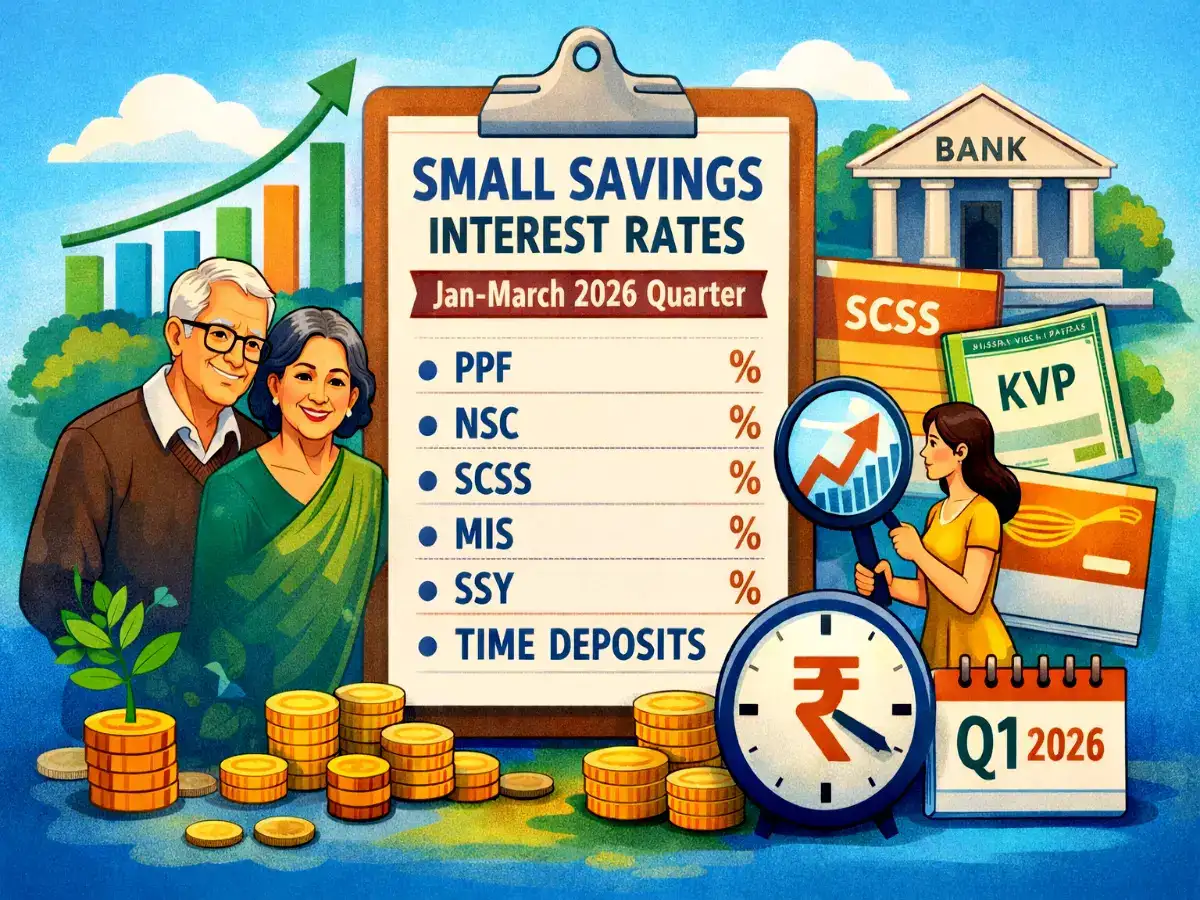
- Finance Ministry retains PPF NSC SCSS interest rates for January–March 2026, keeping PPF at 7.1% and SCSS and SSY at 8.2%.
- The decision preserves income for retirees and small savers amid falling bank FD rates after 2025 repo cuts.
- Rates remain unchanged for a seventh consecutive quarter despite lower 10-year G‑Sec yields and subdued inflation.
- Policy follows historical flexibility from the Shyamala Gopinath Committee formula rather than strict formulaic cuts.