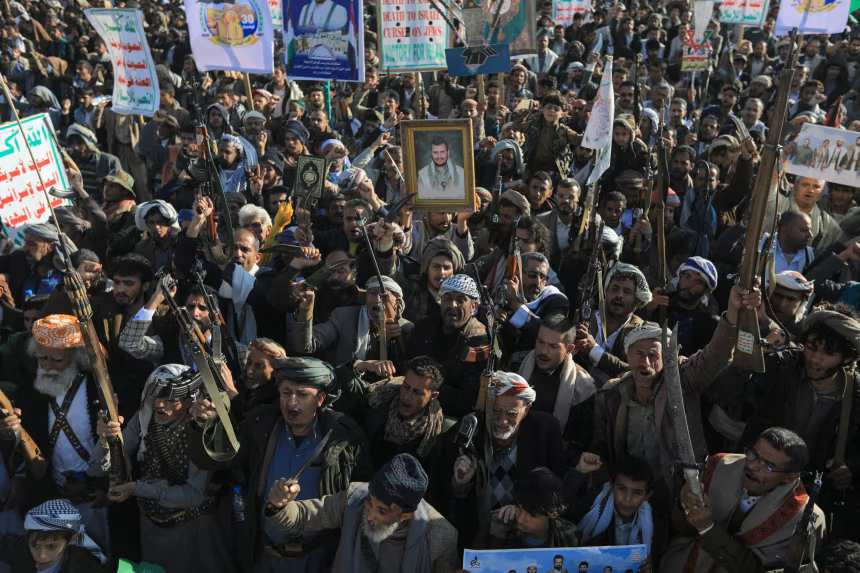
Yemeni Huthi rebels and the Saudi-backed government have agreed to the largest prisoner exchange of the conflict so far, a development described by diplomats and aid agencies as a significant humanitarian step that could ease tensions and save lives.
Yemen prisoner exchange secures release of thousands
Officials said the deal, concluded at the end of a 12-day meeting in Muscat, Oman, will see roughly 1,700 Huthi detainees released in return for about 1,200 prisoners held by the other side. Among those to be freed are seven Saudi nationals and 23 Sudanese, according to statements from Yemeni and Saudi officials.
The agreement was signed under the supervision of the United Nations special envoy for Yemen and the International Committee of the Red Cross (ICRC). Saudi Arabia’s ambassador to Yemen, Mohamed Al-Jabir, described the pact on social media as an important confidence-building measure and welcomed the role of international mediators in securing the deal.

Hans Grundberg, the UN special envoy, said the exchange was a “positive and meaningful step that will hopefully ease the suffering of detainees and their families across Yemen.” The UN envoy’s office confirmed the agreement after the Muscat talks, which brought together representatives from both sides to narrow differences and focus on humanitarian measures.
Prisoner swaps have been one of the most tangible areas of progress between the warring parties. Previous UN-backed deals released more than 1,000 detainees in Switzerland in October 2020, and the ICRC facilitated the transfer of 973 detainees in April 2023. Thursday’s agreement surpasses those exchanges in scale and ambition.
Yemen’s conflict began in 2014 when Huthi forces seized the capital, Sanaa, and escalated in 2015 after a Saudi-led coalition intervened. While fighting continues in parts of the country, the parties have avoided a return to full-scale war in recent years, and humanitarian measures such as prisoner exchanges have remained a vital channel for dialogue.
Humanitarian organisations welcomed the deal but cautioned that implementation would be the test. The ICRC and the UN typically oversee logistics, medical screening and the safe transport of detainees, and both stressed that swift, transparent implementation will be crucial to translate the agreement into relief for families.
Beyond immediate humanitarian benefits, diplomats said the exchange could help rebuild limited trust between the sides and create space for further confidence-building measures. Analysts noted that while such deals do not replace a political settlement, they can reduce tensions on the ground and prevent further humanitarian deterioration.
Yemen has already endured a catastrophic toll. A 2021 United Nations Development Programme (UNDP) report estimated about 377,000 conflict-related deaths, with more than half attributed to indirect causes such as food and water shortages and a collapsing health system. Prisoner releases do not alter these structural challenges, but they offer respite to families and a rare signal of cooperation.
Officials in Muscat did not set a firm timetable for the releases, saying instead that further technical discussions would determine sequencing and locations for transfers. Observers urged all parties and international monitors to ensure the process is humane, swift and safe.
For detainees and relatives, the agreement offers hope after years of uncertainty. For mediators, it provides a template for using humanitarian channels to sustain engagement. Whether it opens the way to wider de-escalation remains unclear, but negotiators emphasised that practical steps such as this exchange are necessary to keep diplomatic avenues open.
Key Takeaways:
- Yemen prisoner exchange will free roughly 1,700 Huthi detainees for 1,200 prisoners, including Saudi and Sudanese nationals.
- The deal was signed under UN and ICRC supervision after talks in Muscat, hailed as a confidence-building humanitarian step.
- It is the largest exchange to date and follows prior UN-backed releases in 2020 and 2023.
- The agreement could ease suffering for detainees and families while keeping dialogue channels open.